The Unsolved Mysteries of the Bennington Triangle Disappearances
In the dense, fog-choked forests of southwestern Vermont, a patch of wilderness holds secrets that have baffled investigators for nearly eighty years. This area, famously known for the Bennington Triangle disappearances, saw five people vanish without a trace between 1945 and 1950. From seasoned woodsmen to young students, the victims stepped into the shadows of Glastenbury Mountain and never returned. Local legends speak of ancient curses and strange lights, but the physical evidence remains hauntingly thin.
The rugged terrain of the Green Mountain National Forest is beautiful, yet it carries a heavy reputation for swallowing those who wander too far. While most disappearances leave behind a trail or a clue, these cases defy standard logic and traditional search efforts. Only one body was ever recovered, leaving the families of the missing and curious researchers with more questions than answers. Exploring these accounts requires a balance of historical facts and an open mind toward the unexplained forces that might dwell in the woods.
Key Takeaways
- The Bennington Triangle is a specific region around Vermont’s Glastenbury Mountain where five people vanished without a trace between 1945 and 1950, leaving behind almost no physical evidence.
- The disappearance of Paula Welden exposed critical flaws in local search-and-rescue capabilities, directly resulting in the creation of the Vermont State Police.
- Investigations into the disappearances remain inconclusive due to a lack of forensic clues, fueling a debate between logical environmental factors—such as treacherous sinkholes and volatile weather—and supernatural theories like ancient curses and cryptid sightings.
- The case of James Tedford remains the most baffling anomaly of the region, as he reportedly vanished from a moving bus filled with passengers, leaving his belongings behind on his seat.
The Sudden Vanishing of Middie Rivers and Paula Welden
The mysteries of the Bennington Triangle began in earnest on November 12, 1945, with the sudden disappearance of Middie Rivers. As a seventy four year old hunting guide, Rivers possessed an intimate knowledge of the rugged Bickford Hollow terrain that few others could claim. While leading a group of four hunters toward the Long Trail, he stepped ahead of the party and vanished into the autumn mist. Despite an exhaustive search involving over three hundred volunteers and military personnel, the only item ever recovered was a single rifle cartridge found in a nearby stream. Local legends recorded by author Joseph Citro suggest that the woods seemed to swallow the experienced woodsman whole, leaving behind no tracks or signs of a struggle.
Just one year later, the region gained national attention when eighteen year old Paula Welden went missing during a solo hike. On a chilly December afternoon in 1946, the Bennington College student set out to explore a section of the Long Trail wearing a distinctive red coat. Several witnesses, including an elderly couple, reported seeing her walking toward the mountain, yet she never returned to her dormitory. The subsequent search was so poorly coordinated that it exposed a desperate need for a professional statewide investigative body. This tragic event directly led to the establishment of the Vermont State Police, as authorities realized local volunteers were not enough to comb the dense, unforgiving forest.
These two cases set a chilling precedent for the supernatural reputation that now defines the Green Mountain National Forest. While skeptics point to the treacherous cliffs and unpredictable weather as logical explanations, the complete lack of physical evidence continues to baffle modern investigators. Some researchers wonder if the geographical anomalies of the area create a natural trap for the unwary, while others look toward local folklore regarding ancient curses. The stories of Rivers and Welden remain the foundation of the Bennington Triangle mystery, serving as a somber reminder of how quickly the familiar woods can become a place of profound uncertainty. Does the rugged terrain hide a logical danger, or is there something more elusive at play in the Vermont wilderness?
James Tedford and the Vanishing Bus Passenger
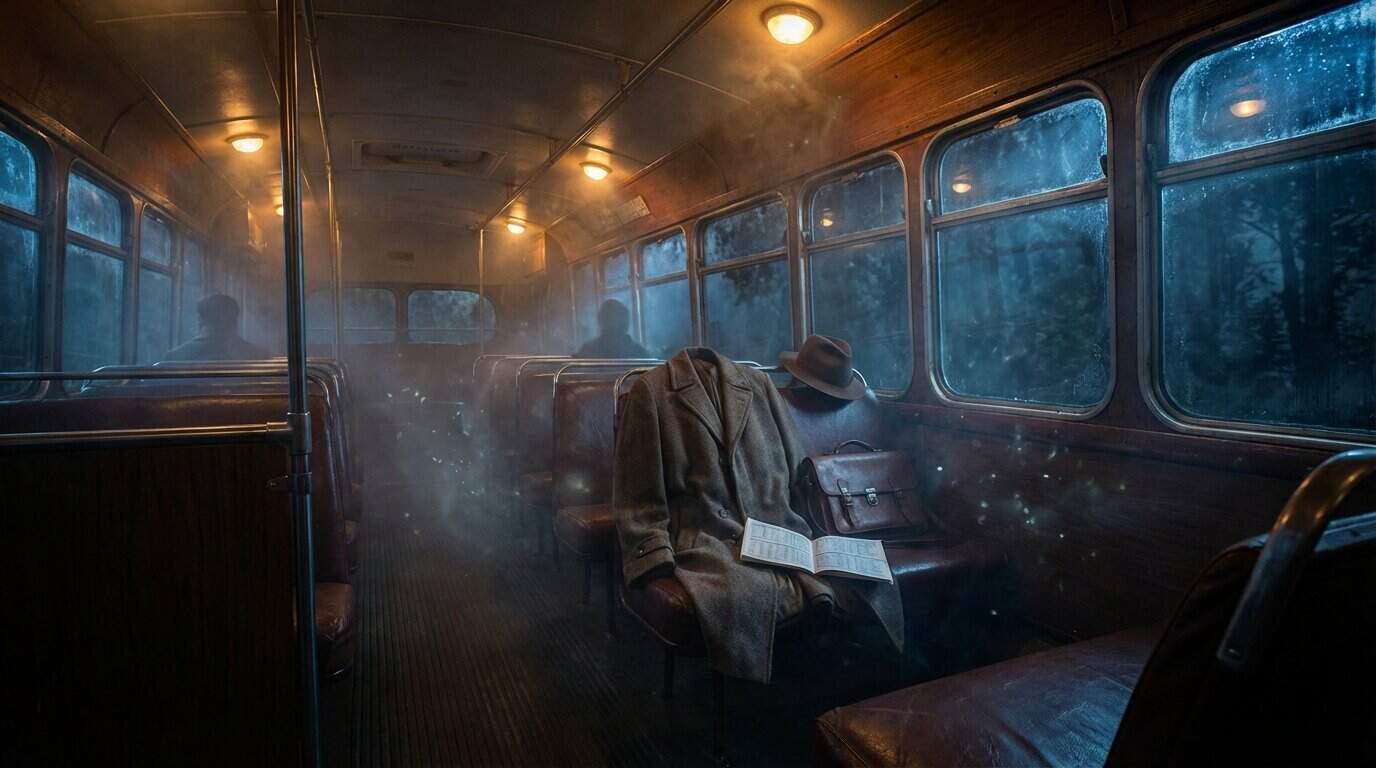
James Tedford was a veteran who became the center of one of the Bennington Triangle’s most baffling mysteries on a cold December day in 1949. While returning home to Bennington after visiting family, he boarded a bus in St. Albans for the final leg of his journey. Several passengers and the driver confirmed he was sitting in his seat as the bus traveled through the dense Green Mountain National Forest. However, when the vehicle finally reached its destination, Tedford was nowhere to be found. His luggage and an open bus timetable remained on his empty seat, yet the man himself had vanished into thin air.
The circumstances of his disappearance defy easy explanation and have fueled local folklore for decades. Witnesses were certain that Tedford never stepped off the bus during any of the scheduled stops along the route. Because the bus was moving through a region known for strange lights and unexplained anomalies, some believe he was a victim of the area’s peculiar energy. Author Joseph Citro has documented how these woods seem to swallow people without leaving a single trace behind. Despite extensive investigations by local authorities, no physical evidence or signs of foul play were ever discovered inside the bus.
This case remains a cornerstone of Vermont lore because it occurred right in the middle of a five year streak of disappearances. Unlike other victims who were hiking or hunting in the rugged terrain, Tedford vanished from a confined, public space. This shift in the pattern suggests that the Bennington Triangle might not just be a dangerous wilderness, but a place where the laws of physics behave differently. It leaves us wondering if certain locations on Earth possess doorways to places we do not yet understand. Do you think James Tedford fell victim to a natural accident, or is there something truly supernatural about the Green Mountains?
Local Folklore and the Bennington Monster Legend
Long before the string of disappearances in the 1940s brought national attention to the region, Glastenbury Mountain held a dark reputation among indigenous groups. Local lore suggests that Native American tribes, including the Abenaki, viewed the peaks as cursed ground where the four winds met in a dangerous clash. Many avoided the area entirely, believing the soil itself was inhospitable and capable of swallowing travelers whole. These ancient warnings laid a foundation of unease that persists today, suggesting that the land might harbor a natural or spiritual hostility toward human presence.
Modern explorers and residents often report seeing strange, dancing lights flickering through the dense canopy of the Green Mountain National Forest. These ethereal glows are frequently accompanied by an unsettling silence that seems to descend over the woods without warning. Some witnesses describe encountering the Bennington Monster, a large, hairy creature that bears a striking resemblance to the legendary Bigfoot. Author Joseph A. Citro has documented many of these sightings, noting that the beast is often blamed for the eerie sounds and unexplained sensations of being watched that many hikers report.
While skeptics point to the rugged terrain and unpredictable weather as the likely culprits for the missing persons cases, the sheer volume of oddities remains difficult to ignore. The combination of ancient curses, cryptid sightings, and mysterious atmospheric lights creates a tapestry of high strangeness that mirrors the enigma of the Bermuda Triangle. Whether these phenomena are separate anomalies or part of a singular regional mystery, they continue to draw curious minds to the shadows of the mountain. Have you ever experienced a strange sensation or seen something unexplainable while hiking in the deep woods of Vermont?
Searching for Answers in the Vermont Wilderness
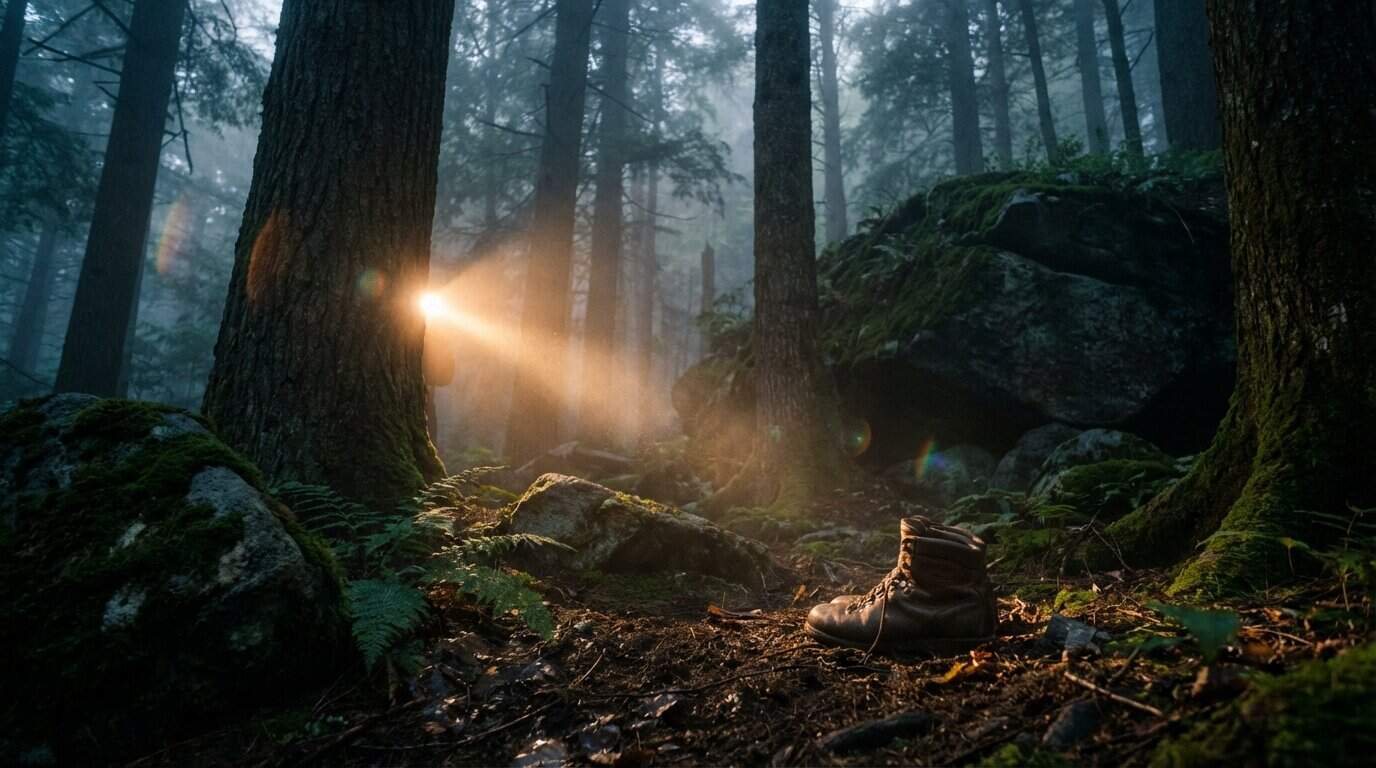
The dense forests of the Green Mountain National Forest present a formidable challenge for even the most experienced outdoorsmen. Spanning over 100 square miles, this rugged terrain is filled with steep ridges, tangled undergrowth, and unpredictable weather patterns that can shift in an instant. During the late fall and early winter months, temperatures often plummet and heavy snow can mask a person’s tracks within minutes. Local historian Joseph Citro has noted that the geography itself seems to swallow people whole, leaving behind no physical evidence for search parties to find. These harsh environmental factors provide a logical explanation for how a hiker might lose their way or succumb to the elements.
Despite the practical dangers of the wilderness, the specific details of these disappearances continue to baffle investigators and armchair detectives alike. In 1945, a seasoned hunting guide named Middie Rivers vanished in the Bickford Hollow area while leading a group, yet he was never seen again despite his extensive knowledge of the local trails. Unlike typical missing persons cases where fragments of clothing or gear are eventually recovered, the Bennington Triangle is unique for its total lack of forensic clues. This eerie silence from the forest floor has led many to wonder if something more unusual than simple geography is at play. The absence of bodies suggests that these individuals did not just get lost, but perhaps encountered something that defies traditional explanation. Much like the mystery of the Dyatlov Pass Incident involving nine Russian hikers, these cases remain open because the physical proof is simply missing.
The enduring mystery of the Bennington Triangle lies in this delicate balance between the physical world and the unexplained. While scientists point to the region’s sinkholes and volatile winds, regional lore continues to whisper about strange lights and ancient curses that have haunted Glastenbury Mountain for centuries. Every new investigation must weigh the reality of the unforgiving Vermont winters against the possibility of terrestrial anomalies that mirror the legendary Bermuda Triangle. This blend of natural peril and supernatural mystery ensures that the area remains one of the most intriguing locations for those seeking answers in the wild. Have you ever felt an unexplainable chill while hiking through a silent forest, or do you believe the wilderness is simply too vast for us to ever truly master?
The Unsolved Secrets of Glastenbury Mountain
The legacy of the Bennington Triangle remains a haunting chapter in New England folklore that refuses to fade with time. These woods continue to guard their secrets, leaving the families of the missing and local historians with more questions than answers. While some point to the treacherous terrain and unpredictable mountain weather as the primary culprits, others cannot ignore the strange patterns that link these five cases. The enduring mystery of Glastenbury Mountain serves as a chilling reminder that some pockets of the world seem to operate under their own set of rules. It is this unique blend of documented history and unexplained anomalies that keeps the legend alive for new generations of explorers.
The stories of Middie Rivers and the others who vanished into the Green Mountains invite us to look closer at the thin line between the known and the unknown. Whether the cause was a natural predator, a series of tragic accidents, or something far more unusual, the silence of the forest is a powerful testament to the event. Skeptics and believers alike find common ground in the undeniable fact that people simply disappeared without a trace in a relatively small geographic area. Exploring these regional mysteries helps us understand the deep connection between local geography and the myths we create to explain the unexplainable. This particular corner of Vermont stands as a premier example of how a specific environment can become synonymous with the enduring mystery of the supernatural.
What do you believe is truly hidden within the dense brush and rocky outcrops of the Bennington Triangle? Do you think a logical explanation exists for every disappearance, or does the history of the Bennington Monster and strange lights suggest something more mysterious? We want to hear your thoughts on these classic Vermont cases and any personal experiences you might have had in the Green Mountain National Forest. Perhaps you have a theory about the geographical layout of the area that others have overlooked during their research. Please share your perspectives in the comments below to keep the conversation going about this fascinating American mystery.
Frequently Asked Questions
1. What exactly is the Bennington Triangle?
The Bennington Triangle is a colloquial name for a mysterious patch of wilderness centered around Glastenbury Mountain in southwestern Vermont. It gained notoriety for a series of unexplained disappearances that occurred between 1945 and 1950, captivating researchers and locals alike.
2. How many people actually went missing in this area?
Five documented disappearances occurred during the peak years of the mystery, involving individuals of various ages and experience levels. While other stories of missing hikers exist in the region, these five cases remain the most famous because they happened in such a short window of time.
3. Was any physical evidence ever found during the searches?
Physical evidence is incredibly scarce, with only a few items like a single rifle cartridge ever being recovered from the woods. Out of the five primary victims, only the body of Frieda Langer was eventually found, yet the circumstances of her death remained inconclusive due to the passage of time.
4. Who was the most experienced person to disappear?
Middie Rivers was a seventy four year old hunting guide who knew the local trails and terrain better than almost anyone in the area. His disappearance in 1945 shocked the community because he was a seasoned woodsman who was unlikely to get lost in familiar territory.
5. Are there any popular theories about what caused the disappearances?
Theories range from natural explanations like hidden sinkholes and mountain lions to more supernatural ideas like ancient curses or interdimensional portals. Author Joseph Citro has documented many of these local legends, which often point toward a mysterious energy or presence dwelling within the forest. Researchers often find themselves tracking the truth between environmental factors and these persistent eyewitness accounts.
6. Is it still dangerous to hike in the Bennington Triangle today?
While the string of mysterious disappearances ended in 1950, the Green Mountain National Forest remains a rugged and challenging environment for any hiker. Modern visitors are encouraged to stay on marked trails and prepare for sudden weather changes that can occur on the steep slopes of Glastenbury Mountain.