
The Tulli Papyrus Authenticity Mystery: Ancient UFOs Or Modern Hoax
In 1934, a mysterious discovery in a dusty Cairo antique shop sparked a debate that continues to captivate researchers and historians alike. Alberto Tulli, a director at the Vatican Museums, claimed to have found an ancient scroll describing circles of fire descending from the Egyptian sky during the reign of Thutmose III. Today, the question of tulli papyrus authenticity remains at the center of a tug-of-war between those who see it as the world’s oldest report of unidentified aerial phenomena and scholars who suspect a clever modern forgery.
The story takes a cinematic turn when we realize the original document vanished as quickly as the strange lights it supposedly described. Because Tulli only provided a transcription rather than the physical papyrus, researchers are left chasing a ghost through the annals of history. While mainstream experts often dismiss the account as a hoax, the precise details of the celestial event keep the door cracked open for a more extraordinary truth.
Key Takeaways
- The Tulli Papyrus serves as the world’s oldest potential record of unidentified aerial phenomena, detailing a fleet of silent, foul-smelling ‘fire disks’ observed during the reign of Pharaoh Thutmose III.
- The lack of a physical artifact remains the primary obstacle to scientific verification, as only a transcription exists while the original document vanished following its 1934 discovery in Cairo.
- Linguistic analysis reveals significant red flags, including modern grammatical errors and phrases that appear to be direct copies from 20th-century Egyptian grammar textbooks.
- Despite evidence of a modern forgery, the document continues to fuel historical debate by aligning ancient Egyptian sightings with modern descriptions of unexplained aerial objects.
Fiery Disks Over The Nile
The narrative of the Tulli Papyrus centers on a startling event during the twenty second year of Pharaoh Thutmose III’s reign. According to the translated text, a silent disk of fire appeared in the sky, measuring nearly five meters across and emitting a foul odor. This was not a solitary event, as the document claims that more of these fire disks eventually filled the horizon, shining brighter than the sun itself. The Pharaoh and his army reportedly watched in awe as these celestial visitors ascended high into the sky before heading south toward the horizon. This account provides a fascinating historical anchor for the study of unexplained aerial objects, suggesting that these mysterious sightings predate modern technology by thousands of years.
While the story is captivating, the physical evidence for the Tulli Papyrus remains elusive and creates a divide between believers and skeptics. Alberto Tulli, a former director of the Vatican Museums, claimed to have discovered the document in an antique shop, but he only produced a copy rather than the original artifact. Because the original papyrus has never been found or analyzed by modern laboratories, many Egyptologists suspect it may be a clever modern fabrication. However, those who believe in its authenticity point to the specific hieroglyphic descriptions of the objects’ movements as proof of a genuine ancient encounter. Without the original scroll to test, the mystery of whether Thutmose III actually witnessed a fleet of flying objects remains one of history’s most debated puzzles.
The implications of such a sighting in ancient Egypt are profound, as they would rewrite our understanding of early human history and potential contact with advanced technology. If the descriptions are accurate, it would mean that advanced aerial phenomena were interacting with one of the world’s most powerful civilizations at its peak. This possibility keeps the legend alive in many circles, encouraging researchers to look for similar patterns in other ancient texts and monuments. Even if the papyrus is eventually proven to be a hoax, the story serves as a powerful reminder of our enduring fascination with the stars. What do you think prompted such a specific and detailed story to emerge in the early twentieth century, and could there be a lost original still waiting to be found?
Alberto Tulli And The Missing Original

The story of the Tulli Papyrus begins in the dusty corners of a Cairo antique shop in 1934, where Alberto Tulli first laid eyes on the mysterious document. As the director of the Egyptian branch of the Vatican Museums, Tulli was a respected figure with a keen eye for genuine artifacts. He claimed that the price for the papyrus was far too high to purchase, so he instead created a careful copy of the original hieratic text. This transcription was later converted into formal hieroglyphs, providing the world with a window into what many believe is the earliest recorded sighting of a fleet of unidentified objects. According to the text, circles of fire appeared in the sky during the reign of Thutmose III, predating modern sightings by thousands of years and offering a historical anchor for the phenomenon.
Despite the fascinating nature of the story, the original papyrus has remained frustratingly elusive to modern scholars and researchers. After Alberto Tulli passed away, his personal effects went to his brother, but the ancient document was nowhere to be found among his belongings. Many researchers have reached out to the Vatican Museums in hopes of locating the artifact, yet the institution maintains that they have no record of the original ever entering their collection. This missing link has led many skeptics to label the entire account as a clever modern fabrication or a hoax. However, those who believe in the document’s authenticity argue that such a significant discovery may have been intentionally hidden away to protect established historical narratives.
The absence of the physical papyrus leaves us with a compelling mystery that sits right on the edge of history and science fiction. Without the original material to test for age or ink composition, we are forced to rely entirely on Tulli’s transcription and the accounts of those who saw his notes. If the document is real, it suggests that ancient Egyptians witnessed a massive aerial event that defied their understanding of the natural world. This leaves us wondering if we are looking at a lost piece of human history or a creative piece of mythology that has stood the test of time. What do you think happened to the original Tulli Papyrus, and do you believe it holds the truth about ancient visitors?
Linguistic Errors And Evidence Of Forgery
While the Tulli Papyrus offers a thrilling glimpse into ancient aerial mysteries, Egyptologists have uncovered several red flags within its linguistic structure. Experts like Gianfranco Nolli, who eventually took over Alberto Tulli’s position at the Vatican Museum, pointed out that the hieroglyphic transcription contains modern grammatical errors that simply do not belong in a document from the Eighteenth Dynasty. These inconsistencies suggest that the author may have been trying to mimic ancient Egyptian without a full grasp of the language’s complex evolution. Critics argue that these blunders are the smoking gun of a modern forgery designed to fool amateur enthusiasts. Even with these concerns, the sheer detail of the circles of fire keeps the debate alive for those searching for historical proof of early visitors.
The most damaging evidence against the document’s authenticity comes from its striking resemblance to a well-known academic source. Linguistic analysis discovered that certain phrases and sentence structures in the Tulli Papyrus appear to be direct copies from established Egyptian grammar textbooks. It seems as though someone may have plucked vocabulary words and common phrases from academic literature to construct a narrative about celestial wonders. This discovery led many scholars to conclude that the text was a clever fabrication created in the early 20th century using available educational materials. Despite this likely origin, the mystery remains popular because it aligns with the descriptions of modern aerial sightings.
If the papyrus is indeed a hoax, it raises fascinating questions about why someone would go to such lengths to plant a fake story in the records of history. Some believe the creator wanted to bridge the gap between ancient mysteries and the burgeoning interest in space travel and extraterrestrial life. By using a prestigious name like the Vatican Museum, the story gained a level of credibility that has lasted for decades. Whether it is a misunderstood masterpiece or a carefully crafted prank, the tulli papyrus authenticity serves as a reminder to look closely at the evidence. Do you think a modern person could have faked such a specific account, or is there a chance the textbook examples were actually based on a much older, genuine tradition?
Final Conclusion
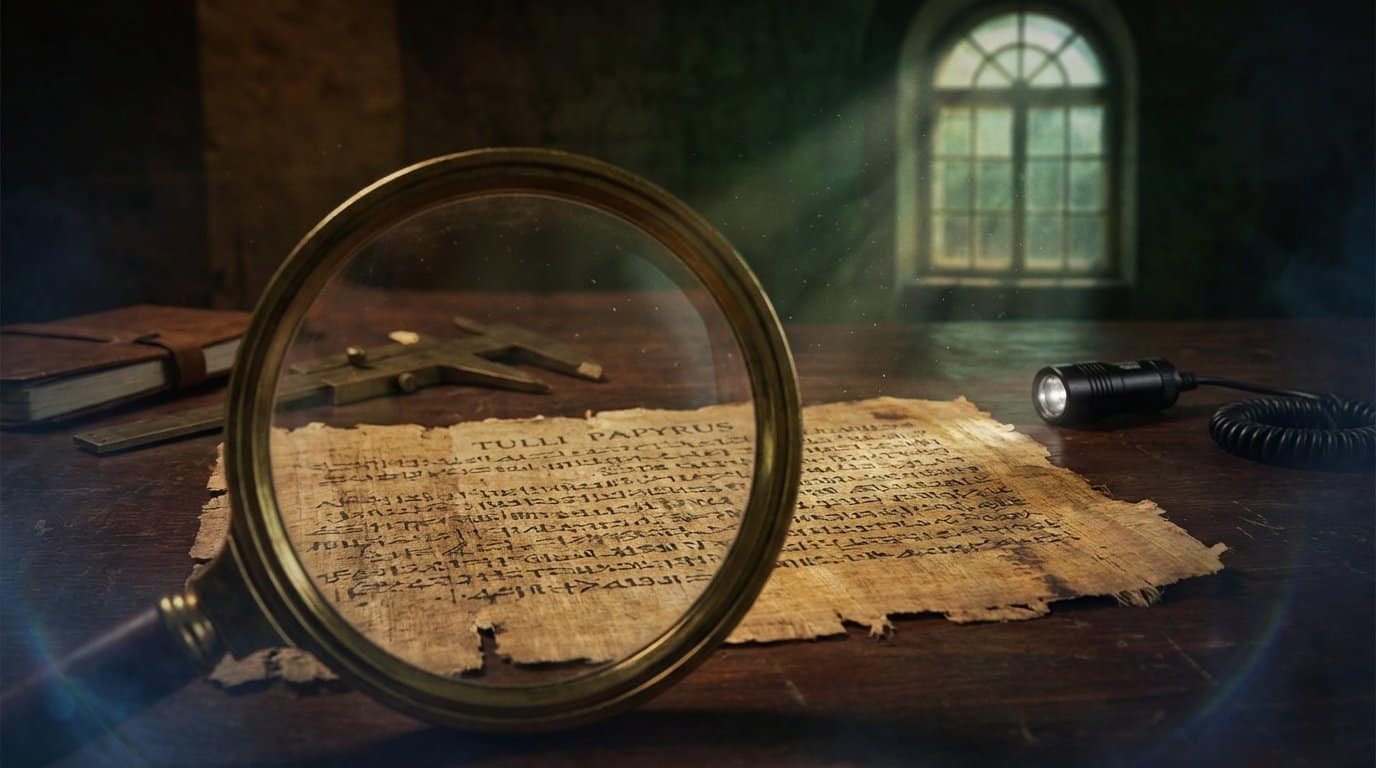
The investigation into the Tulli Papyrus leaves us at a fascinating crossroads between ancient history and modern mystery. On one hand, the document provides a thrilling historical anchor for the study of unexplained phenomena, suggesting that circles of fire once dominated the skies during the reign of Thutmose III long before modern technology existed. This narrative offers a captivating glimpse into a world where extraterrestrial contact might have been a recorded reality for the Pharaohs. However, the lack of an original physical artifact and the reliance on a single hand-copied transcription lead many researchers to view it as a clever fabrication. The mystery remains suspended between a missing ancient masterpiece and a twentieth-century legend.
Even if the papyrus is eventually proven to be a modern creation, its cultural impact cannot be ignored. It has fueled decades of curiosity regarding what our ancestors might have witnessed in the silent deserts of Egypt. Whether the text represents a genuine sighting of a fleet of objects or is simply a visionary piece of fiction, it challenges us to look closer at the gaps in our historical records. The possibility that a profound secret is hidden within those lost hieroglyphs continues to inspire those who believe we have never been alone. Science demands evidence, but the human spirit thrives on the wonder of the unexplained.
What do you think happened over the Nile thousands of years ago? Is the Tulli Papyrus a genuine record of an ancient encounter that has been lost to time, or is it a masterful hoax designed to spark our imaginations? Perhaps the original document is still waiting to be rediscovered in a dusty corner of a private collection. We invite you to share your theories and join the conversation about this enduring Egyptian enigma. Your perspective could be the key to unlocking a mystery that has puzzled researchers for nearly a century.
Vanished Artifact or Ancient Truth?
The question of whether the Tulli Papyrus is a genuine window into the past or a clever modern invention remains one of Egyptology’s most captivating debates. While the original document has vanished from the public eye, the transcription left behind suggests a world where the skies were filled with fiery disks during the reign of Thutmose III. Skeptics point to the lack of a physical artifact as evidence of a hoax, yet the specific details within the text continue to fascinate those who believe our ancestors witnessed something extraordinary. This document provides a rare historical anchor for the study of unexplained phenomena, suggesting that these mysterious aerial displays are not just a product of the space age.
Deciding the truth about this ancient mystery requires a balance between scientific caution and an open mind toward the unexplained. If the papyrus is an accurate copy of a lost original, it represents the earliest recorded encounter with a fleet of flying objects in human history. Even without the physical papyrus to test, the story serves as a reminder that history is often stranger than we imagine and that some secrets may still be buried under the desert sands. We are left to wonder if the scribes of old were simply recording a natural phenomenon or if they were truly decoding the legends of potential visitors from beyond. Much like the Dropa stones discovery in the mountains of China, these accounts force us to reconsider our place in the universe. What do you believe the ancient Egyptians saw in those quiet skies thousands of years ago?
Frequently Asked Questions
1. What exactly is the Tulli Papyrus?
The Tulli Papyrus is a document allegedly discovered in a Cairo antique shop in 1934 that describes a fleet of flying fire disks during the reign of Pharaoh Thutmose III. It is often cited by researchers as one of the earliest recorded instances of a mass sighting of unexplained objects in human history.
2. Who was Alberto Tulli and why is he central to this mystery?
Alberto Tulli was a director of the Vatican Museums who claimed to have found the original papyrus while visiting Egypt. Although he did not purchase the artifact, he created a transcription that serves as the only remaining record of the strange events described in the text.
3. Where is the original Tulli Papyrus located today?
The physical papyrus has completely vanished and its current location remains unknown. Because the original document was never formally archived or photographed, researchers must rely entirely on the copies and translations left behind by Tulli and later investigators.
4. What did the ancient Egyptians reportedly see in the sky?
Witnesses described silent circles of fire that appeared in the sky, measuring roughly five meters in diameter and emitting a strange, unpleasant odor. These objects eventually multiplied until they filled the horizon, shining brighter than the sun before they ascended and moved toward the south.
5. Is there any evidence that the Tulli Papyrus is a modern forgery?
Many mainstream scholars suspect the document is a clever hoax because the original artifact is missing and the language used in the transcription contains certain grammatical oddities. However, the specific mention of a foul odor and silent flight matches many modern reports of unexplained objects, leading some to believe it is a genuine record of an ancient encounter.
6. How does the Vatican view the authenticity of this document?
The Vatican has never officially confirmed the existence of the Tulli Papyrus in its archives. While Alberto Tulli was a high ranking official, the museum maintains that the document was part of his private research and was never an official part of their collection.