
The Salzburg Cube And The Wolfsegg Iron Mystery
In 1885, a simple day at an Austrian foundry took a strange turn when a workman cracked open a block of ancient coal. Tucked inside the 20-million-year-old fuel was a bizarre, cuboid object that would soon become known as the wolfsegg iron mystery. This heavy, metallic block appeared far too geometric and intentional to be a natural formation, leading many to wonder how a manufactured object could end up buried deep within a prehistoric layer of the Earth.
The object, also called the Salzburg Cube, quickly captured the imaginations of those hunting for evidence of advanced ancient civilizations or visitors from the stars. While the small, weathered iron piece fits perfectly in the palm of a hand, its weight in the world of the unexplained is massive. It challenges our understanding of history and forces us to look closer at the thin line between natural wonders and impossible artifacts.
Key Takeaways
- The Wolfsegg Iron, or Salzburg Cube, is a 20-million-year-old mystery involving a geometric metallic object found embedded inside a block of prehistoric coal.
- Scientific analysis using electron beam microanalysis debunked the meteorite theory by revealing a lack of nickel, identifying the object’s composition as man-made cast iron.
- The artifact likely originated as industrial scrap, such as ballast or a weight from 19th-century mining machinery, that became accidentally encased in the coal seam.
- Despite its probable industrial origins, the cube remains a significant example of an ‘out-of-place artifact’ that challenges our perceptions of geological time and historical timelines.
The Discovery Of The Wolfsegg Iron
In 1885, a workman named Reidl was busy at his job at an iron foundry in Schöndorf, Austria, when he made a discovery that would baffle researchers for decades. While breaking open a large block of lignite coal that had been hauled from the Wolfsegg mine, he found a peculiar metallic object nestled deep inside the ancient fuel. This coal was estimated to be millions of years old, making the presence of a finished metal piece seem almost impossible. The object was immediately striking because it did not look like a natural mineral formation. Instead, it appeared to be a deliberate creation that had been trapped in the earth for eons.
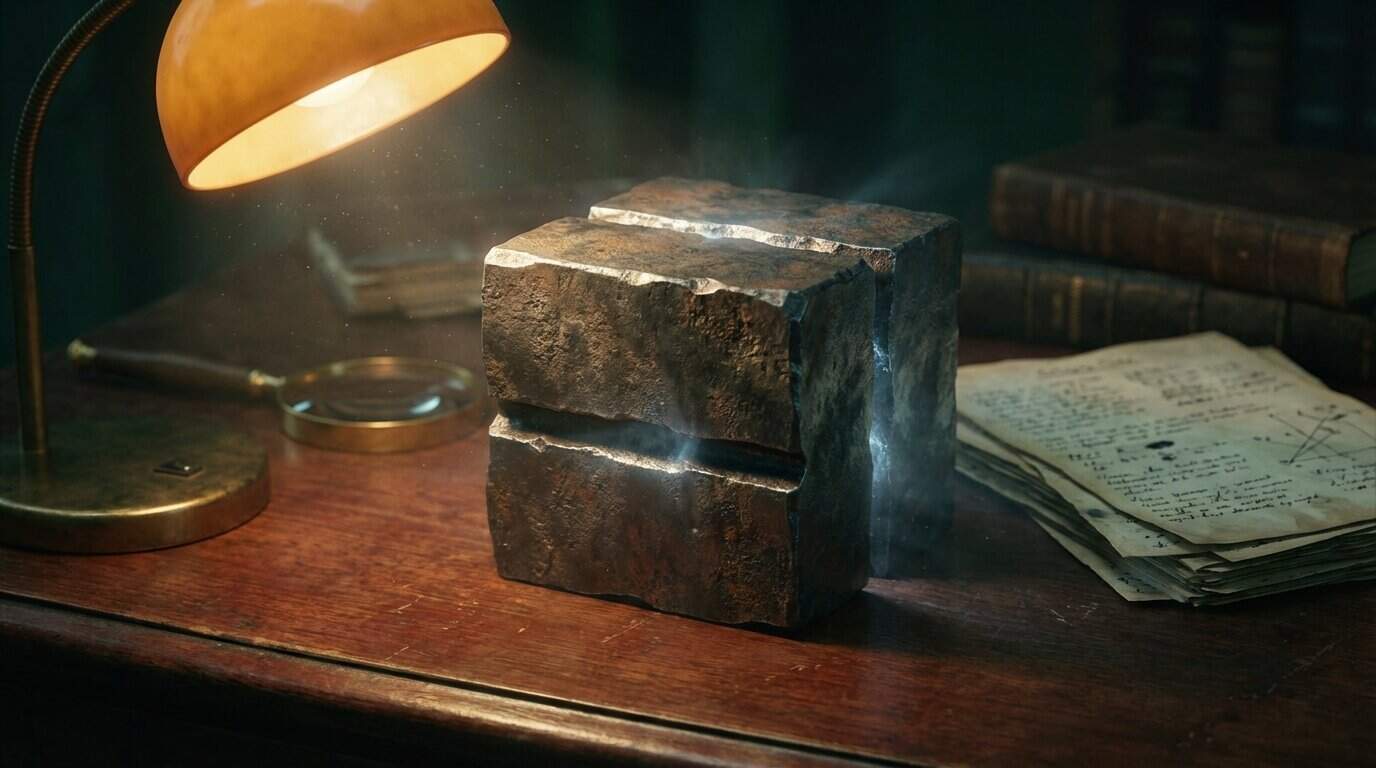
The physical characteristics of the object, often called the Salzburg Cube, only added to the growing sense of wonder. It was a small, heavy block measuring roughly 67 by 67 by 47 millimeters and weighing about 785 grams. What caught everyone’s attention were the deep incisions and a distinct groove running around its middle, features that looked remarkably like human craftsmanship. Its four flat sides and slightly rounded edges gave it a geometric precision that felt out of place in a prehistoric coal bed. To many who saw it, the cube looked less like a random rock and more like a specialized tool from a forgotten era.
Because the cube was found inside coal that formed during the Miocene epoch, its existence suggested a massive contradiction in the timeline of human history. If the object was indeed man-made, it would mean that advanced metalworking existed long before the first modern humans ever walked the Earth. Early observers noted that the metal was tough and possessed a unique composition, leading to various theories ranging from ancient technology to a rare type of meteorite. This strange find at the foundry launched a mystery that continues to challenge how we look at anomalies found in deep time.
Ancient Tool Or Out Of Place Artifact
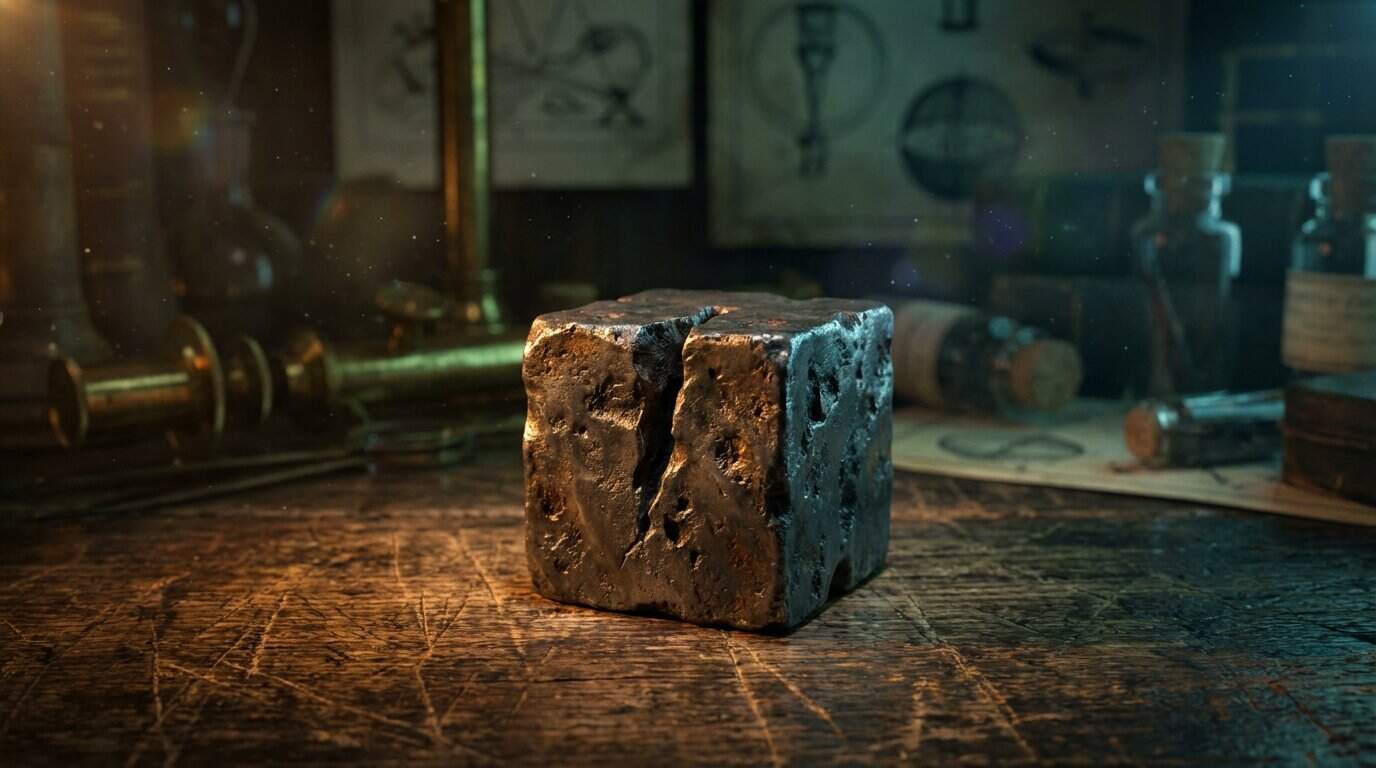
The Wolfsegg Iron first captured the world’s imagination in 1885 when a workman reportedly discovered it embedded deep within a block of ancient coal. Because the coal seam dated back millions of years, the presence of a shaped metal object suggested a staggering possibility that defied conventional history. Early observers noted its peculiar cuboid shape and deep incisions, leading many to wonder if they were looking at a tool crafted by a lost, prehistoric civilization. This strange artifact, often called the Salzburg Cube, quickly became a centerpiece in the debate over objects that seem to exist out of their proper place in time.
As curiosity grew, researchers began to investigate whether the object was a manufactured relic or a rare visitor from space. Some early theories suggested it was a meteorite, pointing to its iron composition and weathered surface as evidence of a cosmic origin. However, the lack of typical nickel levels found in most space rocks kept the mystery alive for decades. If the object was not a meteorite, the implications were profound, as it would mean a sophisticated iron tool existed long before humans were thought to have mastered metalworking.
Today, the Wolfsegg Iron remains a fascinating example of how modern science grapples with anomalies found in the deep reaches of time. While some later studies at a prominent natural history museum suggested it might be cast iron used in mining machinery, the original accounts of it being encased in coal continue to fuel the imagination of those who believe in hidden history. It serves as a reminder that our understanding of the past is often challenged by single, stubborn objects that refuse to fit into a neat box. What do you think this strange cube represents, and could it be a remnant of a world we have yet to fully understand?
Scientific Analysis And The Meteorite Theory
When the Salzburg Cube first arrived for professional examination, researchers were eager to determine if this strange object was a visitor from the stars. For decades, the iron piece was categorized as a meteorite because of its unusual shape and the way it was found deep within a coal deposit. However, in the 1960s and again in the 1970s, scientists used modern electron beam microanalysis to peek into the chemical makeup of the metal. These tests looked specifically for nickel, a signature element found in almost all iron meteorites. To the surprise of many, the results showed virtually no nickel present, which strongly suggested the cube did not fall from space.
The scientific evidence points toward a more terrestrial, though still puzzling, origin for the Wolfsegg Iron. Further analysis revealed that the object is likely made of cast iron, a material produced through human smelting processes. Experts believe the cube may have been used as ballast in a piece of mining machinery or perhaps as a weight for a scale. Because cast iron is brittle and can be shaped with specific grooves, the distinct central furrow that once sparked theories of alien design is now seen as a common feature of industrial manufacturing. This discovery shifts the mystery from a cosmic event to a historical puzzle about how a man-made object ended up in such an ancient geological layer.
Even with the meteorite theory largely dismissed by scientific findings, the Wolfsegg Iron remains a fascinating anomaly for those who study deep time. If the object is indeed cast iron, the question remains how it became embedded in a block of lignite that formed millions of years ago. Some researchers suggest it may have fallen into a crack in the coal seam or was accidentally encased during the mining process itself. While science provides a clear answer regarding what the cube is made of, the story of its discovery still invites us to wonder about the strange ways history and geology can overlap. Do you think this cube is a simple piece of discarded industrial scrap, or does its presence in the coal suggest a history we have yet to fully understand?
Modern Legacy Of The Salzburg Cube
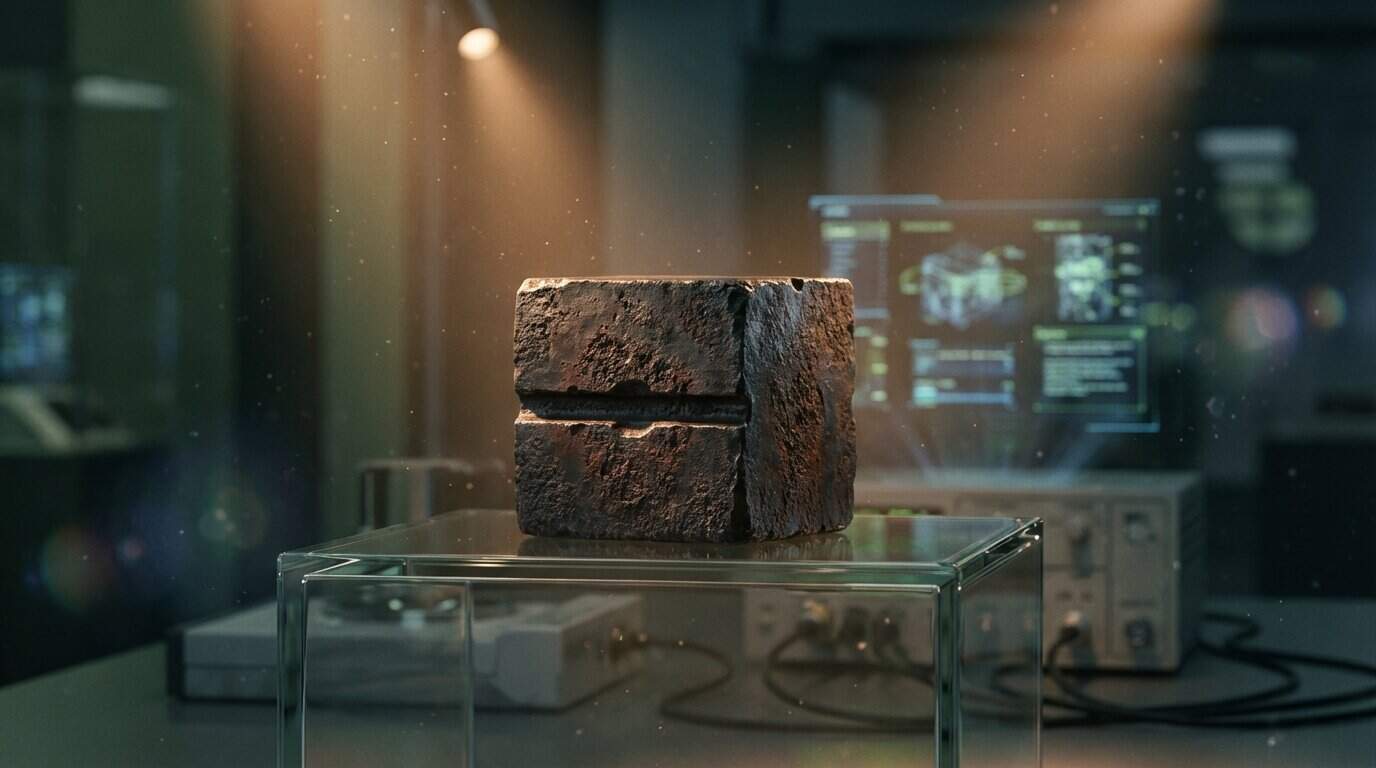
Today, the Salzburg Cube is housed at a local museum in Vöcklabruck, Austria, where it continues to serve as a silent witness to one of the most enduring puzzles in geology. This small iron block remains a powerful bridge between the rigid world of traditional science and the human desire to uncover hidden chapters of history. While early researchers initially categorized it as a meteorite, its unusual shape and chemical makeup have kept it at the center of heated debates for over a century. It represents a rare moment where a physical object challenges our understanding of deep time, forcing us to wonder how a processed-looking metal could end up inside a coal bed millions of years old.
The mystery of the Wolfsegg Iron persists because it sits at the intersection of documented history and the unexplained. Although modern scientific analysis has suggested the object might be cast iron used as ballast in mining machinery, the lack of a definitive match keeps the door open for more exotic theories. This anomaly encourages a unique brand of open-minded skepticism, inviting us to look closer at the ancient metal orbs and artifacts that do not fit neatly into our standard timelines. By maintaining its place in the public eye, the cube reminds us that even in an age of advanced technology, there are still treasures from the earth that refuse to give up all their secrets.
How do you feel about objects like the Salzburg Cube that seem to defy their geological surroundings? Do you believe this iron block is a simple piece of forgotten industrial history, or could it be evidence of a technology that predates our records? Join the conversation below and share your thoughts on whether modern science has truly solved this ancient puzzle.
From Ancient Artifact to Industrial Tool
The journey of the Wolfsegg Iron takes us from a dusty foundry in 1885 to the high-tech laboratories of modern science. What began as a shocking discovery inside a block of ancient coal eventually faced the rigorous scrutiny of chemical testing and microscopic analysis. While early theories leaned heavily toward a celestial origin or even a prehistoric tool, researchers eventually identified the object as a piece of cast iron likely used in mining machinery. This transition from a supernatural anomaly to a man-made relic shows how science can peel back the layers of a mystery to find a grounded explanation. Even so, the story of the Salzburg Cube remains a fascinating example of how easily our imaginations are captured by objects that seem to defy the timeline of history.
Despite the logical conclusions reached by experts, the Wolfsegg Iron still serves as a powerful reminder of the anomalies that hide within deep time. It invites us to consider how many other objects are waiting to be found that might challenge our current understanding of the past. Much like the debate over an ancient vase or tool, even when a specific mystery is solved, the initial sense of wonder it creates helps drive the human desire for discovery and truth. Science provides the answers we often seek, but the thrill of the unknown is what keeps the conversation alive across generations. The cube may no longer be a total enigma, but its legacy as an out-of-place artifact continues to spark debate among those who believe history still holds many secrets.
Do you believe that every strange find like the Wolfsegg Iron can eventually be explained by science, or are there some anomalies that will always remain beyond our reach? Perhaps you think some discoveries are dismissed too quickly as mundane objects simply because they do not fit the traditional historical narrative. We invite you to share your thoughts on whether these mysteries represent genuine gaps in our knowledge or just clever tricks of time and chemistry. Whether it is a piece of iron in coal or a strange carving in stone, every anomaly tells a story that deserves to be heard. Much like the debate surrounding ancient technology or natural wonder, these finds force us to question the origins of everything we pull from the earth. Join the discussion below and let us know which side of the mystery you lean toward. This debate is similar to the questions surrounding the Baghdad Battery, where researchers must decide if they are looking at a revolutionary invention or a simple household item.
Frequently Asked Questions
1. What exactly is the Wolfsegg Iron?
The Wolfsegg Iron, also known as the Salzburg Cube, is a small and heavy metallic object found inside a block of ancient coal. It measures about 67 by 67 by 47 millimeters and features strange incisions and a deep groove around its center. This peculiar shape gives it the appearance of a manufactured tool or a deliberate creation rather than a natural rock.
2. How was this mysterious object first discovered?
A workman named Reidl discovered the object in 1885 while working at an iron foundry in Austria. He was breaking apart a large piece of lignite coal from the Wolfsegg mine when the metallic block fell out from the center. Because the coal was millions of years old, the discovery immediately sparked questions about how a metal object could be trapped inside such ancient material.
3. Why is the age of the coal so significant to researchers?
The coal that housed the artifact is estimated to be approximately 20 million years old, which predates human history by a massive margin. If the object was truly embedded in the coal as it formed, it would suggest that someone or something was manufacturing metal long before humans walked the Earth. This creates a fascinating puzzle that challenges our standard timeline of technological development.
4. Does the Salzburg Cube have any unusual physical features?
The object is remarkably geometric and weighs about 785 grams, which is quite heavy for its small size. It possesses deep, intentional-looking grooves and a weathered surface that many believe could not have been formed by natural erosion. These specific details lead many to categorize it as an out of place artifact that defies easy explanation.
5. Could the Wolfsegg Iron be of extraterrestrial origin?
Many enthusiasts and researchers have explored the theory that the cube is a piece of ancient space technology or a meteorite that was reshaped. Its presence in prehistoric coal layers makes it a popular piece of evidence for those who believe advanced visitors might have left traces behind millions of years ago. While science looks for natural answers, the possibility of a cosmic origin remains a captivating part of the mystery.
6. Is it possible the object is just a natural mineral formation?
Some scientists suggest the object might be a piece of fossilized cast iron or a natural pyrite formation that happens to look like a cube. However, the distinct middle groove and the precise measurements continue to fuel skepticism toward a purely natural explanation. The debate remains open between those who see a geological fluke and those who see a manufactured relic.