
The Mystery of the Lake Tianchi Monster Sightings
High atop the volcanic peaks of Baekdu Mountain, a deep blue crater lake hides a secret that has baffled locals for over a century. Known as Heaven Lake, this freezing body of water straddling the China, North Korea border is the site of numerous tianchi monster sightings that defy scientific explanation. While some dismiss these accounts as mere ripples or floating debris, the consistent descriptions of massive, long necked creatures continue to draw curious explorers to this remote summit.
The mystery began in 1903 when a strange, buffalo like beast reportedly emerged from the depths to attack a group of travelers. Decades later, more than one hundred witnesses watched in awe as two unidentified giants chased each other through the crystal clear water. Given the lake’s extreme depth and volcanic history, the survival of such large animals seems impossible, yet the stories from those who have stood on its shores suggest something ancient remains hidden beneath the surface.
Key Takeaways
- The Lake Tianchi mystery is supported by over a century of consistent eyewitness accounts, ranging from a violent 1903 encounter to mass sightings by over one hundred people in 1962.
- Modern evidence, including a 20-minute video captured in 2007, suggests a social population of up to twenty creatures that move in synchronized formations rather than acting as solitary predators.
- Physical descriptions of the creatures consistently highlight unique mammalian and reptilian traits, such as long necks, smooth grey skin, and distinctive white rings at the base of their necks.
- The survival of such large animals remains a biological enigma due to the lake’s high-altitude volcanic environment and limited food chain, leading to theories about hidden geothermal vents or underwater tunnels.
A Century of Violent Encounters and Early Reports
The legend of the Lake Tianchi monster took a violent 1903 encounter when a group of travelers reported a terrifying encounter at the water’s edge. According to historical records from the Qing Dynasty era, a massive creature resembling a giant buffalo emerged from the depths to launch a direct attack on three people. The witnesses described the beast as incredibly powerful and aggressive, forcing them to defend themselves with immediate force. In a desperate attempt to survive the ordeal, the travelers shot the creature six times with their rifles. Despite the barrage of gunfire, the animal did not collapse but instead retreated back into the cold, deep waters of the volcanic lake.
These early reports established a foundation of mystery that predates the global fame of many Western lake monsters. While the harsh conditions of the high altitude crater often lead skeptics to dismiss the possibility of life, the consistency of these early accounts suggests a tangible presence in the water. Local historians have preserved these stories as the first documented evidence of a predator inhabiting the 384 meter deep basin. The 1903 incident remains a cornerstone of the legend because it involved physical interaction rather than a distant sighting. It paints a picture of a creature that is not just a passive swimmer but a territorial inhabitant of the mountain.
Decades later, the narrative shifted from isolated attacks to mass sightings that captured the attention of the entire region. Between August 21 and 23 in 1962, over one hundred people reported seeing two strange creatures chasing each other through the waves. One witness used a telescope to get a clearer view, describing a long neck and a head that appeared eerily human from a distance. These observers noted a distinct white ring at the base of the neck, a detail that has since become a recurring feature in modern reports. This transition from the violent 1903 encounter to the synchronized movements seen in the 1960s suggests a breeding population may exist within the isolated lake.
Massive Sightings and the 1962 Telescope Discovery
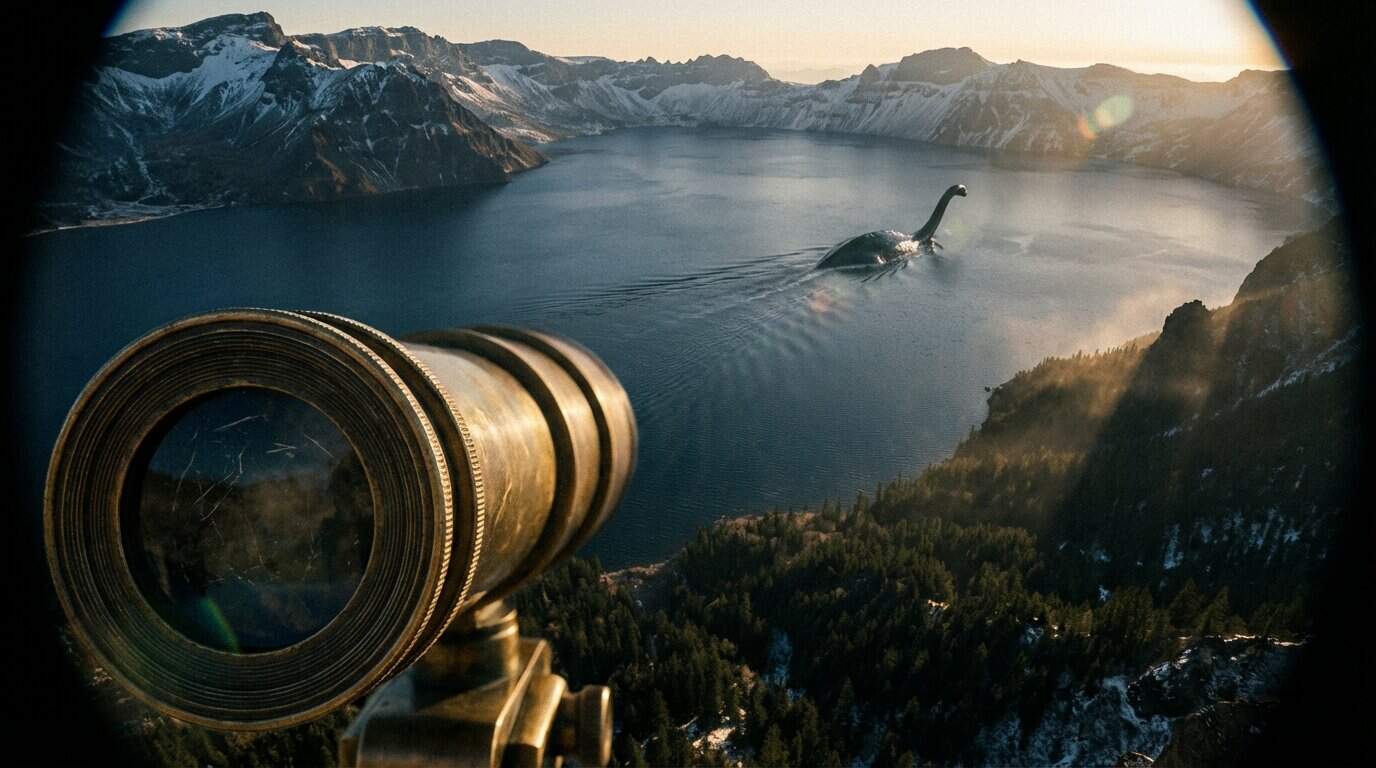
While many lake legends rely on blurry, distant shapes, the events of August 1962 transformed the Lake Tianchi monster from a local myth into a massive public phenomenon. Over a three day window, more than one hundred people gathered along the volcanic shores of Heaven Lake to witness two massive creatures chasing each other through the freezing waves. One observer used a telescope to get a closer look, providing a level of detail rarely captured in cryptid sightings. This witness described a creature with a human like head and a long, graceful neck reaching about 1.5 meters in height. Unlike the typical scaly hide of a sea serpent, these animals possessed smooth, grey skin and a distinctive white ring at the base of their necks.
This specific discovery challenged the usual tropes of lake monster lore by introducing physical traits that seemed almost mammalian. Observers noted that the creatures moved with incredible speed and agility, appearing more like playful predators than prehistoric relics. The sheer volume of witnesses during this period made it difficult for local authorities to dismiss the event as a simple trick of the light or floating logs. Because the lake sits at such a high altitude with extreme temperatures, the survival of such large animals remains a biological puzzle. Even though the volcanic history of the mountain suggests a harsh environment, the consistency of these 1962 reports keeps the mystery alive for researchers today.
The telescope sightings remain a cornerstone of the Tianchi legend because they offer a clear alternative to the famous Loch Ness monster. Instead of a dinosaur like appearance, the Tianchi creatures are often described with features that feel strangely familiar yet completely out of place in a crater lake. These accounts suggest a population of animals that have adapted to the deep, cold waters of the border between China and North Korea. Scientists continue to debate whether a sustainable food chain exists at such depths to support these massive residents. Do you think a group of large animals could remain hidden in such a remote volcanic lake, or is there a more natural explanation for what those hundred witnesses saw?
Modern Era Video Evidence and Group Dynamics
The mystery of Heaven Lake took a dramatic turn between 2005 and 2007 when sightings shifted from solitary encounters to massive group displays. During this period, witnesses reported seeing as many as twenty creatures swimming in synchronized formations that resembled a fleet of yachts. This collective behavior challenged previous theories about lone predators and suggested a thriving, social population living deep within the volcanic crater. Local observers noted that the animals seemed to move with a shared purpose, cutting through the water at impressive speeds. These accounts transformed the legend from a rare curiosity into a recurring phenomenon that demanded serious investigation.
A pivotal moment in modern cryptid history occurred in 2007 when Zhuo Yongsheng, a reporter for a local television station, captured a 20-minute video captured in 2007 of the phenomenon. His recording displayed six unidentified objects splashing in the distance, moving in circular patterns for nearly an hour before vanishing beneath the surface. Zhuo described the creatures as having fins or wings that were longer than their bodies, a detail that puzzled marine biologists and enthusiasts alike. This footage remains some of the most compelling evidence to date because it was filmed by a professional observer using high quality equipment. The video sparked a fresh wave of international interest, proving that the secrets of the deep lake were far from being solved.
Recent photographic evidence has added another layer of intrigue, with some images depicting animals with distinct, deer like heads and elongated necks. These modern snapshots often show the creatures breaking the surface of the mirror like water, creating ripples that suggest significant mass and power. While skeptics point to the lake’s recent volcanic history as a reason to doubt large life forms, the sheer volume of consistent reports keeps the debate alive. The mountain’s high altitude and harsh conditions make these sightings even more remarkable to those following the mystery. Do you believe these synchronized movements suggest a family of unknown animals, or could there be a natural geological explanation for what the cameras caught?
Volcanic Science Versus the Unexplained Ripples
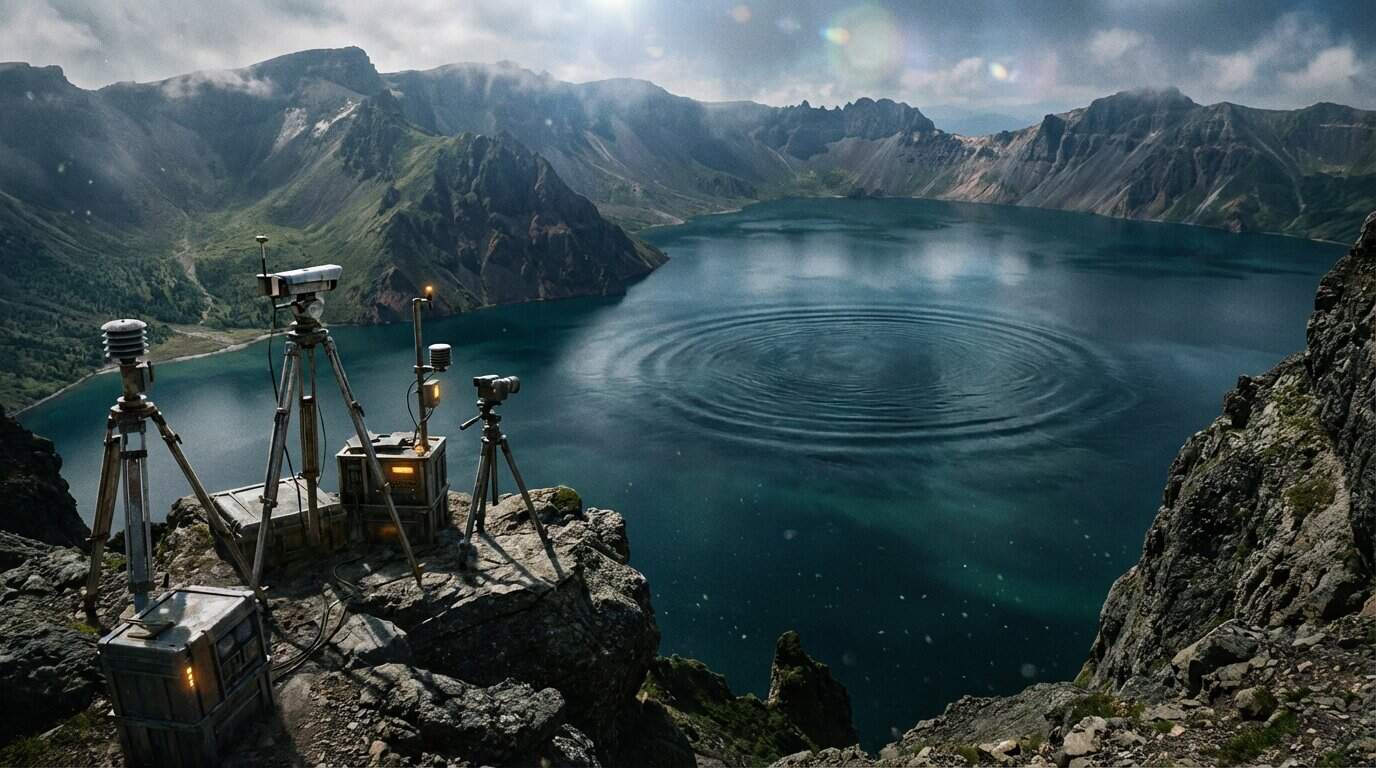
Scientific skepticism regarding the Lake Tianchi monster often begins with the lake’s volatile history and freezing environment. Located at an elevation of over 2,000 meters, this volcanic crater lake was shaped by a massive eruption only 300 years ago. Many biologists argue this timeline is too short for a large species to evolve or survive. The water remains ice cold for most of the year, lacking the abundant plant life and fish populations typically required to sustain a massive predator. Despite these harsh conditions, the frequent reports of large, dark shapes moving against the current continue to baffle researchers. Some experts suggest that these sightings might be simple volcanic gases rising to the surface or floating pumice stones, yet these theories rarely satisfy those who have seen the creature’s distinct, powerful movements.
Witnesses often describe physical evidence that is difficult to dismiss as mere geological activity or optical illusions. Since the famous 1962 sighting where over one hundred people observed two creatures through telescopes, reports have consistently mentioned large circular ripples and finned silhouettes breaking the surface. These observers describe smooth, dark skin and long necks that look remarkably like aquatic reptiles from a prehistoric era. While skeptics point to the lack of a food chain, proponents of the mystery suggest the lake might be deeper or more complex than current maps show. They believe there could be hidden underwater vents or tunnels providing warmth and a unique ecosystem for a species unknown to modern science.
The persistent nature of these sightings transforms Heaven Lake into a living laboratory where folklore meets modern investigation. Even without a captured specimen, the photographic evidence and consistent descriptions from diverse groups of people create a compelling case for further study. Much like the legend of the Bunyip, it is possible that the monster is not a single giant beast, but a small, elusive population that has adapted to the high altitude and volcanic minerals of the region. This intersection of harsh volcanic reality and unexplained biology keeps the legend alive for a new generation of explorers. Whether the ripples are caused by shifting tectonic plates or a breathing animal, the lake remains one of the most enigmatic bodies of water in Asia.
The Enduring Mystery of China’s Alpine Giant
The legend of the Lake Tianchi monster proves that the world still holds deep secrets far beyond the well trodden paths of more famous cryptids. While the harsh conditions of this high altitude volcanic crater might seem inhospitable, over a century of sightings suggests something remarkable may reside in its depths. From the early reports of a buffalo like creature in 1903 to the massive group sighting in 1962, the consistency of these accounts is difficult to ignore. These stories blend ancient regional folklore with modern observations, creating a bridge between the past and the present. Each new photograph or testimony adds another layer to the mystery of what could survive in such a unique environment.
Science often points to the lake’s recent volcanic history as a reason to be skeptical about large undiscovered species. However, the sheer volume of witnesses and the physical descriptions of long necked creatures keep the conversation alive among enthusiasts and researchers alike. Whether these sightings are misidentified natural phenomena or a truly unknown biological marvel, they remind us to remain curious about the natural world. Maintaining a balance between critical thought and open minded wonder allows us to appreciate the beauty of the unexplained. The cold waters of Heaven Lake continue to guard their secrets, inviting anyone with a keen eye to look closer at the surface.
What do you think is hiding beneath the waves of this border straddling mountain lake? Could an ancient lineage of animals have survived the volcanic transitions of the last few centuries, or is there a more conventional explanation for the white ringed creatures seen by hundreds? Perhaps the true answer lies in a combination of environmental factors and something yet to be classified by modern biology. We encourage you to share your theories and join the discussion about this fascinating Asian mystery. Every perspective helps piece together the puzzle of the Tianchi monster and its place in our world’s enduring folklore.
Frequently Asked Questions
1. What exactly is the Tianchi Lake monster?
The Tianchi monster is a mysterious creature reported to live in the deep waters of Heaven Lake on Baekdu Mountain. Witnesses often describe it as a massive, long necked beast that resembles ancient animals or giant buffalo like creatures. These sightings have persisted for over a century, blending local folklore with modern day eyewitness accounts.
2. When was the first recorded sighting of the creature?
The first major documented encounter occurred in 1903 during the Qing Dynasty era. A group of travelers reported being attacked by a large, aggressive animal that emerged from the water. Despite being shot multiple times by the travelers, the creature managed to retreat back into the depths of the lake and disappear.
3. Is it possible for large animals to survive in such a cold lake?
Heaven Lake is a freezing volcanic crater, which makes the survival of large creatures a scientific puzzle. While the harsh conditions and high altitude suggest a lack of food, some believe the lake hides geothermal vents or undiscovered underwater tunnels. These hidden features could potentially provide the warmth and resources needed for a hidden species to endure.
4. Have there been any sightings involving more than one monster?
Yes, one of the most famous modern reports involved over one hundred witnesses who saw two giant creatures at once. These unidentified animals were seen chasing each other through the crystal clear water, suggesting a possible breeding population. This mass sighting remains one of the most compelling pieces of evidence for those who believe the lake holds a secret.
5. What do skeptics say about the Tianchi monster sightings?
Skeptics often point to natural explanations like floating volcanic rocks, large ripples caused by wind, or simple optical illusions. However, the consistent descriptions of a living, breathing animal with a long neck make it difficult to dismiss every report as a mistake. Many wonder are chupacabra sightings real or if these Asian reports are similarly based on misidentified wildlife. The mystery continues because the lake is so deep and remote that a full scientific survey is nearly impossible.
6. Where is the best place to see the monster?
Most sightings occur from the high volcanic peaks of Baekdu Mountain, which straddles the border of China and North Korea. Explorers typically gather at the edge of the crater to watch the surface of Heaven Lake for unusual movement. The remote location and stunning blue water provide a perfect backdrop for those hoping to catch a glimpse of the unexplained.