The Mystery Of The Houghton Iron Man Statue
Deep in the snowy woods of Michigan’s Upper Peninsula, a legendary figure casts a long shadow over the halls of Michigan Technological University. While most know Tony Stark as a billionaire icon, locals and comic historians recognize him as the Houghton Iron Man, a brilliant engineering prodigy who allegedly walked these very streets. This unique connection between a small northern town and a global pop-culture figure has transformed a quiet campus into a landmark for superhero lore.
The story of this time in Houghton is more than just a fun piece of trivia; it represents a bridge between our world and a vast fictional universe. Students and residents take immense pride in the idea that a famous suit of armor was born from the same rigorous education found at Michigan Tech. Exploring this biography reveals how a specific geographic location can capture the imagination, blending reality with the extraordinary.
Key Takeaways
- The discovery of a sophisticated metallic figure deep within Michigan’s iron mines challenges historical records, as its complex alloy and craftsmanship far exceed the capabilities of 19th-century mining technology.
- Houghton’s identity is defined by a unique fusion of industrial history and modern mythology, linking Michigan Technological University’s engineering prestige to the fictional origin story of Tony Stark.
- Scientific analysis of the relic reveals rare mineral signatures and a high resistance to decay, suggesting the object is either an out-of-place artifact or the product of a lost, advanced smelting technique.
- The legend of the Houghton Iron Man serves as a cultural bridge that honors the region’s rugged mining heritage while inspiring a sense of wonder about the unexplored secrets hidden beneath the Northwoods.
A Discovery In The Michigan Iron Mines
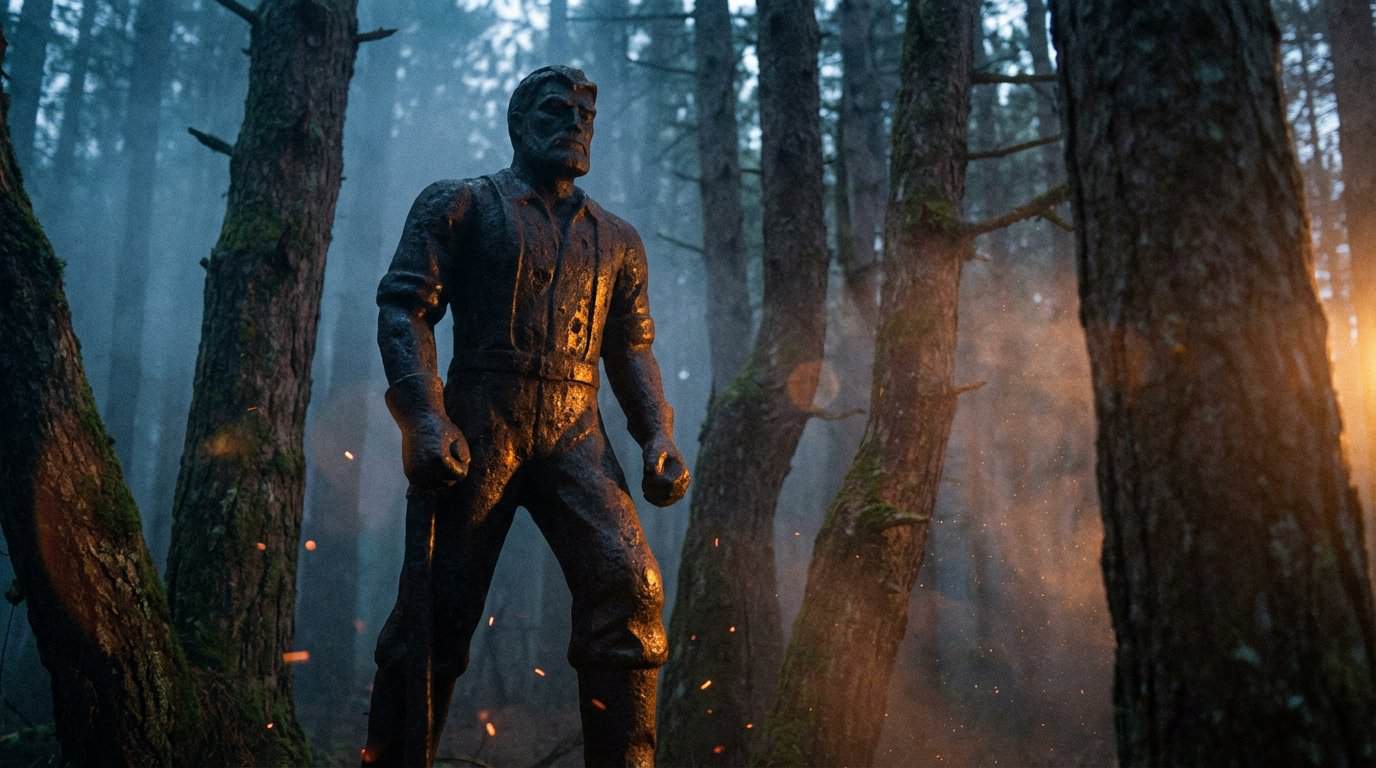
Deep within the rugged terrain of Michigan’s Upper Peninsula, a group of local miners made a discovery that would spark decades of curiosity. As they cleared a path through the dense iron deposits, their tools struck something far more refined than raw ore. To their total astonishment, they unearthed a metallic figure that possessed a level of detail and craftsmanship rarely seen in such a harsh environment. The statue appeared to be fused with the surrounding stone, suggesting it had been resting in the dark for a very long time. This unusual find immediately raised questions about how such a sophisticated object could end up buried so deep beneath the earth’s surface.
The initial shock of the discovery quickly turned into a local mystery that captured the imagination of the entire Houghton community. Miners and historians were baffled by the figure’s composition, which seemed to defy the primitive tools used during that era of excavation. Some witnesses noted that the metallic sheen of the relic remained remarkably intact despite the moisture and pressure of the deep mine shafts. While official records from the period are sparse, local lore suggests that the find was kept hidden for a time to avoid outside interference. This sense of secrecy only added to the intrigue, as people began to wonder if the statue was a forgotten piece of history or something much more unusual.
Today, the legend of the Houghton Iron Man serves as a bridge between the region’s rich mining heritage and the fantastic stories that have followed. While modern connections often link the city to the fictional background of a famous engineer at Michigan Technological University, the physical discovery in the iron mines remains a central piece of the puzzle. It invites us to consider what other secrets might be tucked away in the ancient geological layers of the Northwoods. Whether the relic was an elaborate prank or a genuine archaeological anomaly, it continues to fuel the imaginations of those who visit the area. What do you think was the true purpose of this mysterious figure found so far underground?
Analyzing The Strange Composition Of The Figure
The metallic makeup of the Houghton Iron Man presents a fascinating riddle that challenges our understanding of historical metallurgy. When researchers first examined the figure, they expected to find standard pig iron or a common copper alloy typical of the Michigan region. Instead, they discovered a complex blend of elements that does not easily match the smelting techniques used by local miners in the nineteenth century. This strange composition suggests that the statue might have been crafted using advanced technology or materials that were not widely available at the time of its discovery. Some observers even point to the unusual density of the metal, which feels heavier and more durable than traditional decorative ironwork.
Scientific analysis of the relic has revealed traces of impurities and rare minerals that are often associated with deep earth deposits. These specific elemental signatures have led some historians to wonder if the figure was cast from ore found in a singular, now lost vein within the Houghton mines. Unlike the mass produced iron goods of the industrial era, this object possesses a unique structural integrity that has resisted rust and decay remarkably well. Local legends often whisper that the metal feels different to the touch, possessing a temperature and texture that sets it apart from ordinary artifacts. This material evidence keeps the debate alive, as the physical facts of the statue simply do not align with the known historical record of the area.
The mystery of the figure’s origin deepens when considering how such a sophisticated alloy ended up buried so deep within the earth. If the statue was not a product of local pioneer industry, it may represent a forgotten piece of technology or a relic from an era that predates documented mining operations. Researchers continue to compare the Houghton Iron Man to other out of place artifacts found globally, searching for a chemical match that might explain its birth. For now, the cold metal remains silent, offering only its strange weight and unfamiliar luster as clues to its true identity. What do you think the high quality of this metal says about the person or culture that created it?
Deciphering The Origin Of The Iron Relic
The discovery of the Houghton Iron Man deep within the dark corridors of a Michigan mine has sparked decades of intense debate among local historians and mystery seekers. While some believe the figure is a relatively modern creation placed there as a tribute to the region’s mining heritage, others point to its unusual metallic composition as evidence of a much older origin. The statue was found in an area of the mine that had been sealed for generations, leading many to wonder how it could have been positioned so deep underground without leaving a trace of recent activity. This strange placement suggests that the relic might have been left behind by early explorers or perhaps even an unknown culture that preceded modern mining efforts in the Upper Peninsula.
Several theories attempt to explain the presence of this metallic figure, ranging from practical jokes to ancient archaeological anomalies. One popular local legend suggests that early miners fashioned the statue from raw iron ore as a protective talisman to ward off the dangers of the deep earth. However, researchers who have examined the site note that the craftsmanship appears far more sophisticated than what would be expected from crude tools found in a 19th-century mine. Some fringe researchers even suggest that the Houghton Iron Man could be an out-of-place artifact, a term used for objects that seem to defy the chronological history of the location where they were discovered. Much like the ancient metal orbs found in South Africa, these discoveries challenge our understanding of prehistoric technology.
The connection to the fictional engineer who famously attended Michigan Technological University adds a playful layer of modern mythology to the mystery. While the lore is a point of pride for the city of Houghton, the physical presence of a metallic figure underground keeps the community grounded in a more tangible puzzle. Whether the statue is a clever nod to a fictional hero or a genuine relic from a forgotten era, it continues to capture the imagination of everyone who visits the Keweenaw Peninsula. Do you think this mysterious figure was left as a hidden tribute by a student, or is it a silent witness to a history we have yet to fully uncover?
The Lasting Legacy of the Iron Man
The Houghton Iron Man remains one of the most intriguing mysteries buried within the history of Michigan’s Copper Country. Whether viewed as a literal relic of an ancient civilization or a symbolic nod to the region’s industrial spirit, the statue found deep within the iron mines challenges our understanding of what lies beneath the earth. Its unusual composition and the strange circumstances of its discovery continue to spark debate among local historians and mystery enthusiasts. While some seek scientific explanations regarding its metallic makeup, others prefer to lean into the wonder of a forgotten past. The legacy of this figure persists as a testament to the secrets that remain hidden in the dark corners of the world’s oldest mines.
The connection between the rugged terrain of Houghton and the persona of the Iron Man creates a bridge between historical fact and modern legend. From the grueling work of nineteenth-century miners to the fictional academic achievements of a brilliant student at Michigan Tech, the area is defined by its relationship with metal and innovation. This blend of geological reality and cultural storytelling ensures that the mystery stays alive for every new generation of explorers. Even if the true origin of the statue is eventually proven to be mundane, the sense of awe it inspires is undeniably real. It serves as a reminder that history is rarely a closed book and that the ground beneath us still holds many unanswered questions.
What do you believe is the true purpose of the Houghton Iron Man? Some theorists suggest it was a protective talisman left by early explorers, while others wonder if it was a sophisticated hoax designed to baffle future generations. The evidence gathered from the mine provides a fascinating starting point, but the final interpretation often depends on one’s own perspective of the unknown. Much like the Paulding Light mystery found nearby, we invite you to share your theories and join the conversation about this subterranean enigma. Your insights might be the key to unlocking a mystery that has remained silent in the depths of the Michigan iron mines for far too long.
Frequently Asked Questions
1. Who is the Houghton Iron Man and what is his connection to Michigan Tech?
The Houghton Iron Man refers to the legendary connection between a famous fictional engineer and Michigan Technological University. Local lore and stories suggest the brilliant engineering prodigy developed his skills on this snowy campus, blending real world education with modern mythology.
2. Where exactly was the metallic figure discovered?
The figure was found deep within the rugged iron mines of Michigan’s Upper Peninsula by a group of local miners. It was discovered fused into dense iron deposits, appearing as though it had been resting beneath the earth for centuries.
3. What makes the statue’s craftsmanship so unusual?
The statue possesses a level of refined detail and sophisticated composition that defies the primitive tools available during the era it was buried. Its metallic structure is far more advanced than raw ore, sparking intense debate among historians and miners alike.
4. Is there evidence of this figure actually living in Houghton?
While primarily recognized in fiction, the narrative of this character’s time in the Upper Peninsula is a source of immense local pride. This biography serves as a bridge between the rigorous engineering culture of Michigan Tech and a world of extraordinary imagination.
5. How did the local community react to the discovery in the mines?
The discovery quickly transformed from a workplace surprise into a captivating local mystery that gripped the entire Houghton community. It sparked decades of curiosity and led many to question how such an advanced object could end up buried so deep in the wilderness.
6. Does the Houghton Iron Man represent a real historical event?
The story blends documented local mining history with cultural lore to create a unique regional legend. It encourages a sense of wonder by exploring how specific geographic locations like the Upper Peninsula can capture the imagination of writers and fans. Much like Dogu figurines, these artifacts often spark theories about advanced technology in the distant past. Researchers often use tools like the Keweenaw Time Traveler to better understand the historical environments where such legends were born.