
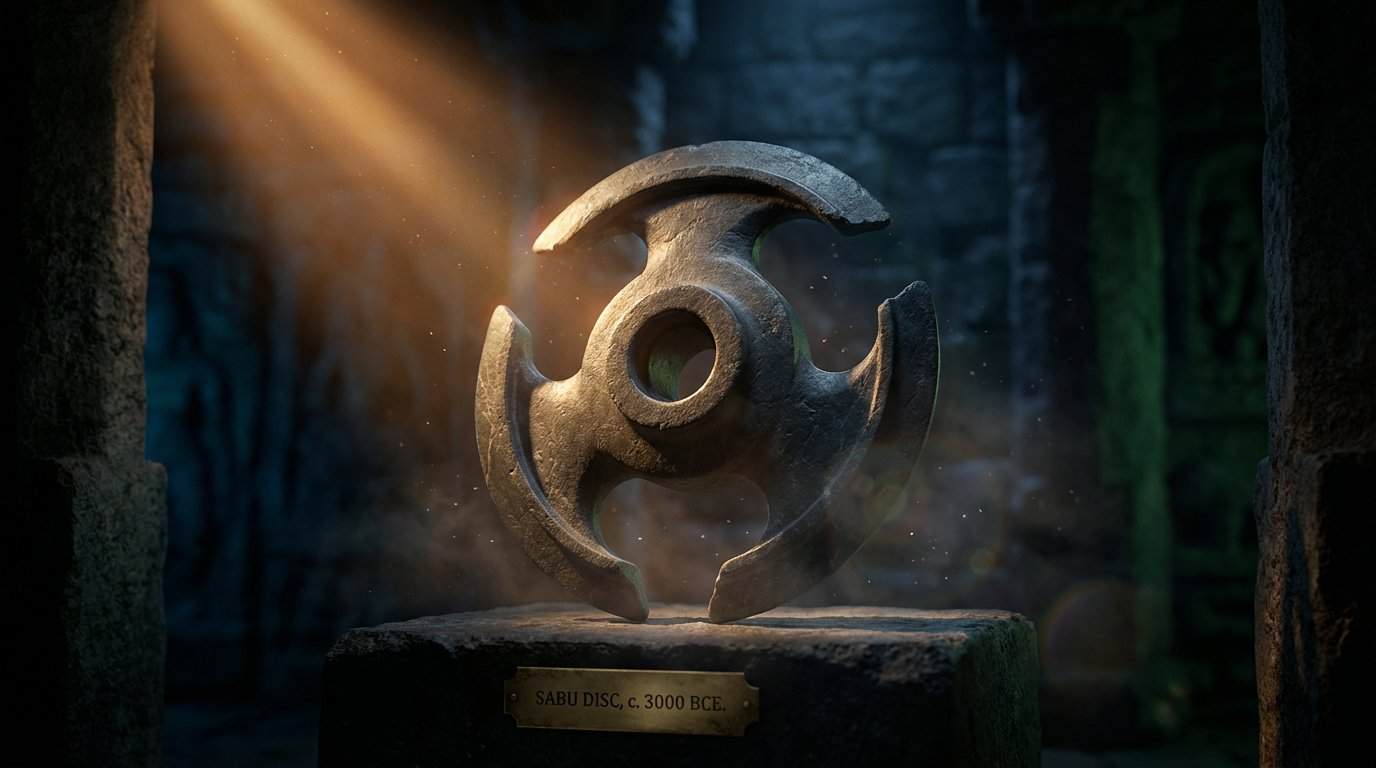
The Mysterious Sabu Disc Purpose: Ancient Vase or Advanced Technology?
In 1936, archaeologist Walter Bryan Emery uncovered a strange object buried deep within the tomb of Prince Sabu in Saqqara, Egypt. Unlike the typical pottery or ivory found nearby, this circular stone artifact looked remarkably like a modern steering wheel or a piece of advanced machinery. For decades, historians and engineers have argued over the sabu disc purpose, trying to understand how such a complex shape was carved from fragile stone over 5,000 years ago. Its sleek design seems completely out of place for the First Dynasty, sparking endless debates about lost ancient technology.
The artifact is made from metasiltstone, a material so delicate that carving its thin, curving lobes without fracturing the rock seems nearly impossible with primitive tools. While mainstream researchers suggest it might be a ceremonial vase or an incense holder, these explanations often fail to account for its precise, mechanical appearance. The object sits in the Cairo Museum today as a silent puzzle, challenging the accepted timeline of human innovation. It invites the world to wonder if the ancients possessed engineering skills that have since vanished into history.
Key Takeaways
- Uncovered in the tomb of Prince Sabu, this 5,000-year-old metasiltstone artifact features a complex, aerodynamic design that strikingly resembles modern mechanical parts like flywheels or propellers.
- The disc’s creation from brittle, flaky rock using only the primitive copper and stone tools of the First Dynasty represents a significant anomaly in the accepted timeline of manufacturing capabilities.
- While mainstream historians classify the object as a ceremonial vase or incense burner, the lack of chemical residue and its unsuited shape for holding liquids fuel ongoing debates about lost ancient technology.
Discovery Within Prince Sabu’s Tomb
In 1936, the renowned Egyptologist Walter Bryan Emery uncovered a baffling anomaly while excavating at the Saqqara necropolis near Cairo. He was exploring Tomb S3111, the final resting place of Prince Sabu, a high-ranking official and son of the Pharaoh Anedjib. As Emery sifted through the sands of the First Dynasty mastaba, he cataloged typical items meant to serve the Prince in the afterlife. The collection included expected grave goods like stone vessels, flint knives, and ivory boxes. Yet, lying broken in fragments near the Prince’s remains was a singular object that defied immediate explanation and continues to puzzle researchers today.
Once restored at the Cairo Museum, the artifact revealed itself as a circular plate measuring about twenty-four inches in diameter with a distinct central hub. Carved from metasiltstone, a fragile and flaky type of schist, the disc features three thin lobes curving inward toward the center. This material is notoriously difficult to work with because it cracks easily, making the delicate craftsmanship seem nearly impossible for the time period. The shape bears a striking resemblance to a modern flywheel or a chemical mixing component rather than a decorative vase or bowl. Its intricate design suggests a level of technological sophistication that contradicts the copper chisels and stone hammers known to be available in 3000 BCE.
Standard archaeological interpretations often label this item as a ceremonial incense burner or a decorative vase, but these explanations fail to account for its aerodynamic form. The object lacks the typical basin shape required to hold liquids, and its complex curvature implies a mechanical function that remains unknown. While the surrounding flint tools and pottery fit perfectly within the historical context of ancient Egypt, this sleek schist wheel stands out as a technological outlier. It appears to be a functional component of a larger machine that has disappeared over time. This stark contrast between the primitive tools found in the tomb and the precise engineering of the disc fuels the enduring debate about its true purpose.
Theories on Ritual and Ceremonial Use
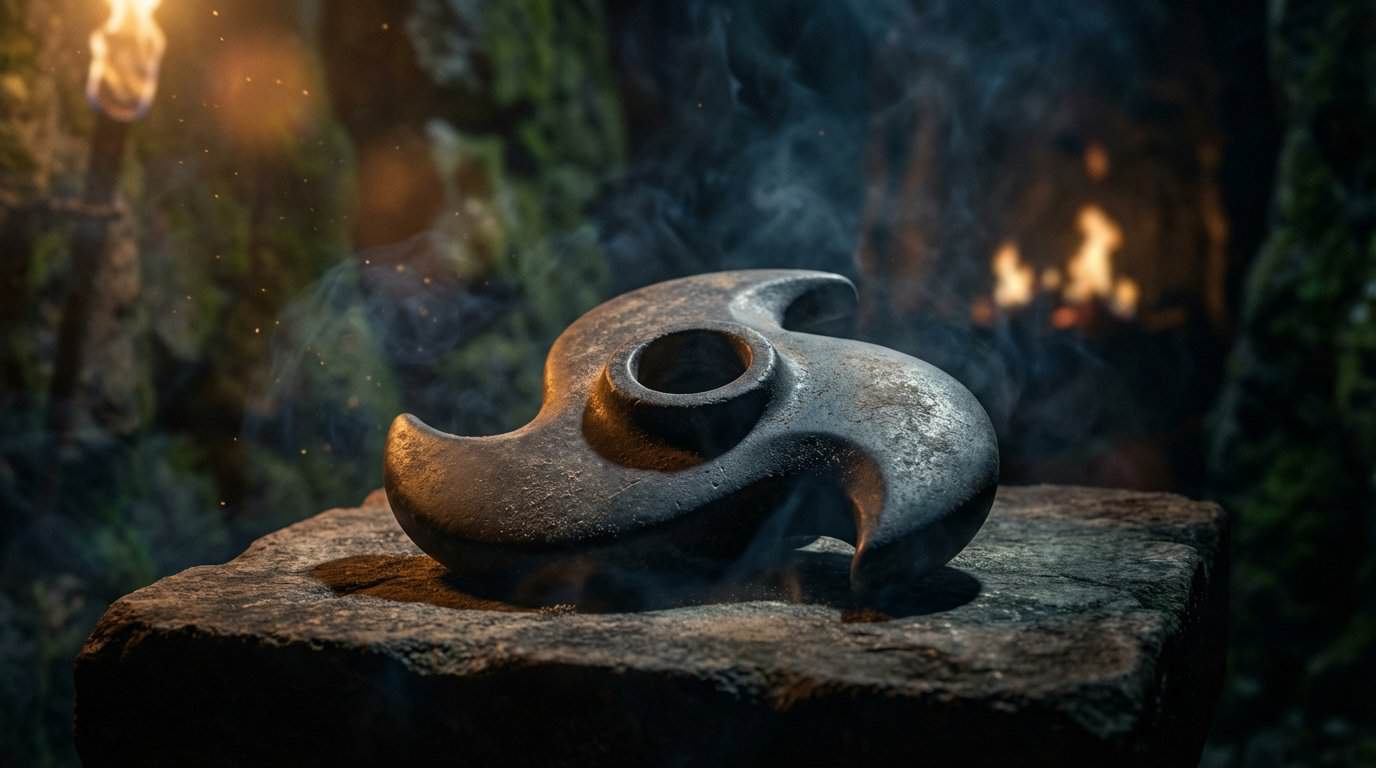
The most common explanation offered by historians suggests the Sabu Disc was designed for holding incense or oil during religious ceremonies. Because the object has three distinct curved lobes, some researchers believe it could have functioned as a tri-lobed oil lamp to light a sacred space. In this scenario, the central hole would likely fit onto a wooden pole or stand to elevate the light source above the ground. However, critics often point out that no soot marks or chemical residues were found on the stone to support this idea. This lack of physical evidence leaves the door open for other interpretations regarding its true function.
Another prevailing theory proposes that the artifact was purely ornamental and meant to accompany Prince Sabu into the afterlife. Walter Bryan Emery, who discovered the object in 1936, noted that the metasiltstone material is incredibly fragile and prone to flaking. Using such a brittle stone for a mechanical part or a heavy-duty tool would likely result in immediate shattering under stress. Therefore, scholars argue that the complex carving demonstrated the craftsman’s extreme skill rather than served a practical mechanical function. This perspective views the disc as a sophisticated piece of funerary art intended to impress the gods or denote high status.
Despite these practical explanations, the specific design continues to puzzle both engineers and casual observers. The inward-curving lobes create an aerodynamic shape that looks much like modern propellers or chemical mixing impellers. While archaeologists maintain that the Egyptians lacked the technology for complex machinery, the visual similarity is hard to ignore. If it was merely a vase or a lamp, the artisan went to extreme lengths to carve difficult curves that serve no obvious purpose. This undeniable precision is what keeps the Sabu Disc firmly planted in the category of unexplained historical finds.
The Ancient Propeller and Machinery Hypothesis
When visitors see the Sabu Disc in the Cairo Museum, they often remark that it looks incredibly modern compared to the simple clay pots surrounding it. The artifact features three curved lobes that fold inward toward a central hollow hub, creating a shape that strongly resembles a modern propeller or a fan blade. This aerodynamic design has led many alternative history enthusiasts to suggest that the object served a mechanical function rather than a decorative one. Engineers who have analyzed the shape note that the curvature would be efficient for moving air or water, much like a pump or turbine. It stands out clearly against the primitive tools usually associated with the First Dynasty.
Proponents of the lost technology theory argue that the disc might be a stone replica of a metallic original used in advanced machinery. If the original device were made of metal, the specific design could function perfectly as a flywheel to store rotational energy or as an impeller to mix chemicals. However, the actual artifact discovered in the tomb of Prince Sabu is carved from metasiltstone, a material known for being quite brittle and delicate. This fragility creates a puzzle, as using this specific stone for high-speed rotation would likely cause it to shatter instantly. Despite this, the precision of the carving suggests the maker understood complex geometric principles usually reserved for industrial parts.
This object is frequently cited as a classic example of an out-of-place artifact because it seems to appear out of nowhere in the archaeological record. There are no known predecessors to this design in ancient Egypt, nor are there any similar objects from later periods that show an evolution of the style. Some researchers believe this isolation indicates that the disc is a remnant of a pre-dynastic civilization that possessed higher technological capabilities than historians currently admit. If it was indeed a component of a larger machine, the rest of the mechanism has long since decayed or disappeared into the sands. The Sabu Disc remains a testament to a level of craftsmanship that defies easy explanation by mainstream historians.
Deciphering the Sabu Disc’s True Purpose
The Sabu Disc remains a stubborn puzzle for Egyptologists and engineers alike, defying easy categorization even decades after its discovery in tomb S3111. While mainstream scholars often suggest it served as an elaborate incense burner or a decorative vase, the object’s specific design challenges simple explanations. The delicate metasiltstone material would likely shatter under the stress of mechanical use, yet the aerodynamic curves suggest a function far more complex than a mere ceremonial offering. It sits in the Cairo Museum as a lasting example of design that seems to arrive thousands of years too early. Its existence forces us to question whether we have underestimated the technical knowledge available to the ancients.
This artifact fits perfectly alongside other out-of-place artifacts that challenge the accepted linear timeline of human invention. If the First Dynasty craftsmen possessed the ability to shape brittle rock into such precise and thin ribbons, one must wonder what other tools they wielded. The visual similarity to modern flywheels or propellers keeps the debate alive among alternative historians who refuse to see it as just a bowl. Perhaps the true purpose was lost to time, or perhaps this stone object represents a ceremonial copy of a device originally made from metal. Regardless of its use, the craftsmanship displays a mastery of stone that rivals modern machining.
The Sabu Disc serves as a humble reminder that the past is rarely as simple as our textbooks suggest. We are left to decide if this is merely a piece of art or evidence of lost technology that predates the wheel in Egypt. Looking at the intricate lobes folded inward, it is hard not to feel a sense of awe at the skilled hands that carved it. The line between ritual object and functional machine is often blurred when we look back across five thousand years of history. The mystery invites us to keep looking closer at the sands of Saqqara for answers that might still be buried.
Frequently Asked Questions
1. What exactly is the Sabu Disc?
The Sabu Disc is a mysterious circular stone artifact discovered in the tomb of Prince Sabu in Saqqara. Resembling a modern steering wheel or propeller, this object dates back to the First Dynasty of Egypt. Its complex design challenges our understanding of ancient stone carving capabilities and remains a subject of intense debate.
2. Who discovered the artifact and when?
Archaeologist Walter Bryan Emery found this strange object in 1936 while excavating Tomb S3111. He uncovered it while exploring the final resting place of Prince Sabu in the Saqqara necropolis near Cairo. It was found broken in fragments among other grave goods like stone vessels and ivory boxes.
3. What material is the Sabu Disc made from?
The artifact is crafted from metasiltstone, a specific type of sedimentary rock known for being incredibly delicate. Carving such thin, curving lobes from this material without fracturing it seems nearly impossible with primitive copper and stone tools. This choice of material adds to the mystery surrounding how the object was successfully created.
4. What is the mainstream explanation for the Sabu Disc purpose?
Historians and archaeologists generally suggest the object served as a ceremonial vase or an elaborate incense holder. They believe it was likely a decorative item meant to demonstrate high status and craftsmanship during the First Dynasty. However, this theory often fails to account for the precise, mechanical appearance of the artifact.
5. Why do some researchers believe it represents lost technology?
The object looks remarkably like a piece of modern machinery, such as a flywheel or a propeller. Its sleek curves and balance suggest it might have been designed for aerodynamic motion rather than simple decoration. This leads to speculation that the ancients possessed engineering skills that have since vanished into history.
6. How old is the Sabu Disc?
This artifact dates back to approximately 3000 to 2800 BCE, making it over 5,000 years old. It originates from the dawn of Egyptian civilization when metalworking was still in its infancy. The existence of such a complex geometric shape from this era stands as a baffling anomaly in the historical timeline.
7. Where is the Sabu Disc located today?
The restored artifact currently sits in the Cairo Museum in Egypt. It remains on display as a silent puzzle for visitors and researchers who continue to analyze its form. The object invites the world to wonder about the true extent of ancient innovation.