
The Lost Aviation Secrets Of Ancient Vimana Technology
Thousands of years ago, long before the first modern airplane took flight, ancient Sanskrit texts described magnificent flying machines soaring through the clouds. These vessels, known as Vimanas, were said to be incredible metallic palaces capable of traveling between cities and even into the stars. Today, the mystery of ancient vimana technology sits at a fascinating crossroads where sacred religious history meets speculative modern science.
While many historians view these stories as beautiful metaphors, a growing number of researchers wonder if they are actually technical manuals from a lost age. From the wind-powered chariots of the Vedas to the massive, self-moving cities described in the great epics, the details are surprisingly specific. Exploring these legends offers a unique window into a past where the line between divine magic and advanced engineering begins to blur.
Key Takeaways
- Ancient Sanskrit texts like the Vedas and Mahabharata provide highly technical descriptions of Vimanas, suggesting a sophisticated understanding of aerodynamics, metallurgy, and propulsion that predates modern aviation by thousands of years.
- The Vaimanika Shastra and other manuscripts detail advanced mechanical concepts, including mercury vortex engines, solar energy propulsion, and pilot requirements that mirror modern theoretical physics and aerospace engineering.
- The consistent accounts of metallic flying structures across multiple historical texts indicate a shared memory of real aerial phenomena rather than purely mythological or metaphorical storytelling.
- The existence of these celestial chariots challenges the traditional linear timeline of human progress, pointing toward a possible lost era of high achievement where divine legend and advanced engineering were indistinguishable.
Celestial Chariots In The Vedas And Epics
The Sanskrit epics of ancient India describe a world where the sky was not a void, but a highway for incredible flying palaces known as Vimanas. In the Ramayana, the most famous of these is the Pushpaka Vimana, a magnificent craft that was said to resemble a bright cloud or a sunlit peak. This vessel was not merely a spiritual symbol, as the texts detail its ability to travel vast distances and carry an entire army through the air. Descriptions provided by historical scholars suggest these crafts could move at the speed of thought and were even capable of hovering stationary in the atmosphere. The sheer detail found in these verses hints at a sophisticated understanding of aerodynamics that seems far ahead of its time.
When we look at the Mahabharata, the descriptions of celestial technology become even more technical and intriguing. The texts speak of the Vidyut Ratha, which translates to a vehicle powered by lightning, and other crafts that utilized wind or solar energy to stay aloft. These accounts often describe the roar of the engines and the brilliant light emitted during takeoff, mirroring what we might expect from modern jet propulsion. Some researchers who study these ancient manuscripts point out that the movements of these chariots often defied the known laws of physics of that era. By viewing these stories through a technological lens, a fascinating picture of a lost era of high achievement emerges.
The Vedas, which are among the oldest written records in human history, support these epic tales with mentions of mechanical birds and three-storied flying structures. These crafts were often described as being made of metals like gold, silver, and iron, and were equipped with various internal chambers for passengers. While mainstream history often labels these as imaginative myths, the consistent technical descriptions across multiple texts suggest a shared memory of real metallic flying structures. This invites us to wonder if our ancestors witnessed a level of technology that was later lost to time and catastrophe. Could these celestial chariots be the evidence of a forgotten chapter in human engineering?
Technical Blueprints Of The Vaimanika Shastra
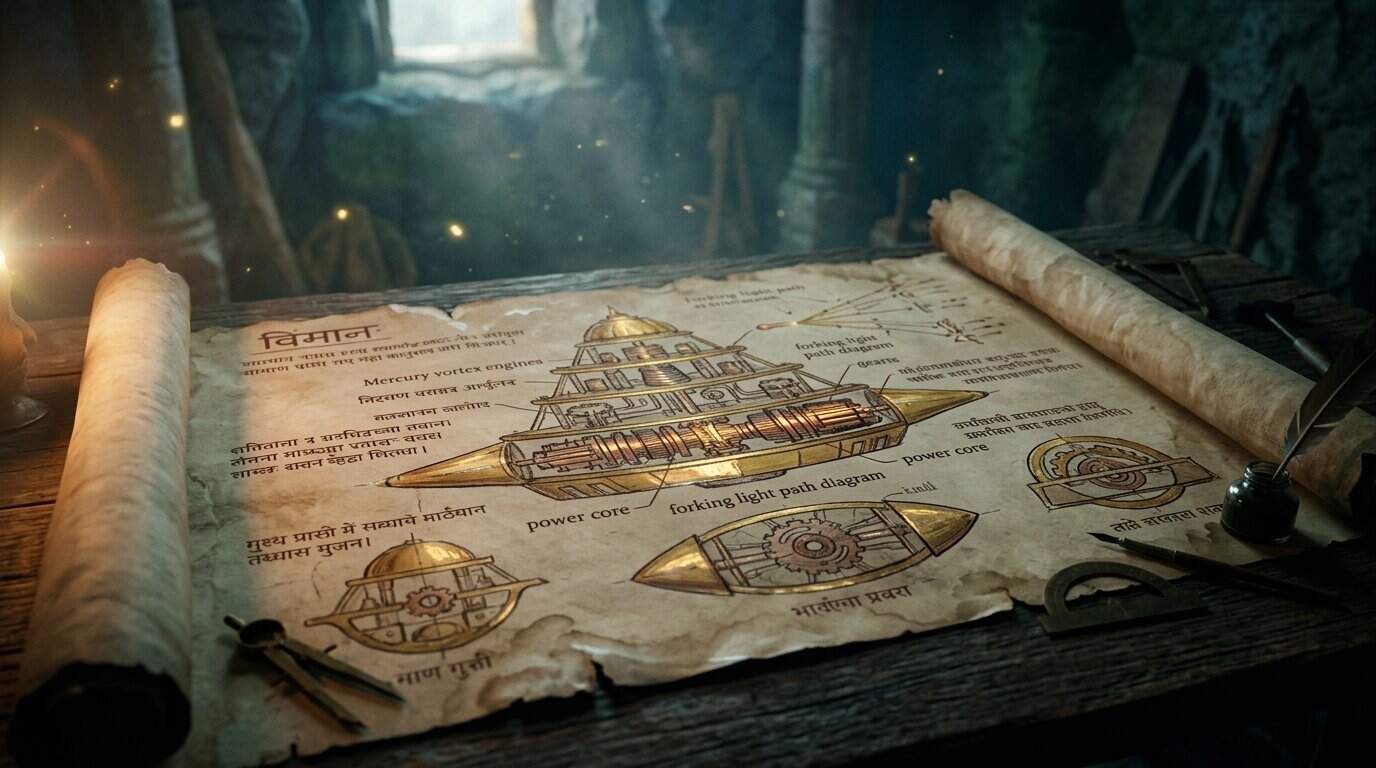
The Vaimanika Shastra stands as one of the most intriguing documents in the study of ancient high technology, claiming to be a channeled reproduction of much older wisdom. This text provides an exhaustive look into the mechanics of flight, detailing the construction of four distinct types of craft that could supposedly travel between islands or even across different worlds. Unlike vague myths, this manual offers specific instructions on building engines and creating power sources that seem to mirror modern concepts of electricity and solar energy. It suggests that the builders of these machines possessed a sophisticated understanding of metallurgy and physics that challenges the standard timeline of human progress.
Beyond the hardware itself, the text dives into the specific requirements for the individuals tasked with operating these complex machines. Pilots were reportedly required to master thirty-two different secrets, which included the ability to make the craft invisible or to detect enemy vessels through a form of ancient radar. The manual also lists specialized diets and clothing made from unique plant fibers to protect the crew from high-altitude environments and extreme temperatures. These details paint a picture of a highly organized aeronautical culture that treated flight as a disciplined science rather than a magical feat.
The materials described in these blueprints are perhaps the most fascinating aspect of the entire document. It mentions the creation of heat-absorbing metals and mirrors that could harness sunlight to generate propulsion, a concept that researchers today find surprisingly visionary. While some skeptics point to the text’s 20th-century origins, others argue that the specific chemical compositions and technical descriptions reflect a lost legacy of Vedic engineering. Whether this book is a modern reimagining or a window into a forgotten age, it forces us to wonder if our ancestors were much more technologically advanced than previously imagined.
Mercury Vortex Engines And Propulsion Theories
The most intriguing aspect of Vimana technology lies in the descriptions of the mercury vortex engines found in ancient texts like the Samarangana Sutradhara. According to these Sanskrit manuscripts, the propulsion system relied on a central container filled with liquid mercury that was heated by a strong, glowing fire. This process supposedly created a powerful whirlwind of energy that allowed the craft to lift off and travel great distances in an instant. Modern researchers have compared these descriptions to the physics of ion propulsion or plasma engines, suggesting that the ancients may have understood how to harness high-energy physics. While mainstream science remains cautious, the technical detail provided in these historical records offers a fascinating glimpse into a potential lost era of advanced engineering.
The theory suggests that rotating mercury could generate a powerful electromagnetic field capable of overcoming gravity. This concept aligns with modern experiments involving superconductors and magnetic levitation, which explore how spinning fluids can influence gravitational forces. The Vaimanika Shastra goes even further by detailing specific alloys and crystals needed to focus this energy. These descriptions portray the Vimanas not just as simple gliders, but as sophisticated machines that could hover, turn invisible, or travel between planets. By looking at these myths through a technological lens, we can begin to wonder if our ancestors possessed a deep understanding of the natural world that has since been forgotten.
Do you think these ancient descriptions are purely poetic imagination, or could they be the blueprints for a forgotten type of power? The idea that mercury, a highly conductive liquid metal, could serve as a fuel source challenges everything we thought we knew about the history of transportation. If these machines truly existed, it would mean that the timeline of human achievement is much older and more complex than traditional history books suggest. Exploring these possibilities allows us to bridge the gap between ancient storytelling and the cutting edge of modern physics. We invite you to share your thoughts on whether these mercury engines represent a lost chapter of human innovation or a misunderstood mystery of the past.
Modern Science Meets Ancient Sanskrit Mysteries
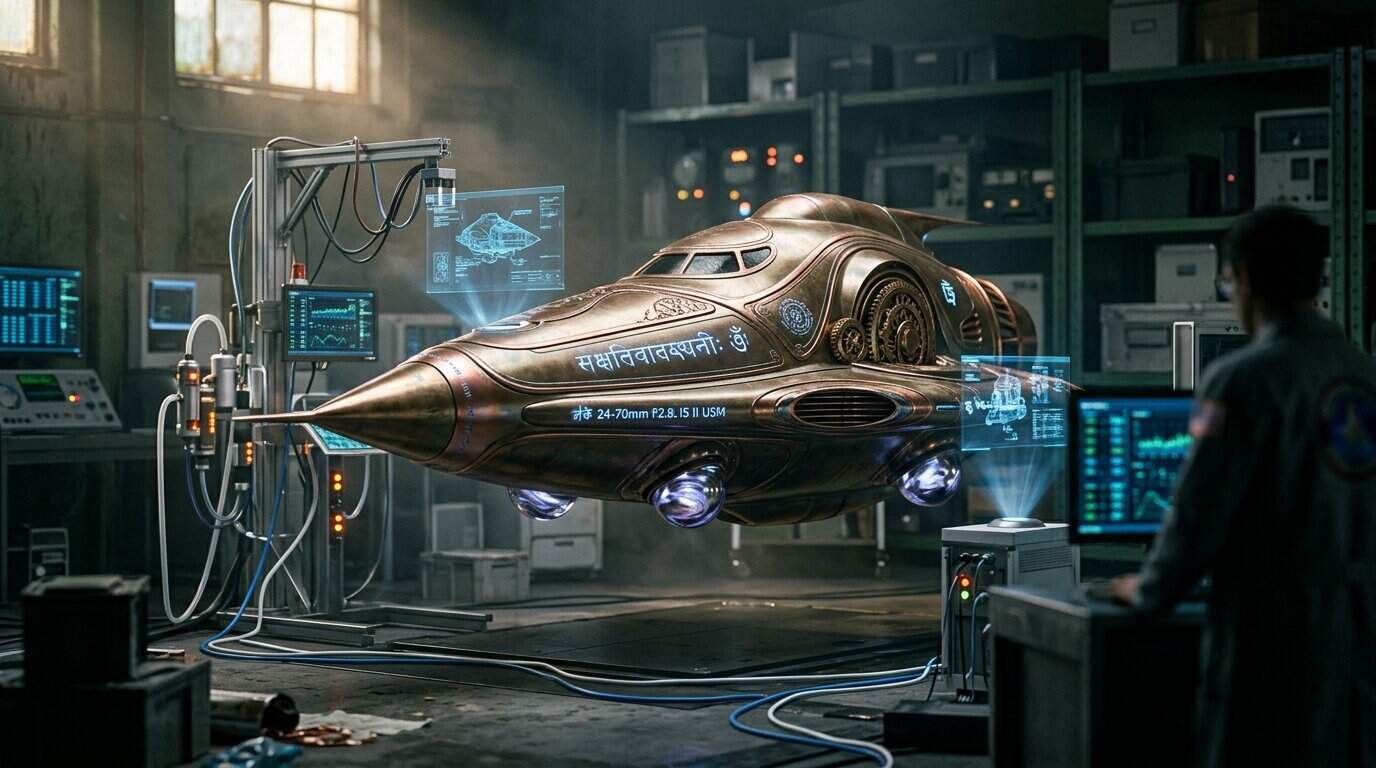
Modern aerospace engineers are beginning to look at these ancient Sanskrit descriptions with a fresh perspective that goes beyond simple folklore. When researchers examine the detailed blueprints found in texts like the Vaimanika Shastra, they discover mentions of propulsion systems and mercury vortex engines that mirror theoretical physics concepts. These descriptions often detail specific metals, heat-absorbing alloys, and complex steering mechanisms that seem out of place for the era they originated from. By applying modern fluid dynamics and aeronautical principles to these ancient designs, some investigators believe they are looking at a lost form of high technology rather than mere creative writing. This intersection of old-world manuscripts and new-world science suggests that our ancestors might have possessed a technical understanding that was later forgotten or obscured by time.
The debate between viewing Vimanas as mythological metaphors or physical artifacts continues to spark curiosity among historians and hobbyists alike. While traditional scholars often interpret these flying palaces as symbols of divine power, the sheer technicality of the writing makes a strong case for a more tangible origin. Some theories suggest that these machines represent a global era of advanced achievement that predates recorded history, challenging the idea that progress is always a straight line upward. If these vehicles truly existed, it would mean that the ancient world was far more connected and technologically capable than most textbooks currently allow. This possibility invites us to rethink the timeline of human innovation and consider what other ancient mystery might be hidden in the dusty pages of our oldest stories.
Could these ancient Indian texts be providing us with a literal roadmap to a forgotten age of flight? As we continue to bridge the gap between spiritual legends and scientific reality, the mystery of the Vimana serves as a powerful reminder that the past is rarely as simple as it seems. We encourage you to look deeper into these descriptions and share your thoughts on whether these accounts represent divine inspiration or a sophisticated legacy of human engineering. Whether they were real machines or brilliant visions of the future, they remain a fascinating puzzle that demands our attention. What do you think is the most likely explanation for these incredible aerial descriptions found in the ancient world?
Bridging Sacred Scripture and Ancient Engineering
The legacy of the Vimana remains one of the most captivating mysteries of the ancient world, bridging the gap between sacred scripture and advanced engineering. These descriptions of celestial chariots and metallic birds found in the Vedas and Indian epics challenge our standard timeline of human progress. Much like the ancient mystery of other cultures that possessed advanced astronomical knowledge, the technical detail found in texts like the Vaimanika Shastra suggests a sophisticated understanding of aerodynamics and propulsion. This enduring lore invites us to reconsider whether our ancestors possessed a level of high technology that was eventually lost to the sands of time.
Whether these machines were the products of a forgotten chapter of human achievement or the creative expressions of spiritual visionaries, they continue to inspire modern researchers and dreamers alike. Many who study these accounts find themselves decoding the legends of a past where advanced beings may have shared their knowledge with early civilizations. The possibility that ancient civilizations navigated the skies thousands of years ago forces a shift in how we view the capabilities of the past. As we uncover more artifacts and re-examine old manuscripts, the line between mythology and history becomes increasingly thin. We invite you to share your thoughts on these incredible flying machines and whether you believe they represent a hidden truth about our technological heritage.
Frequently Asked Questions
1. What exactly were Vimanas in ancient Indian history?
Vimanas were sophisticated flying vessels described in ancient Sanskrit texts as metallic palaces or celestial chariots. These incredible machines were capable of traveling between cities, hovering in the atmosphere, and even venturing into the stars. While some see them as metaphors, the texts describe them as physical craft with specific mechanical capabilities.
2. How did these ancient flying machines stay in the air?
The ancient texts describe several different ways these vessels achieved flight, including the use of wind, solar energy, and even lightning. Some accounts, such as those found in the Mahabharata, suggest a deep understanding of aerodynamics and energy systems that allowed the craft to move at incredible speeds. These descriptions hint at a lost era of advanced engineering that utilized natural forces in ways we are still trying to understand today.
3. What is the Pushpaka Vimana mentioned in the epics?
The Pushpaka Vimana is the most famous of these celestial crafts, described in the Ramayana as a magnificent vessel that glowed like the sun. It was large enough to carry an entire army and possessed the unique ability to move at the speed of thought. This vessel served as a mobile palace, demonstrating a level of luxury and technical sophistication that challenges our perception of ancient history.
4. Are there technical manuals that explain how to build a Vimana?
Many researchers point to specific verses in the Vedas and later epics that read more like technical blueprints than religious stories. These texts provide detailed descriptions of the materials used and the mechanical requirements for flight, leading some to believe they are records of a lost technology. By treating these accounts as historical documentation, we can explore the possibility that ancient civilizations possessed scientific knowledge far beyond what is commonly accepted.
5. Is there any scientific evidence supporting the existence of Vimanas?
While physical wreckage has not been recovered, the highly specific descriptions of flight mechanics and propulsion in ancient texts provide a form of historical evidence. Scholars note that the terminology used to describe these craft often aligns with modern concepts of aviation and energy physics. This crossover between ancient storytelling and modern science suggests that the legends may be based on real aerial phenomena or observations of advanced technology.
6. Could Vimanas have been powered by solar energy?
Yes, several ancient accounts specifically mention crafts that utilized the power of the sun to stay aloft and travel through the sky. These solar powered vessels represent a clean and advanced form of energy usage that mirrors our own modern push toward renewable technology. The inclusion of such specific power sources suggests that the creators of these stories were familiar with the concept of converting natural light into mechanical motion. Just as the Baghdad Battery hints at early electrical knowledge, these texts point to a sophisticated grasp of energy. This ongoing search for ancient astronauts and their influence continues to drive research into our mysterious past. Similar debates regarding the authenticity mystery of other ancient records highlight the difficulty in separating historical fact from later interpretation.