
The London Hammer Artifact: An Ancient Anomaly In Texas Rock
In the quiet summer of 1936, a simple afternoon walk near a Texas creek led to a discovery that still puzzles minds today. Max Hahn and his wife noticed an odd piece of wood poking out from an ancient, weathered rock, completely unaware of the impossible secret hidden inside. When the stone was eventually cracked open a decade later, it revealed the London Hammer artifact, a high-purity iron tool perfectly encased in solid earth. While experts often dismiss it as a nineteenth-century miner’s tool caught in a fast-forming mineral shell, others wonder if this strange object actually points to a much older, forgotten chapter of human history.
The idea that a modern-looking hand tool could be trapped inside ancient stone challenges everything we are taught about our past. Its partially petrified wooden handle and unusually pure metal head raise questions that simple explanations sometimes struggle to fully put to rest. As scientists and curious thinkers continue to debate its origins, the true story behind this out-of-place object remains a fascinating puzzle.
Key Takeaways
- Discovered in Texas in 1936, the London Hammer is a mysterious artifact featuring a manufactured tool completely encased in solid rock.
- The hammer possesses an unusually pure, rust-resistant iron head and a partially petrified wooden handle that defies conventional aging processes.
- Mainstream geologists attribute the rock shell to rapid mineral concretion, arguing that soluble minerals quickly hardened around a dropped nineteenth-century miner’s tool.
- Despite natural explanations, the artifact’s advanced metallurgy and fossilized wood continue to challenge established timelines of human history and technological development.
The 1936 Discovery At Red Creek
A quiet walk near Red Creek in London, Texas, led to a discovery that would eventually question our understanding of history. In June 1936, Max Hahn and his wife were simply enjoying the outdoors when a strange object caught their attention. They noticed a small piece of wood sticking out from a weathered, loose piece of rock. Curious about how wood could be embedded in solid stone, they decided to take the unusual find home. For over a decade, the strange rock sat untouched as a simple conversation piece in the Hahn household.
The true nature of this peculiar stone remained a mystery until 1947, when their son finally decided to break it open. Using a chisel to crack the rock shell, he revealed a perfectly formed metal hammer head attached to the wooden handle hidden inside. This was not a primitive stone tool, but rather a sophisticated instrument made of high-purity iron. The wooden handle itself appeared to be partially carbonized and petrified, suggesting it had been trapped within the formation for an incredibly long time. Finding a manufactured tool entirely encased in prehistoric rock immediately sparked questions about human timelines that conventional science struggles to answer.
Mainstream researchers often suggest the London Hammer artifact is just a modern tool swallowed by rapidly forming minerals. However, the extreme purity of the iron and the ancient age of the surrounding rock present a fascinating puzzle for those willing to look closer. If the stone encasing the hammer is truly millions of years old, it implies that advanced human activity existed long before accepted historical records claim. This remarkable object invites us to keep an open mind about the distant past and wonder what other physical evidence might be hiding right beneath our feet.
High-Purity Iron And A Carbonized Handle
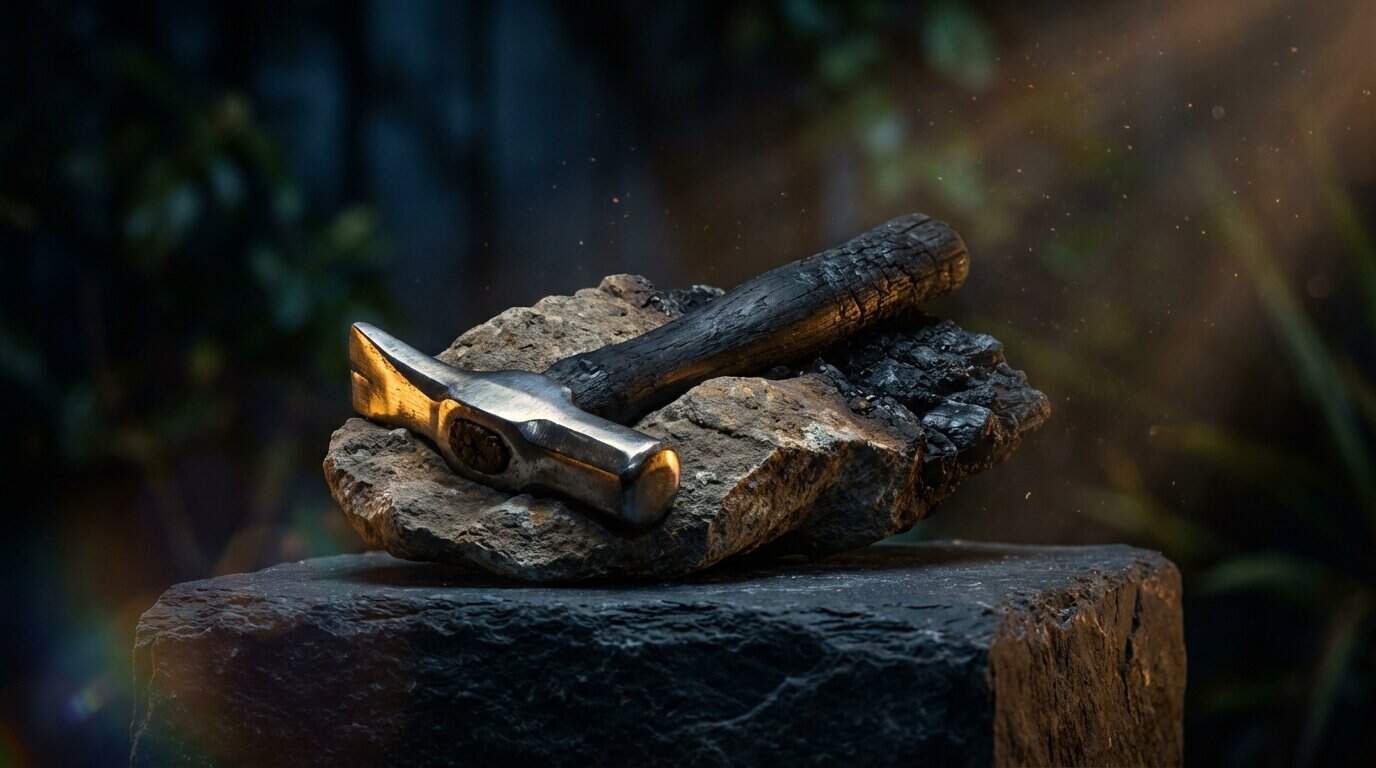
When researchers finally examined the strange object freed from the prehistoric rock, they discovered a tool with truly unusual physical traits. The metal hammer head measures about six inches long with a diameter of one inch, looking much like a typical hand tool at first glance. However, metallurgical tests revealed something astonishing about its composition. The head is made of unusually pure iron, lacking the typical impurities found in ordinary historic blacksmithing. Even more mysterious is the fact that this high-purity iron has strongly resisted rust for decades, a feature that leaves many experts scratching their heads.
The mystery deepens when examining the wooden handle attached to the pristine metal head. Instead of simply rotting away over time, the wood appears to be partially petrified and carbonized. This transformation usually takes massive amounts of time and pressure to occur naturally in the earth. Finding a manufactured handle in this hardened, coal-like state suggests the object might have been buried far longer than conventional history allows. Mainstream scientists argue that specific chemical conditions can speed up this fossilization process, but the extreme alteration of the wood still fuels intense debate.
Together, the rust-resistant iron and the fossilized wood create a puzzle that challenges our understanding of human timelines. If the tool is merely a dropped nineteenth-century hammer, the rapid encasement in solid rock and the severe carbonization of the wood seem highly improbable to many open-minded researchers. This unique combination of physical evidence pushes curious minds to ask if advanced metalworking existed long before recorded history. While conventional science offers natural explanations for rapid mineral buildup, the artifact continues to stand as a fascinating historical anomaly. It invites us to keep questioning the accepted stories of our ancient past and wonder what other ancient secrets might be hiding right under our feet.
Mineral Concretions Versus Prehistoric Timelines
The discovery of the London Hammer in 1936 sparked a passionate debate that continues to challenge our understanding of human history. When Max Hahn and his wife found the strange object near a Texas creek, they noticed a piece of wood sticking out of a solid piece of weathered stone. Fringe theorists and alternative historians point out that the rock surrounding the hammer head is believed to be millions of years old. If traditional geological dating is accurate, the presence of a manufactured iron tool trapped inside ancient stone suggests an impossible timeline. This incredible find forces us to ask if advanced human civilizations might have walked the earth much earlier than textbooks currently claim.
Mainstream geologists offer a much different explanation for this fascinating anomaly by pointing to a natural process known as mineral concretion. According to scientific consensus, the tool itself is likely a standard nineteenth-century miner hammer that was simply dropped or left behind in the Texas dirt. Over a relatively short period, highly soluble minerals from the surrounding ancient limestone dissolved in the water and washed over the abandoned tool. These natural minerals then rapidly hardened like concrete around the metal and wood to create a rocky shell that looks deceptively ancient. Researchers argue that this rapid encasing process proves a rock shell does not need millions of years to form around a modern object.
Despite this logical scientific explanation, several strange details about the London Hammer prevent the case from being completely closed. Independent metallurgical tests have shown that the iron hammer head is surprisingly pure, lacking the typical carbon elements usually found in nineteenth-century manufacturing. Additionally, parts of the wooden handle appear to be partially petrified or carbonized, a structural transformation that usually requires vast amounts of time. These physical quirks leave room for doubt, inviting us to wonder if conventional science might be overlooking a deeper mystery. Is this artifact a simple trick of fast-acting geology, or could it be a genuine piece of physical evidence from an unknown prehistoric era?
The Hammer That Defies Human History
The London Hammer remains a fascinating anomaly that challenges the modern understanding of history. Despite scientific claims that it is merely a recent tool caught in a natural mineral concretion, the high-purity iron and encased wooden handle continue to spark wonder. Today, this curious object rests on display at a local museum in Glen Rose, Texas. Visitors from around the world travel there to see an item that seems to defy the established timeline of human existence. It stands as a tangible reminder that the earth still holds ancient secrets historians have yet to fully understand.
Whether this artifact proves that ancient civilizations possessed advanced metallurgy or it simply demonstrates a rare rock formation, the debate is far from over. Mainstream experts offer a conventional explanation, but the physical reality of the hammer leaves plenty of room for open-minded skepticism. Exploring strange anomalies like this allows curious minds to question accepted narratives and keep digging for the truth about the past. What do you make of this fascinating Texas discovery? Please share your thoughts in the comments below, and let us know if you believe it is a simple geological trick or a true piece of hidden history.
Frequently Asked Questions
1. What is the London Hammer artifact?
The London Hammer artifact is a fascinating metal tool discovered completely encased in solid rock. It features a high-purity iron head and a partially petrified wooden handle. This mysterious find challenges our traditional understanding of ancient history and human development.
2. Who discovered the London Hammer?
Max Hahn and his wife stumbled upon this puzzling object during a quiet summer walk in June 1936. They were exploring near Red Creek in London, Texas, when they noticed a strange piece of wood poking out from a loose rock. They took it home, completely unaware of the impossible secret hidden inside.
3. How was the metal hammer finally revealed?
The unusual rock sat untouched in the Hahn family home for over a decade. In 1947, their son finally used a chisel to crack open the weathered stone shell. Breaking the rock revealed a perfectly formed metal hammer head attached to the hidden wooden handle.
4. Why do some experts dismiss the artifact?
Many mainstream scientists believe the object is simply a nineteenth-century miner’s tool. They suggest it was dropped and later caught in a fast-forming mineral shell. This natural process can sometimes quickly encase modern objects in stone under the right chemical conditions.
5. What makes the London Hammer so mysterious?
The tool is made of unusually pure iron that resists rusting, which is highly uncommon for historical artifacts. Furthermore, the wooden handle is partially petrified, a process that usually takes thousands of years. These strange details make it difficult to completely rule out the idea of an advanced, forgotten chapter in human history.
6. Is the wooden handle actually petrified?
Yes, the wooden handle attached to the iron head shows clear signs of partial petrification. Wood turning into stone is a natural process that typically requires vast amounts of time. Finding a sophisticated tool with a petrified handle inside a solid rock is exactly what makes this puzzle so captivating.
7. Where exactly was the artifact found?
The artifact gets its name from the small town of London, Texas, where it was originally found. The discovery took place near Red Creek, an area known for its ancient geological formations. The stark contrast between the ancient Texas rock and the sophisticated tool continues to spark intense curiosity today.