The Legend Of The Cursed Hope Diamond
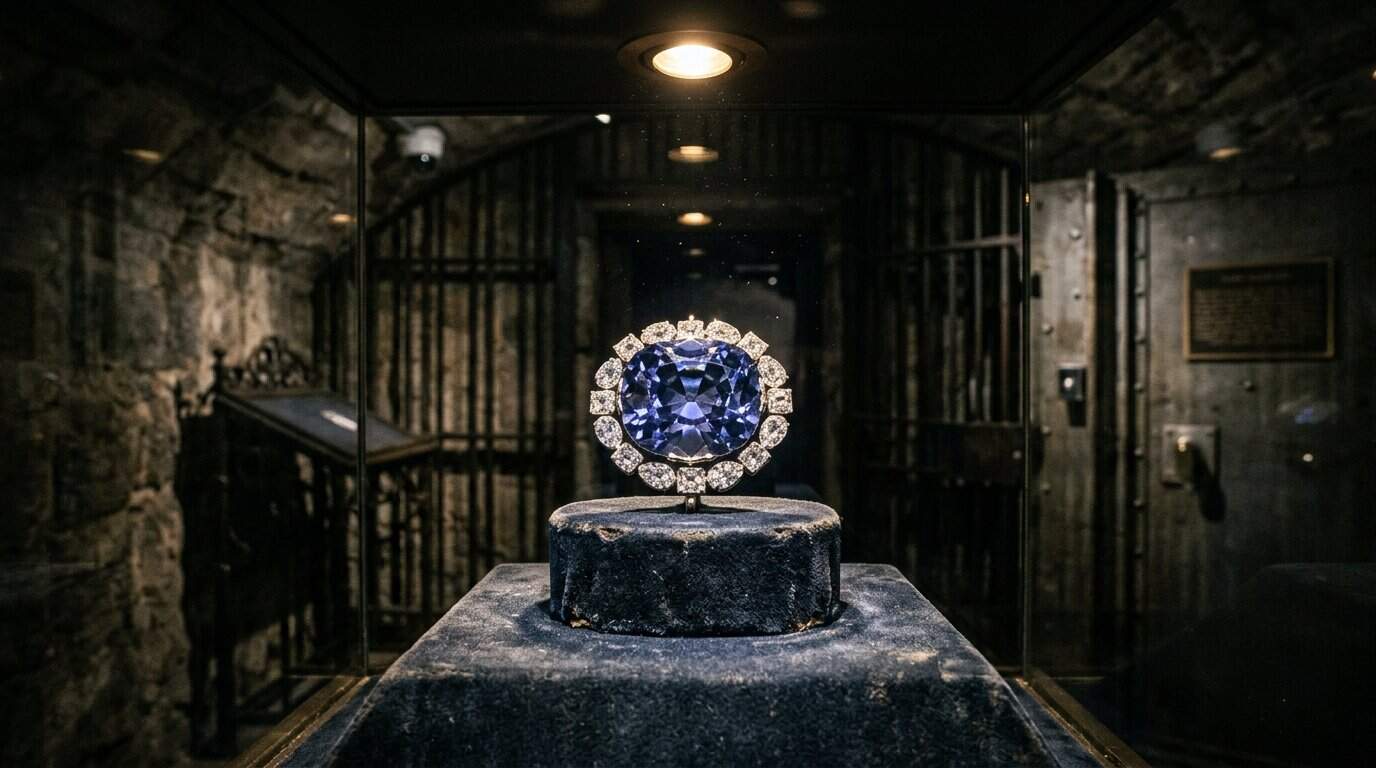
Deep within the vault of the Smithsonian, a massive 45.52-carat gem rests behind thick glass, drawing millions of curious eyes every year. This stone is the world-famous cursed hope diamond, a deep blue treasure that carries a reputation as dark as its history is long. Legend tells of a trail of misfortune following every owner, ranging from sudden financial ruin to mysterious, untimely ends. While it sits quietly today, the whispers of its ancient shadow continue to fascinate those who wonder if a stone can truly hold a grudge.
Beyond its chilling reputation, the diamond possesses physical traits that seem almost supernatural. When the lights go out and it is hit with ultraviolet rays, the gem glows a fiery, blood-red color like a burning coal. This strange phosphorescence is caused by boron atoms, but for many, it serves as a visual reminder of the gem’s eerie past. Whether it is a simple quirk of geology or a mark of something more mysterious, the diamond remains a priceless masterpiece of both science and folklore.
Key Takeaways
- The Hope Diamond’s legendary curse originated from the alleged 17th-century theft of the 112-carat stone from a sacred Hindu statue in India, initiating a centuries-long trail of financial ruin and tragic deaths for its owners.
- Trace amounts of boron atoms give the 45.52-carat gem its rare deep blue color and cause it to exhibit a haunting, fiery red phosphorescence when exposed to ultraviolet light.
- Historical figures ranging from French royalty like Marie Antoinette to American socialite Evalyn Walsh McLean suffered immense personal tragedies and untimely ends while in possession of the diamond.
- The diamond transitioned from a private object of misfortune to a public scientific treasure in 1958 when it was famously sent to the Smithsonian Institution via standard registered mail in a simple brown paper wrapper.
From Indian Temples To French Royalty
The story of the Hope Diamond begins deep within the Kollur Mine of Golconda, India, where it was discovered as a massive 112-carat rough stone. According to long-standing legends, the rare blue gem originally served as the eye of a sacred statue of the Hindu goddess Sita. The curse supposedly took root when the French gem merchant Jean Baptiste Tavernier pried the diamond from its holy setting in the mid-seventeenth century. This act of desecration is said to have invited a dark metaphysical consequence that would follow every future owner. While historians note that Tavernier likely purchased the stone through traditional trade, the narrative of a stolen idol remains a cornerstone of the diamond’s paranormal intrigue.
Upon returning to Europe, Tavernier sold the magnificent prize to King Louis XIV, who had the stone recut into the famous French Blue. This transition from an Indian temple to the pinnacle of French royalty marked the beginning of a high-society drama filled with unexplained misfortune. Although the King lived a long life, many believe the curse manifested through the tragic fates of his descendants, including Louis XVI and Marie Antoinette. The diamond seemed to carry a heavy energy, blending historical documentation with a sense of impending doom for those who wore it. This period established the stone as more than just a piece of jewelry, transforming it into a legendary object of high-stakes mystery.
Today, researchers at the Smithsonian National Museum of Natural History point to the diamond’s unique physical properties as a possible link to its eerie reputation. When exposed to ultraviolet light, the 45.52-carat gem exhibits a haunting red phosphorescence, glowing like a hot coal long after the light is removed. This scientific phenomenon adds a layer of visual evidence to the claims of its supernatural power, leaving many to wonder if the boron atoms responsible for its color hold a deeper secret. While some dismiss the curse as mere coincidence, the consistent trail of tragedy throughout its history suggests a pattern that is difficult to ignore. Do you believe a physical object can truly hold a spiritual grudge, or is the cursed hope diamond simply a clever tale woven by time?
High Society Drama And Tragic Owners

The journey of the Hope Diamond is paved with the glitter of high society and the shadows of inexplicable misfortune. While many see only a 45.52-carat masterpiece, history suggests a darker pattern for those who dared to wear it. The French Revolution serves as a chilling starting point, where the diamond was stolen from the Royal Treasury during a time of immense upheaval. Both King Louis XVI and Marie Antoinette, who once possessed the French Blue from which the Hope was cut, met their ends at the guillotine. These tragic events laid the groundwork for the diamond’s reputation as a cursed object that brings ruin to the powerful.
By the early 20th century, the diamond found its way into the hands of American socialite Evalyn Walsh McLean, who ignored all warnings of a metaphysical hex. Despite her immense wealth and status, McLean’s life became a series of heartbreaking chapters after she began wearing the stone. Her eldest son died in a tragic car accident at a young age, her husband left her for another woman before passing away in a mental institution, and her daughter succumbed to a drug overdose. McLean remained a staunch defender of the diamond until her own death, yet the string of personal losses left many wondering if the stone’s boron-induced red glow was a warning of the sorrow it carried.
The Smithsonian National Museum of Natural History now houses the gem, where it remains a focal point for those fascinated by the intersection of beauty and tragedy. Some researchers argue that these stories are merely coincidences fueled by the sensationalist press of the era, while others believe the diamond retains a heavy energy from its turbulent past. Whether the curse is a product of high-society drama or a genuine paranormal phenomenon, the diamond continues to captivate the public imagination. Does a physical object truly have the power to influence human fate, or do we simply use these legends to make sense of life’s random tragedies?
Scientific Wonders And Red Phosphorescence
The Hope Diamond is a masterpiece of nature that holds a secret deep within its crystal structure. While its massive weight of 45.52 carats is enough to capture anyone’s attention, the stone’s true magic lies in its rare blue color. Scientists at the Smithsonian National Museum of Natural History have determined that this deep, grayish-blue tint is caused by trace amounts of boron atoms trapped inside the diamond. This chemical fluke creates a gem that looks less like a standard diamond and more like a piece of the midnight sky. It is a reminder that even the most beautiful objects are often formed by tiny, accidental changes in the earth’s crust.
The most chilling aspect of the diamond’s physical makeup is how it reacts to invisible light. When the gem is placed under short-wave ultraviolet light and then hidden in the dark, it does not simply go dim like other stones. Instead, it begins to glow with an intense, fiery red phosphorescence that looks like a burning coal. This eerie red light lasts for several seconds, leaving observers with the feeling that the diamond is alive or perhaps holding onto a dark energy. Researchers have noted that this specific reaction is quite rare, which only adds to the diamond’s reputation as a vessel for the supernatural.
This strange red glow has led many believers in the paranormal to wonder if the diamond’s physical properties are linked to its legendary curse. While geologists explain the light through the movement of electrons, those who follow the stone’s dark history of misfortune see it as a visual warning. The transition from a peaceful blue to a menacing red suggests a duality that mirrors the high-society drama and tragedy surrounding its past owners. Whether you trust the chemical evidence or the metaphysical theories, the sight of the glowing diamond remains one of the most haunting spectacles in the world of gemstones. After learning about this burning heart, do you think the red glow is just a scientific quirk, or could it be the mark of a lingering curse?
The Smithsonian And The Modern Legacy
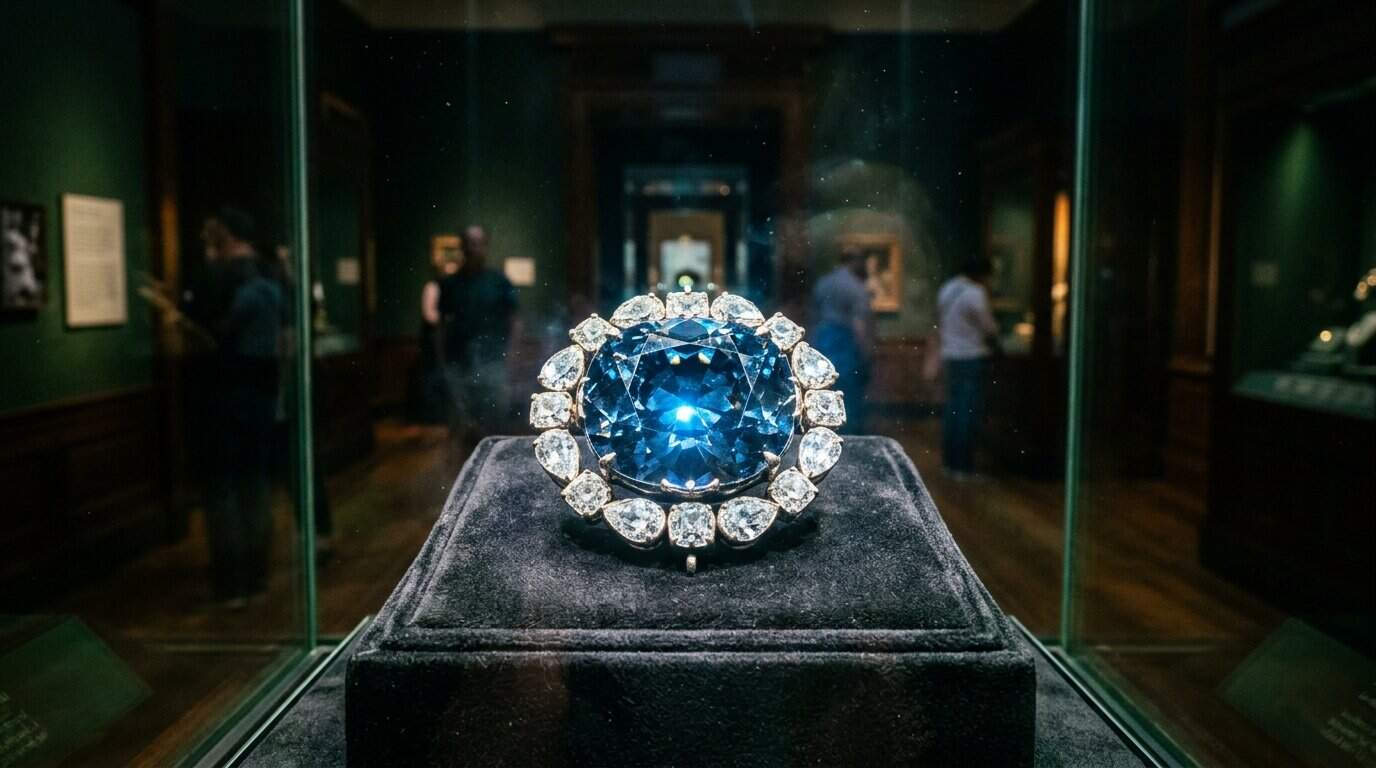
The Hope Diamond’s final journey to its resting place was as peculiar as the legends surrounding it. In 1958, a prominent jeweler decided to donate the 45.52-carat gem to the Smithsonian Institution, but he did not use an armored convoy or a high-security team. Instead, he simply wrapped the priceless blue stone in brown paper and sent it through the standard registered mail as a registered parcel. This unassuming arrival at the National Museum of Natural History marked the end of centuries of high-society drama and tragic misfortune. Today, it sits behind reinforced glass, drawing millions of visitors who are captivated by its deep blue hue and the chilling stories of its former owners.
While the museum focuses on the diamond’s scientific properties, such as the boron atoms that create its color, the metaphysical aura of the stone remains a major draw. One of the most eerie features documented by researchers is its red phosphorescence, which causes the diamond to glow like a burning coal after being exposed to ultraviolet light. Many visitors find this physical reaction to be a fittingly spooky trait for an object rumored to carry a heavy energetic burden. The Smithsonian provides a safe environment for the public to admire the gem, yet the transition from a private curse to a public treasure has not dimmed its reputation for paranormal intrigue.
Historians and enthusiasts often debate whether the string of accidents and financial ruins associated with the diamond were mere coincidences or the result of a genuine supernatural mark. By housing the stone in a public trust, the Smithsonian has effectively neutralized the personal toll the curse allegedly took on individual collectors. This modern legacy allows us to explore the thin line between historical documentation and the unexplained mysteries of the world. Does the diamond truly carry a dark history within its crystal structure, or is its power simply a reflection of our own fascination with the unknown? We would love to hear your thoughts on whether an object can truly hold onto the energy of its past.
Legacy of Legend and Misfortune
The saga of the Hope Diamond remains a captivating blend of high-society drama and metaphysical mystery that continues to spark debate today. While skeptics point to the long list of tragedies as mere coincidences spread across centuries of ownership, others find it difficult to ignore the pattern of misfortune that followed the stone from India to the Smithsonian. The diamond exists at a unique crossroads where documented history meets the unexplained, challenging us to consider if an object can truly carry a heavy spiritual burden. Whether the curse is a product of clever marketing or a genuine supernatural phenomenon, the 45.52-carat gem remains a powerful symbol of the unknown.
Scientific facts, such as the diamond’s eerie red phosphorescence that glows like a burning coal, only add to the sense of wonder surrounding its legacy. This rare physical trait provides a bridge between the natural world and the stories of hauntings that have defined its reputation for generations. By weighing the cold records of historical auctions against the chilling accounts of its previous owners, we are left to wonder if some secrets are still out there beyond our current understanding. Much like the multi-generational obsession seen in history’s greatest treasure hunt, the stone sits safely behind glass now, but its history serves as a reminder that the line between coincidence and a true curse is often thinner than we think.
Do you believe that an object as beautiful as the Hope Diamond could truly be tethered to a dark, supernatural force? Perhaps the stories are just a way for us to make sense of the random tragedies that strike even the most powerful families in history. We invite you to share your thoughts on whether this blue diamond is a victim of its own fame or a genuine vessel for ancient energy. Join the conversation and let us know if you think some mysteries are better left unsolved or if science will eventually explain every shadow.
Frequently Asked Questions
1. Where did the legend of the Hope Diamond curse begin?
The legend started in India when the merchant Jean Baptiste Tavernier allegedly stole the gem from the eye of a statue of the goddess Sita. This act of desecration is said to have unleashed a dark shadow that followed the stone across the ocean to Europe. While some believe it was a simple trade, the story of the stolen idol remains the heart of the diamond’s mysterious reputation.
2. Why does the diamond glow red in the dark?
When exposed to ultraviolet light, the diamond exhibits a rare phosphorescence that makes it glow like a burning coal. Scientists attribute this eerie red light to the presence of boron atoms within the stone’s structure. To many onlookers, this fiery display feels like a physical manifestation of the gem’s restless history.
3. What happened to the diamond during the French Revolution?
During the chaotic days of the French Revolution, the diamond was stolen from the royal treasury and vanished from the public eye for decades. It eventually resurfaced in London in a smaller, recut form to hide its true identity from the French authorities. This period of disappearance only added to the mystery and the growing list of owners who faced sudden misfortune.
4. How large is the Hope Diamond today?
The diamond currently weighs 45.52 carats and is famous for its deep, mesmerizing blue color. It was originally much larger, starting as a 112-carat rough stone before being cut multiple times throughout history. Each transformation changed its appearance but never seemed to quiet the whispers of its ancient curse.
5. Who was the most famous victim of the diamond’s bad luck?
King Louis XIV and Marie Antoinette are often cited as the most famous figures associated with the stone’s dark history. Their tragic ends during the revolution fueled the belief that the diamond brought ruin to anyone who wore it. Even wealthy socialites in later years reported that the gem seemed to attract personal tragedy and financial loss, much like the rumors surrounding The Curse of Tutankhamun’s Tomb and its impact on those who disturbed it.
6. Where can the Hope Diamond be seen today?
The diamond is currently housed in a high-security vault at the Smithsonian Institution in Washington, D.C. It was donated by a famous jeweler who sent the priceless treasure through the regular mail in a simple brown paper wrapper. Since arriving at the museum, the stone has remained safely behind glass, where millions of people admire its beauty from a distance.