
The Lady Of The Dunes Mystery Finally Solved
For nearly five decades, the shifting sands of Provincetown held a secret that haunted the Massachusetts coast and stumped the greatest minds in forensic science. In the summer of 1974, a young girl wandering the Race Point Dunes stumbled upon a sight that would become a legendary mystery known as the lady of the dunes. The victim was found on a beach blanket, her identity stolen by a killer who went to extreme lengths to ensure she remained nameless.
The silence finally broke in late 2022 when modern technology achieved what decades of traditional police work could not. Through the power of investigative genetic genealogy, the FBI revealed that the mysterious woman was actually Ruth Marie Terry, a 37-year-old mother from Tennessee. While her name has been restored, the long journey from a quiet southern town to a lonely beach grave remains a story filled with shadows and unanswered questions.
Key Takeaways
- Modern investigative genetic genealogy successfully restored the identity of Ruth Marie Terry nearly 50 years after her body was discovered in the Provincetown dunes.
- The perpetrator utilized extreme, calculated measures to prevent identification, including the surgical removal of the victim’s hands and near-decapitation.
- Evidence points to the victim’s late husband, Guy Rockwell Muldavin, a man with a history of disappearing family members, as the primary suspect in the killing.
- The case gained significant cultural notoriety through the ‘Jaws’ theory, which suggested the unidentified victim may have appeared as an extra in the 1975 blockbuster filmed nearby.
The Race Point Beach Crime Scene
On a sun-drenched afternoon in July 1974, a twelve year old girl wandering through the Race Point Dunes stumbled upon a sight that would haunt Provincetown for decades. Resting on a beach blanket among the shifting sands was the body of a woman whose life had been violently stolen. The scene was marked by a chilling level of calculation, as the victim was nearly decapitated and her hands had been surgically removed. Investigators and local police quickly realized these gruesome details were likely intended to hide her identity by preventing fingerprinting. This deliberate cruelty transformed a serene coastal landscape into the setting of one of the most enduring mysteries in American history.
The physical evidence left behind at the crime scene offered few clues but plenty of room for haunting speculation. Her head rested on a folded pair of jeans, and the cause of death was determined to be blunt force trauma from a heavy instrument. For nearly fifty years, she was known only as the Lady of the Dunes, a nameless figure whose story felt like something out of a cinematic thriller. Some theorists even wondered if she had been an extra in the movie Jaws, which was filming nearby at the time. This mix of historical tragedy and potential Hollywood connections kept the public fascinated as the salt air slowly reclaimed the secrets of that summer day.
In 2022, the mystery finally reached a turning point when investigative genetic genealogy identified the woman as Ruth Marie Terry from Tennessee. This breakthrough bridged the gap between a cold case and modern science, proving that no secret stays buried forever. While we now know her name, the specific circumstances of her final moments at Race Point Beach continue to spark intense discussion among true crime enthusiasts. The transition from an unidentified “Lady” to a real person with a history reminds us that every cold case deserves a resolution. Do you think the remote beauty of the Cape Cod dunes helped hide the truth for so long, or was it the calculated nature of the crime itself?
Identifying Ruth Marie Terry Through DNA
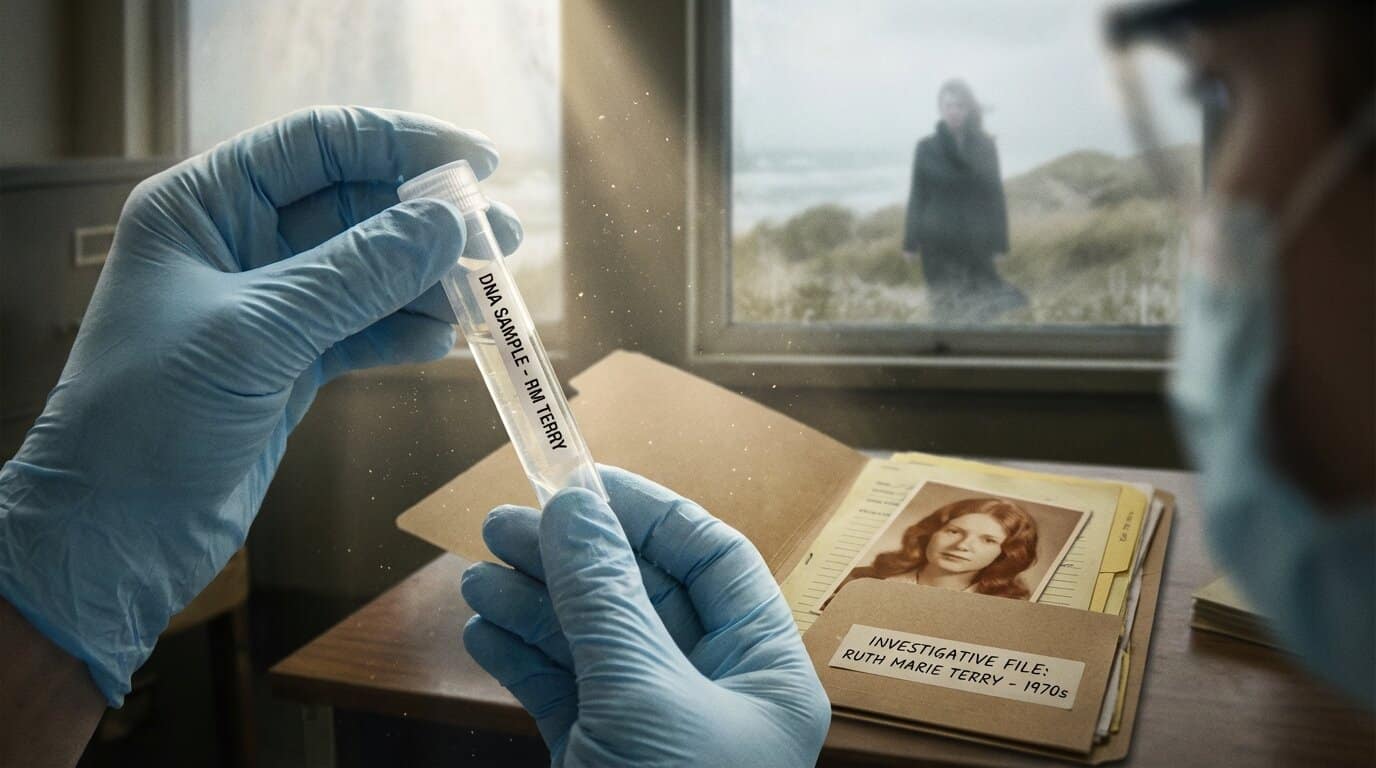
For nearly five decades, the identity of the woman found in the Race Point Dunes remained a haunting void in Massachusetts history. The mystery was so profound that it even sparked cinematic theories, including a popular suggestion by author Joe Hill that the victim might have been an extra in the film Jaws. However, the true breakthrough came in 2022 when investigators utilized investigative genetic genealogy to bridge the gap between unidentified remains and a living family tree. By comparing DNA profiles from the crime scene to sprawling public databases, investigators finally traced a path back to Tennessee. This modern scientific miracle stripped away the anonymity of the dunes, revealing that the woman was actually thirty seven year old Ruth Marie Terry.
The process of naming Ruth Marie Terry required a delicate blend of high tech science and old fashioned detective work. Forensic experts worked to reconstruct her genetic profile, looking for distant cousins who had uploaded their data to genealogy websites. This method has become a significant advancement for cold cases, allowing authorities to solve secrets that were once thought to be buried forever. Once a potential family match was flagged, investigators followed the paper trail to confirm Ruth’s identity through traditional means. It was a bittersweet victory for the community, as the Lady of the Dunes finally regained her name after forty eight years of silence.
Bringing Ruth’s story to light has reopened a chapter of history that many thought was permanently closed. While the DNA provided the “who,” it also provided the necessary foundation for authorities to look closer at the “how” and “why” behind her tragic end. The revelation that she was a daughter, a sister, and a woman with a life far away from the Cape Cod sands has shifted the narrative from a ghost story to a quest for justice. Her identification serves as a reminder that no secret is truly safe from the march of time and technology. Do you believe that every cold case will eventually be solved as DNA technology continues to advance, or will some secrets always remain hidden?
The Dark History Of Guy Rockwell Muldavin
Guy Rockwell Muldavin lived a life that seemed pulled straight from a noir film, marked by a trail of missing women and dark secrets. Long before he was linked to the Lady of the Dunes, Muldavin was the primary suspect in the 1960 disappearance of another wife and her daughter in Seattle. Investigators at the time found human remains in his septic tank, yet he managed to evade a murder conviction, only serving time for larceny. This pattern of behavior paints a picture of a charming but dangerous man who moved through the world by shedding his past and his partners. His ability to reinvent himself allowed him to stay one step ahead of the law for decades while leaving a wake of tragedy behind him.
When Guy Muldavin married Ruth Marie Terry in 1974, he brought her into a world of shadows that she would never escape. Investigators eventually identified Ruth as the Lady of the Dunes, and their investigation pointed directly toward her husband as the most likely killer. Witnesses recalled that Muldavin returned from their honeymoon alone, claiming that Ruth had simply run away with another man. This excuse was a chilling echo of the stories he told after his previous family vanished years earlier. By the time genetic genealogy finally confirmed Ruth’s identity in 2022, Muldavin had already passed away, taking the full truth of his crimes to the grave.
The connection between Muldavin and the brutal crime scene at Race Point Beach offers a terrifying glimpse into the mind of a serial offender. Experts believe the removal of Ruth’s hands and the attempt to decapitate her were calculated moves to hide her identity, a strategy that successfully stalled the investigation for nearly half a century. This case serves as a somber reminder of how easily a predator can hide in plain sight by exploiting the gaps in mid-century law enforcement. While the mystery of her name has been solved, many wonder if Muldavin was responsible for even more cold cases that remain buried in the sand. Do you think modern technology will eventually link Guy Muldavin to other unsolved disappearances across the country?
Cinematic Theories And The Jaws Connection

For decades, one of the most captivating theories surrounding the Lady of the Dunes emerged not from a police file, but from the keen eye of a horror fan. In 2015, author Joe Hill, who is the son of Stephen King, noticed a striking detail while watching the 1975 classic film Jaws. During a crowd scene filmed in Martha’s Vineyard, a woman appears on screen wearing a blue bandana and jeans, an outfit that bore an eerie resemblance to the clothes found on the unidentified victim in Provincetown. This Jaws theory sparked a wildfire of public curiosity, as people wondered if the mystery woman had spent her final summer working as a Hollywood extra.
The proximity of the film set to the discovery of the body made the theory feel grounded in a strange reality. Filming for the blockbuster took place just a short distance away and during the exact same summer that the victim, later identified as Ruth Marie Terry, was discovered in the dunes. This overlapping timeline suggested that she could have easily blended into the background of a major production before her tragic end. While investigators focused on forensic evidence, the public became obsessed with scanning every frame of the movie for a glimpse of a ghost.
This pop culture crossover added a layer of haunting intrigue to a case that had already remained cold for nearly half a century. It highlighted how a single piece of media can breathe new life into an investigation by engaging the imaginations of thousands of amateur sleuths. Even though genetic genealogy eventually provided the definitive answers that the silver screen could not, the Jaws connection remains a testament to our collective desire to find meaning in the smallest details. Do you think it is possible that other D.B. Cooper theories or cold cases are hiding in plain sight within the background of famous films?
A Name Restored: The Identity of Ruth Marie Terry
The resolution of the Lady of the Dunes case marks the end of a haunting chapter in American true crime history. For nearly five decades, the identity of the woman found in the Race Point Dunes remained a ghost story that captivated the public and even sparked cinematic theories about her possible appearance as an extra in the movie Jaws. The breakthrough finally arrived in 2022 when investigative genetic genealogy identified her as Ruth Marie Terry, a thirty seven year old woman from Tennessee. This discovery transformed a nameless cold case into a human story, allowing her family to finally have the answers they had been denied for a lifetime.
While the identification of Ruth Marie Terry brought a sense of closure, the details of her life and death remind us of the chilling secrets that can hide in plain sight. Authorities eventually identified her late husband as the primary suspect, closing the investigation into a crime that was designed to leave the victim anonymous forever. The removal of her hands and the lack of identification were intended to erase her existence, yet modern science refused to let her be forgotten. This journey from a sandy grave in 1974 to a laboratory in the twenty first century proves that no secret is truly safe from the passage of time and technology. Much like the terrifying legend of the Bell Witch haunting, Ruth’s origins in Tennessee connect her to a region rich with dark folklore and unexplained tragedies.
The power of modern forensic science has fundamentally changed how we view the mysteries of the past. By using DNA to bridge the gap between historical tragedy and modern justice, investigators are breathing new life into cases that were once considered frozen in time. It is fascinating to consider how many other secrets are waiting to be unlocked by these same scientific tools and a bit of persistence. Much like the investigation into The Haunted Villisca Ax Murder House, these stories remind us of the enduring nature of historical trauma. Do you believe that every cold case will eventually be solved with this technology, or are some mysteries meant to remain buried? Share your thoughts on the impact of genetic genealogy and whether you think the Pacific mystery of the Lady of the Dunes case has finally find its peace.
Frequently Asked Questions
1. Who was the Lady of the Dunes?
The Lady of the Dunes was a mystery woman found in Provincetown in 1974 who remained unidentified for nearly five decades. In 2022, investigative genetic genealogy revealed her true identity as Ruth Marie Terry, a 37-year-old woman from Tennessee.
2. How was the victim found at Race Point Beach?
A twelve year old girl discovered the body resting on a beach blanket while she was wandering through the dunes. The victim was found with her head resting on a folded pair of jeans in a peaceful coastal area that quickly turned into a major crime scene.
3. Why did it take so long to identify her?
The killer went to extreme lengths to hide her identity by removing her hands to prevent fingerprinting and nearly decapitating her. Traditional police work could not overcome these obstacles until modern forensic technology and DNA databases became available decades later.
4. What was the cause of death in this case?
Forensic investigators determined that the victim died from blunt force trauma caused by a heavy instrument. The calculated nature of the crime scene suggested that the perpetrator was determined to ensure she could never be recognized by authorities.
5. How did investigators finally solve the mystery of her name?
Investigators utilized investigative genetic genealogy, which compares crime scene DNA with public ancestry databases to find biological relatives. This advanced scientific method allowed authorities to trace her family tree back to her origins in a quiet southern town.
6. What evidence was found at the original crime scene?
Physical evidence was scarce, but investigators found the victim on a beach blanket with a pair of folded jeans placed under her head. The most striking evidence was the surgical precision used by the killer to remove her hands, which indicated a chilling level of calculation.