
The Klerksdorp Spheres Mystery Unlocking The Secrets Of South Africa’s Ancient Metal Orbs
Deep within the silver mines of South Africa, miners stumbled upon a collection of objects that seem to defy the laws of history. These small, metallic-looking balls feature perfectly straight grooves etched around their centers as if turned on a precision lathe. What makes them truly startling is their home: a layer of rock nearly three billion years old, a time long before humans or even dinosaurs walked the Earth.
While many scientists point to natural volcanic processes, the sheer symmetry of these stones continues to fuel whispers of a lost, advanced civilization. Some believe they are ancient tools left behind by visitors from another world, while others see them as nature’s most convincing imitation of art. Whether they are geological wonders or out-of-place artifacts, these tiny spheres challenge our understanding of the deep past.
Key Takeaways
- The Klerksdorp spheres are three-billion-year-old objects found in South African pyrophyllite mines that challenge the standard timeline of human history due to their precise, metallic appearance.
- While fringe theories suggest the spheres are out-of-place artifacts created by an advanced ancient civilization or extraterrestrials, geologists identify them as natural mineral concretions formed from hematite and wollastonite.
- The most controversial feature of these objects is the set of perfectly parallel equatorial grooves, which scientists attribute to the natural weathering of sedimentary layers within the host rock.
- Despite claims that the spheres are harder than steel or possess unusual physical properties, scientific testing confirms they rank moderately on the Mohs scale and are consistent with natural geological formations.
The Enigmatic Design Of Ottosdal Objects
The physical appearance of the Ottosdal objects is what first captures the imagination. These spheres range in size from tiny beads to stones about ten centimeters wide, often possessing a distinct metallic sheen. Their most striking feature is a series of three perfectly parallel grooves that circle the center of many specimens, resembling an intentional equatorial design. To the casual observer, these lines look remarkably like the work of a lathe or a precision tool rather than a random act of nature. This precise geometry is the primary reason many researchers categorize them as out-of-place artifacts, suggesting they were crafted by an unknown intelligence.
The composition of these spheres adds another layer to the mystery. Miners found them embedded within pyrophyllite deposits in South Africa, a type of rock that is roughly three billion years old. According to reports from scientific journals, the outer shells are often composed of hematite or wollastonite, which are minerals that can form naturally but rarely in such a uniform, spherical fashion. Because these objects are found in such ancient layers of the earth, their existence challenges the standard timeline of history. If they were indeed manufactured, it would mean an advanced technology existed long before the first humans were ever thought to walk the planet.
While many geologists believe these are simply unique mineral concretions, the debate remains lively among those who study ancient mysteries. Independent researchers point out that the balance and symmetry of the spheres seem too perfect to be an accident of erosion or chemical growth. Some enthusiasts even claim that these objects exhibit strange properties, such as being perfectly balanced for rotation or possessing an unusual hardness. Whether they are a rare gift from the earth or a relic from a lost civilization, their design continues to spark curiosity. What do you think these ancient objects really are, and could they be proof of a forgotten chapter in our world’s history?
Geological Origins And The Concretion Theory
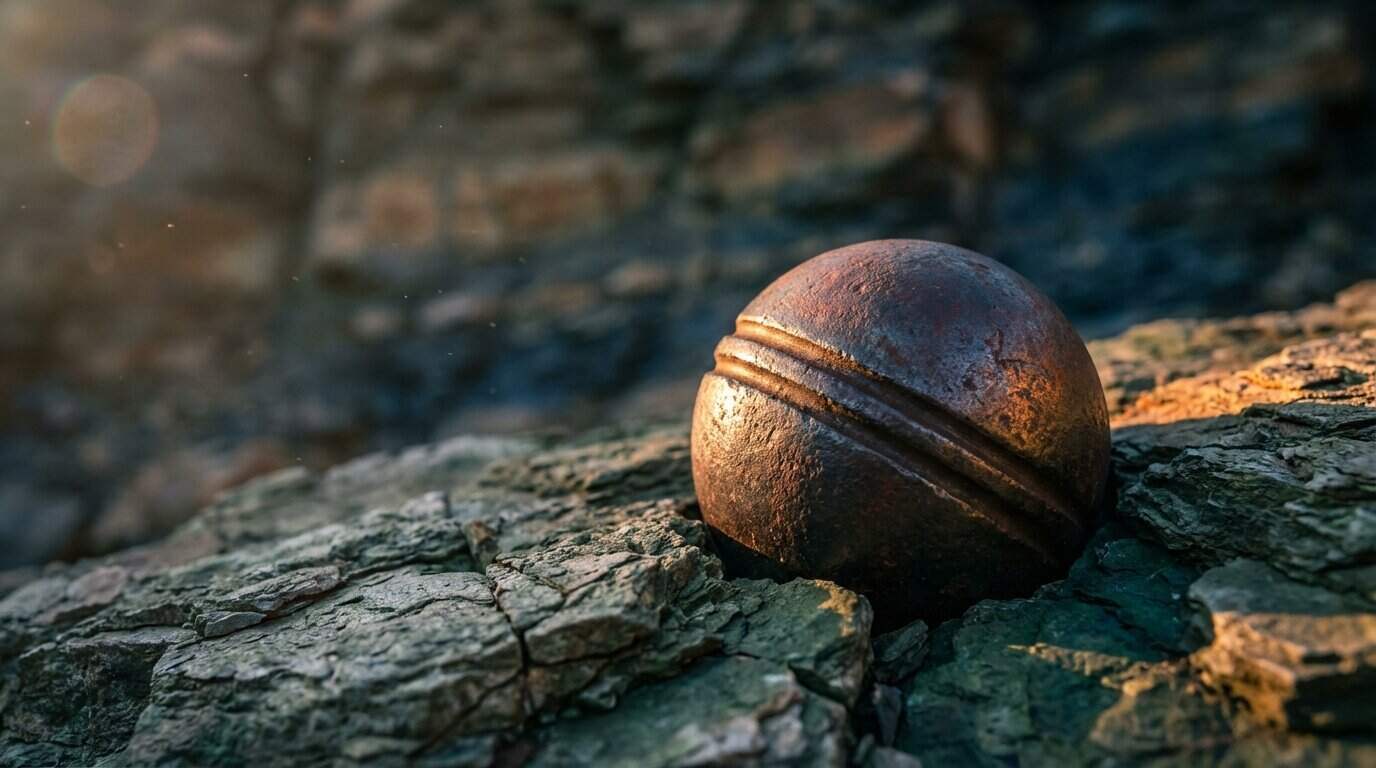
While the precision of the Klerksdorp spheres leads many to believe they are ancient technology, geologists point to a natural process known as concretion. These objects formed within pyrophyllite deposits nearly three billion years ago through the slow accumulation of minerals like hematite and wollastonite. As these minerals seeped through the soft volcanic ash, they naturally gathered around a central point, much like how a pearl grows inside an oyster. Over millions of years, the immense geological pressure and chemical reactions hardened these clusters into the sturdy, spherical shapes we find today. This explanation suggests that nature is capable of creating geometric wonders that rival human craftsmanship.
The most baffling feature of these spheres is the set of parallel grooves running along their equators, which many enthusiasts claim are too perfect to be natural. However, researchers from the South African Council for Geoscience suggest that these ridges may be the result of the surrounding rock layers. As the concretion grew within the sedimentary environment, it likely absorbed the fine layers of the host rock, creating those distinct, level lines. While this scientific view provides a logical framework for their existence, the sheer symmetry of the grooves continues to fuel the debate. It is a case where the beauty of natural chemistry looks so intentional that it challenges our understanding of the ancient world.
Despite the strength of the concretion theory, these objects remain a favorite topic for those who believe in out-of-place artifacts. The extreme hardness of the spheres and their resistance to weathering make them stand out significantly from the softer rock they are buried in. Even if we accept the geological explanation, the coincidence of such perfect geometry appearing billions of years before humans existed is truly remarkable. Whether they are simple mineral formations or remnants of a forgotten era, they serve as a bridge between the rigid laws of science and the limitless possibilities of our imagination. Do you think nature alone is responsible for such precision, or could there be a deeper secret hidden within these stones?
Ancient Technology Or Natural Wonder
The Klerksdorp spheres have long fueled the imagination of those who believe a lost, advanced civilization once walked the Earth. These curious objects, found deep within South African mines, often feature perfectly straight grooves that appear to be the work of a master craftsman rather than nature. Fringe researchers frequently point to these markings as evidence of ancient technology, arguing that such precision could not occur by chance in rock dated at nearly three billion years old. Because they are found in pyrophyllite deposits, some enthusiasts claim they are far more durable than any natural stone. This leads to the popular idea that they are harder than steel and practically indestructible, suggesting they were manufactured using tools that should not have existed in the distant past.
Geologists and mineralogists offer a different perspective by looking at the documented science of concretion. According to scientific reports, these spheres are likely natural formations of hematite or wollastonite that grew within sedimentary layers over millions of years. The famous equatorial grooves that look so intentional are actually the result of fine-grained layers of volcanic ash or sediment that weathered at a different rate than the rest of the object. While the legend says these balls cannot be scratched by a needle, testing on the Mohs scale shows they are actually quite soft, typically ranking around a four or five. This reality often clashes with the out-of-place artifact theories, yet the sheer variety and strange appearance of the spheres keep the debate alive.
Whether these objects are the discarded tools of an ancient race or a fascinating quirk of South African geology remains a point of spirited discussion. The mystery deepens when one considers how many of these spheres have been found, each with its own unique characteristics and varying degrees of symmetry. It is easy to see why someone would look at a perfectly round, grooved metallic ball and see the hand of an intelligent creator. While modern science provides a logical path for their creation, the visual evidence continues to challenge our understanding of what nature is capable of producing. Do you believe these spheres are evidence of a forgotten history, or are they simply a beautiful trick of the natural world?
Geological Marvels or Ancient Relics?
The story of the Klerksdorp spheres remains a fascinating tug of war between the rigid laws of geology and the limitless reach of human imagination. On one side, scientists point to the slow, natural processes of mineral growth that have occurred over billions of years within the South African earth. On the other side, the presence of those perfectly straight, parallel grooves continues to fuel the belief that these objects are out-of-place artifacts from a forgotten era. It is this specific clash between natural formation and the appearance of intelligent design that keeps the mystery alive in the minds of researchers and enthusiasts alike.
Whether these metallic spheres are clever geological tricksters or leftovers from an advanced ancient technology, they serve as a reminder that our planet still holds many secrets. The sheer age of the rock they call home makes the possibility of a manufactured origin both mind-boggling and deeply intriguing. While mainstream science may have its answers, the visual evidence of the spheres often leaves a lingering doubt that is hard to shake. This balance of evidence and wonder ensures that the debate over the Ottosdal objects will continue for generations to come.
What do you think about these strange metallic balls found deep within the ancient mines? Do you believe that nature alone is capable of crafting such precise, symmetrical patterns over millions of years, or is there a piece of the puzzle that science has yet to uncover? Perhaps these spheres are a silent message from a civilization that existed long before our recorded history began. Much like the astronaut connection often discussed in relation to other ancient relics, these spheres invite us to question the origins of our world. We invite you to share your thoughts and theories in the comments below as we continue to explore the world’s most enduring mysteries together.
Frequently Asked Questions
1. What are the Klerksdorp spheres made of?
These mysterious objects are typically found within pyrophyllite deposits and feature outer shells composed of hematite or wollastonite. While they have a metallic appearance, they are naturally occurring mineral forms that hardened over millions of years. Their unique composition allows them to remain intact while embedded in much older rock layers.
2. How old are these mysterious objects?
Geological dating of the rock layers in South Africa where these spheres were discovered places them at approximately three billion years old. This incredible age is what fuels the mystery, as it predates any known human civilization or complex life on Earth. They are among the oldest physical enigmas ever pulled from the ground.
3. Are the grooves on the spheres man-made?
The three parallel grooves around the center of the spheres look remarkably like they were turned on a precision lathe. While many observers believe these markings are evidence of ancient intelligence, some scientists argue they are the result of natural chemical processes. These lines remain the most debated feature of the objects because of their perfect symmetry.
4. Where exactly were the Klerksdorp spheres found?
These objects were discovered by miners working in mines near Ottosdal in South Africa. They are often referred to as Ottosdal objects because of this specific geographic location. The spheres were found deeply embedded inside solid pyrophyllite stone, requiring miners to carefully extract them from the earth.
5. Could these spheres be evidence of ancient aliens?
Many researchers who study out-of-place artifacts suggest these spheres might be tools or technology left behind by an advanced, non-human civilization. The precision of the equatorial grooves and their extreme age make it difficult to explain them through traditional history. This theory remains popular among those who believe Earth was visited by ancient astronauts billions of years ago.
6. What is the scientific explanation for their shape?
Mainstream science often identifies these objects as concretions, which are hard masses formed by the precipitation of mineral cement. Geologists suggest that as minerals grew within the soft volcanic ash, they naturally formed into round shapes. Over vast periods of time, these shapes hardened into the metallic spheres we see today.