
The Great Siberian Mystery: Exploring the Top Tunguska Event Theories
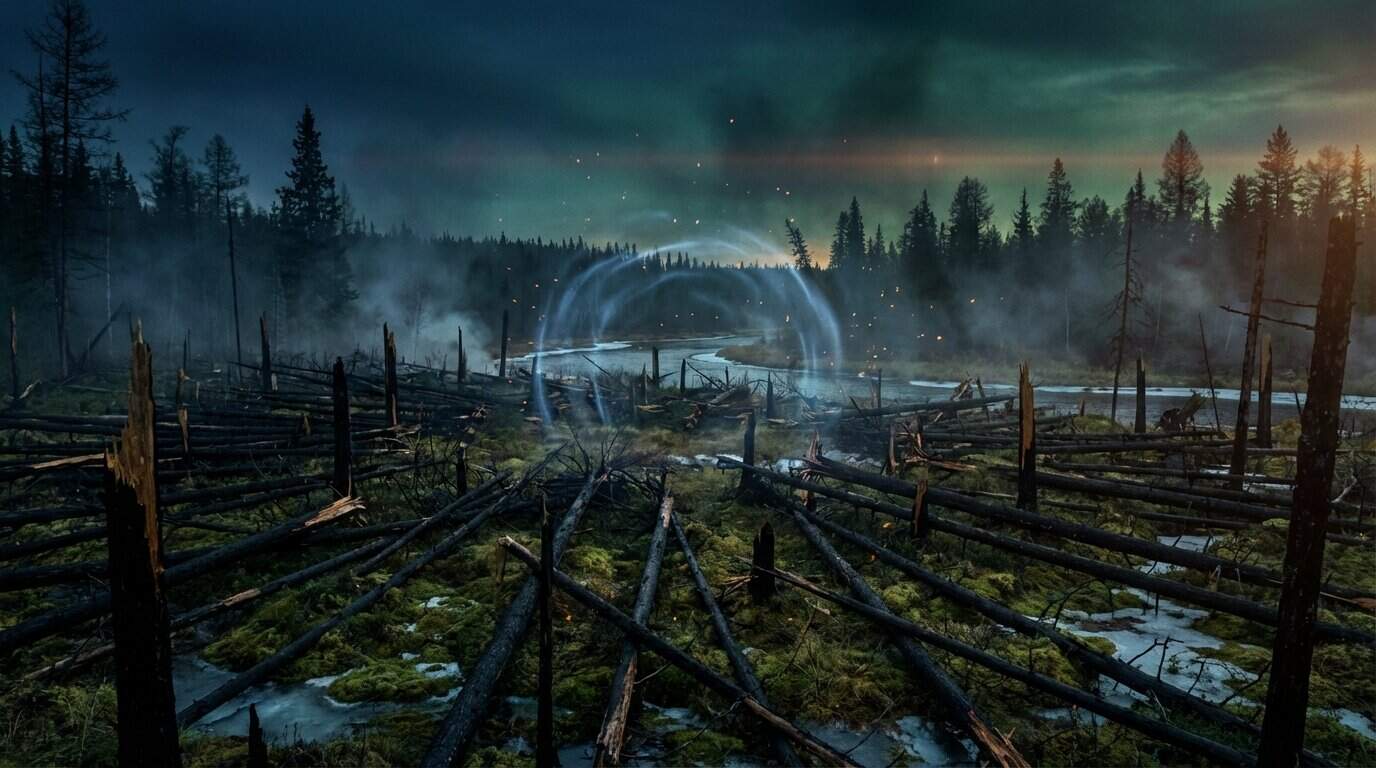
On a quiet summer morning in 1908, a massive fireball tore through the Siberian sky and exploded with the force of a thousand atomic bombs. This mysterious blast flattened eighty million trees in an instant, yet it left no crater behind for investigators to find. Today, the search for answers continues as researchers weigh various Tunguska event theories to explain how such a powerful force could vanish into thin air.
Locals reported a blinding light followed by hot winds so intense they knocked people off their feet hundreds of miles away. Even though over a century has passed, the site near the Podkamennaya Tunguska River remains a place of deep intrigue and scientific debate. From icy comets to more fringe possibilities, the event stands as a great modern mystery.
Key Takeaways
- The 1908 Tunguska event was a massive explosion, equivalent to a thousand atomic bombs, that flattened 80 million trees without leaving a traditional impact crater.
- Evidence suggests the blast was a high-altitude airburst caused by a 120-foot-wide asteroid or comet fragment that vaporized five miles above the earth’s surface.
- Microscopic mineral fragments and the unique funnel shape of Lake Cheko provide the primary physical clues used to distinguish between a total atmospheric disintegration and a partial ground impact.
- The lack of a primary impact site has fueled diverse theories ranging from cosmic phenomena like antimatter and primordial black holes to human-centric legends involving Nikola Tesla’s experiments.
The Scientific Case for Space Rock Airbursts
The most popular scientific explanation suggests that a massive space rock, likely a stony asteroid or a fragment of a comet, entered the atmosphere at incredible speeds. As this cosmic traveler plunged toward the Siberian wilderness, the intense pressure and heat from the air caused it to shatter before it could reach the surface. This high altitude explosion, known as an airburst caused a shockwave that slammed into the ground with the force of a massive bomb. NASA researchers believe this explains why the trees were flattened in a butterfly pattern without leaving a traditional impact crater behind. It was a phantom strike that left the earth scarred but the culprit mostly vaporized.
Whether the object was made of solid rock or icy comets material remains a topic of friendly debate among researchers. A comet would have been mostly ice and dust, potentially explaining why so little solid debris was found at the site during early expeditions. However, many modern experts point to a small asteroid because its denser structure would be more likely to survive the trip through the thickest parts of our atmosphere. According to studies by the Planetary Science Institute, the object likely measured around 120 feet across and exploded roughly five miles above the forest floor. This height was the perfect distance to maximize the destruction below while leaving the sky filled with glowing dust for days.
The lack of a giant hole in the ground does not mean there is no evidence of the visitor left behind. Scientists have spent decades sifting through the soil and tree resin to find microscopic clues from the stars. They discovered tiny metallic spheres and fragments of minerals like lonsdaleite, which is a rare form of diamond that only forms under extreme heat and pressure. These tiny particles act like a fingerprint for a cosmic impact, proving that something from beyond our world was responsible for the chaos. While the main body of the rock vanished into thin air, these microscopic remains tell the story of a terrifying close encounter with the solar system.
Searching for Clues in Lake Cheko
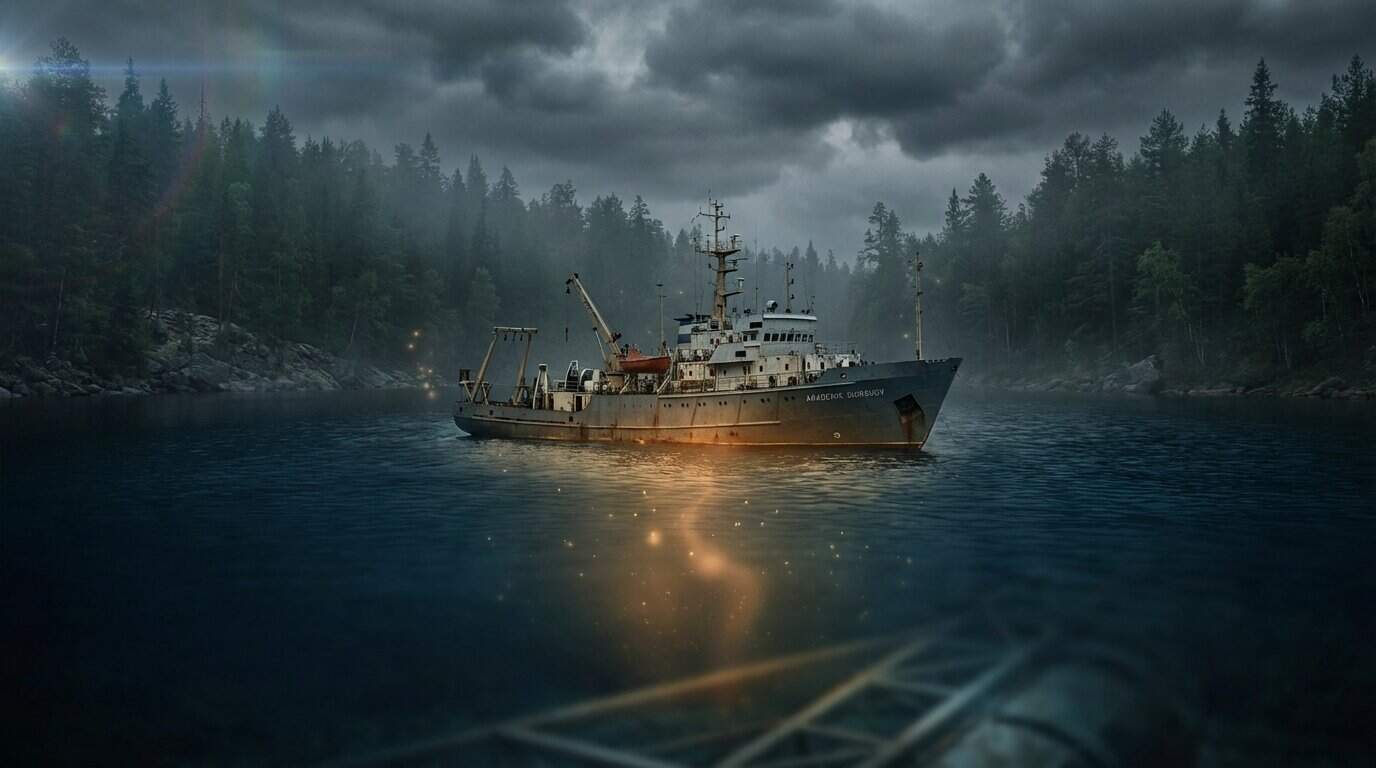
Deep in the Siberian wilderness, about five miles from the center of the massive explosion, lies the mysterious Lake Cheko. While most of the region is filled with shallow marshes, this lake is unusually deep and shaped like a perfect funnel. Italian researchers from the University of Bologna began studying the site in the late 1990s, noticing that its bowl like shape is very different from other local lakes. They used sonar to map the bottom and discovered a strange reflection that suggests a dense object might be buried deep beneath the lake bed. This led to the theory that a fragment of the original space rock survived the blast and slammed into the ground to create the lake.
Critics of this theory point out that the trees surrounding the water appear to be older than the 1908 event, which would mean the lake existed before the explosion. However, the research team argues that the sediment at the bottom of the lake shows it is only about a century old. They believe the impact was not a high speed collision but rather a slower plunge by a piece of the object that was moving at a lower velocity. If this is true, Lake Cheko could be the only physical crater left behind by the disaster. Scientists continue to debate whether the lake is a natural formation or a direct result of the Tunguska fireball.
The search for answers at Lake Cheko highlights the ongoing struggle to find physical evidence of what actually happened that summer morning. Even though many experts believe the object exploded high in the atmosphere, the existence of this deep lake keeps the possibility of a solid impactor alive. Finding a piece of the original meteor or comet would change everything we know about the event and its composition. It serves as a reminder that the Siberian taiga may still be hiding secrets beneath its quiet waters. Do you think Lake Cheko is a hidden impact crater, or is its perfect shape just a strange coincidence of nature?
Wild Theories from Black Holes to Antimatter
Beyond the standard ideas of rocks and ice, some researchers have proposed that a tiny black hole might have been the culprit for the massive Siberian blast. In 1973, physicists Albert Jackson and Michael Ryan suggested that a primordial black hole with the mass of a large asteroid could have zipped through the Earth. According to their theory, this dense object would have entered the atmosphere in Siberia and exited through the North Atlantic. While this would explain the lack of a crater or physical debris, most scientists point out that there was no exit explosion recorded on the other side of the world. Still, the idea of a microscopic tear in the fabric of space and time remains a favorite among those who enjoy a touch of science fiction in their history.
Another fascinating possibility involves a high speed collision with a chunk of antimatter falling from deep space. In the 1940s, Lincoln LaPaz and later Nobel laureate Willard Libby explored whether a small amount of antimatter could have vanished upon hitting our atmosphere. This meeting of matter and antimatter would cause a total release of energy, leaving behind absolutely no chemical traces or solid fragments. This theory matches the observed reality of flattened trees with no meteoritic dust found in the immediate soil. However, critics often note that antimatter is incredibly rare in our solar system and would likely have reacted much higher up in the atmosphere.
Some people even look toward the legendary inventor Nikola Tesla and his mysterious experiments with wireless energy. Local legends and fringe researchers sometimes suggest that a test of his Death Ray or a massive power transmission from his Wardenclyffe Tower went off course. While Tesla was known for his ambitious ideas about sending electricity through the air, there is no historical documentation that he was conducting such powerful tests on that specific day in 1908. Despite the lack of evidence, the coincidence of his work occurring during the same era keeps the connection alive in many mystery circles. It serves as a reminder that when science cannot provide a quick answer, the human imagination will always step in to fill the gaps.
Unlocking the Secrets of the Siberian Blast
The Tunguska event serves as a humbling reminder of the immense power hidden within our solar system. Even after more than a century of investigation, the Siberian wilderness refuses to give up all its secrets. While most researchers point to a rocky asteroid or a frozen comet as the likely cause, the lack of a traditional impact crater keeps the door open for more imaginative ideas. This massive explosion changed the environment forever and continues to spark curiosity in the minds of scientists and enthusiasts alike. It highlights how much we still have to learn about the cosmic neighborhood we call home.
Exploring the various theories behind this disaster reveals a fascinating mix of hard science and speculative mystery. From the widely accepted airburst models to the more fringe ideas involving black holes or alien technology, each explanation attempts to solve a unique puzzle. Much like the Rendlesham Forest UFO incident, the evidence of flattened trees and strange atmospheric glows provides a foundation for these stories, yet no single theory perfectly fits every detail. This lingering uncertainty is what makes the Tunguska event mystery so captivating for every new generation. It encourages us to look at the stars with a sense of wonder and a healthy dose of caution.
Now that the evidence and the most popular theories have been laid out, it is time to consider which explanation feels most right. Does the idea of unraveling the Tunguska event cause satisfy the need for a scientific answer, or does a more unusual theory capture the imagination? Perhaps the truth is something that has not even been considered by modern experts yet. Readers are encouraged to share their thoughts and join the conversation about what really happened on that summer morning in 1908. Every perspective adds another layer to this enduring historical riddle.
Frequently Asked Questions
1. What exactly happened during the Tunguska event?
A massive fireball streaked across the Siberian sky in 1908 and exploded with enough energy to flatten 80 million trees. This blast created a shockwave felt hundreds of miles away, yet it left behind no traditional impact crater. It remains the largest witnessed explosion of its kind in modern history.
2. Why was there no crater found at the site?
The most likely explanation is that the object exploded several miles above the ground in a high altitude airburst. Because the pressure caused the space rock to shatter before it hit the earth, the energy was released as a massive shockwave rather than a direct physical strike. This left the ground scarred and the trees flattened without creating a deep hole.
3. Was the object an asteroid or a comet?
Scientists are still debating whether the visitor was a stony asteroid or an icy comet fragment. NASA researchers often lean toward a small asteroid because its dense structure would better survive the trip through the atmosphere. However, a comet made of ice and dust would explain why so little solid debris was found by early investigators.
4. How powerful was the Tunguska explosion?
The blast was roughly one thousand times more powerful than the atomic bomb dropped on Hiroshima. It released enough energy to knock people off their feet and shatter windows across vast distances. The heat was so intense that locals reported feeling as if their clothes were catching fire even from miles away.
5. What are some of the more unusual theories about the event?
Beyond space rocks, some researchers have explored fringe ideas like a small chunk of antimatter or a tiny black hole passing through the planet. Others have even wondered if an ancient technological craft experienced a malfunction over the remote wilderness. Much like the Roswell incident explained, these stories often involve intense speculation about what the government or military might be hiding from the public. While these ideas are less likely, they add to the deep sense of mystery surrounding the site.
6. Could an event like Tunguska happen again today?
Earth is constantly moving through a solar system filled with debris, so another airburst is certainly possible in the future. Modern astronomers now use advanced telescopes to track near earth objects to provide early warnings. While a strike of this size is rare, staying curious and watchful helps us prepare for whatever might come from the stars. Sometimes these objects are identified as a messenger from the stars, while others are simply remnants of our own solar system’s formation.