The Enduring Mystery of the Hollow Earth Theory
Imagine standing on solid ground and wondering if a vast, hidden world exists just miles beneath your boots. For centuries, explorers and dreamers have championed the hollow earth theory, suggesting our planet is not a solid ball of rock but a shell containing strange civilizations. From the scientific proposals of Edmond Halley to the wild expeditions of the 19th century, this idea has captured the human imagination like few others. It challenges everything we think we know about the world under our feet.
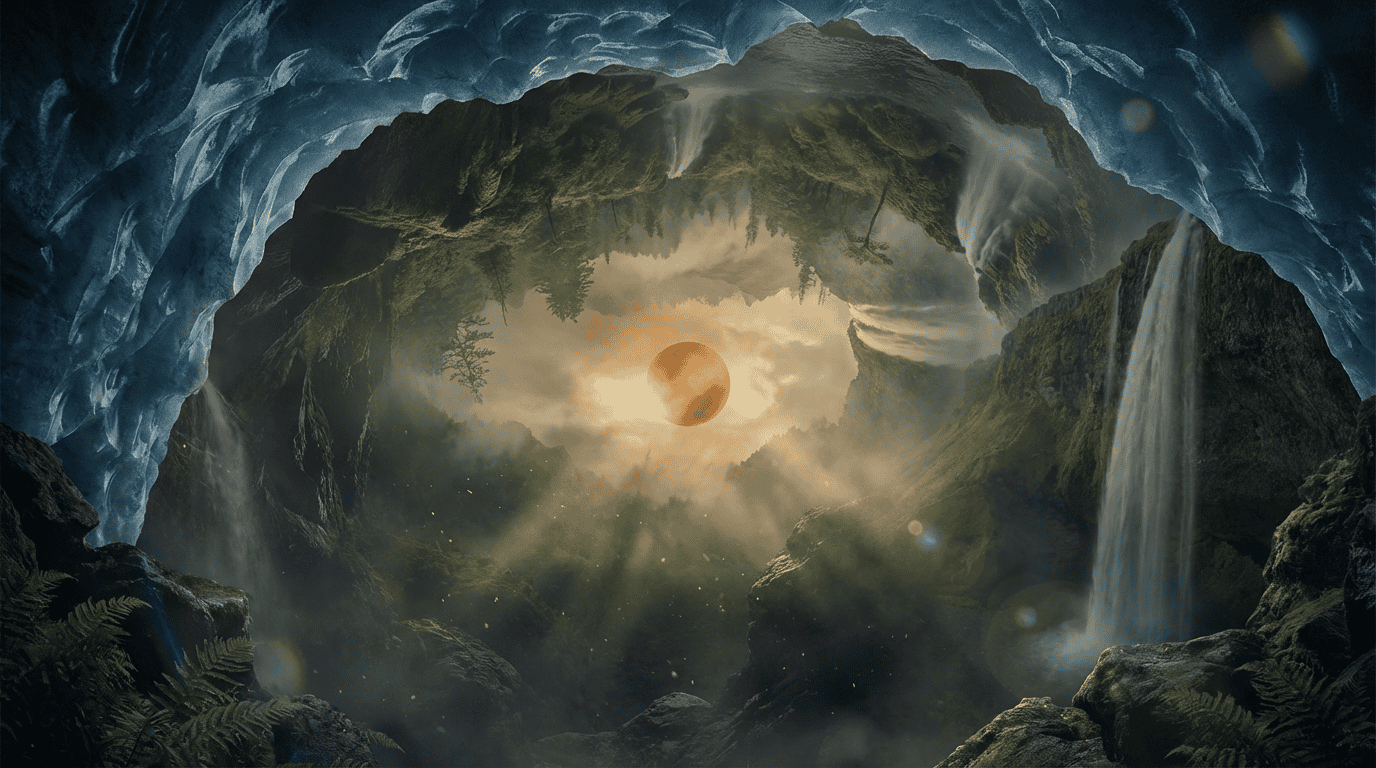
While modern geology dismisses the idea, whispers of polar openings and subterranean suns refuse to fade away completely. Stories of secret maps and government cover-ups keep the mystery alive in the minds of truth-seekers around the globe. Investigating this legend reveals a fascinating blend of forgotten history and enduring questions about what truly lies at the center of the Earth. The journey into the depths is far more complex than just science fiction.
Key Takeaways
- Renowned astronomer Edmond Halley originally proposed the Hollow Earth theory in 1692 as a serious scientific hypothesis to explain shifting magnetic fields.
- Modern seismological data and gravitational physics refute the theory, confirming that earthquake waves travel through dense, solid rock rather than a hollow void.
- Literature by authors like Jules Verne and Edgar Allan Poe transformed the geological concept into an enduring cultural legend that outlived its scientific credibility.
- Contemporary conspiracy narratives have evolved to link the Hollow Earth to alleged government cover-ups, UFO origins, and the apocryphal diaries of Admiral Richard E. Byrd.
Edmond Halley and the Origins of Inner Worlds
While most people know Edmond Halley for his famous comet, his contributions to the theory of inner worlds are equally fascinating. In 1692, this renowned astronomer proposed that the Earth consisted of a hollow shell about 500 miles thick. To explain shifting magnetic fields, he suggested two inner concentric shells and an innermost core were rotating at different speeds inside the planet. Halley even speculated that these inner worlds might be habitable and lit by a luminous atmosphere. This was not the rambling of a madman, but a serious attempt by a leading scientist to solve the mystery of magnetic variation.
The concept remained quiet until the early 19th century when an American army officer named John Cleves Symmes Jr. brought it back into the spotlight. Symmes declared to the world in 1818 that the Earth was hollow and habitable within. He famously claimed that massive open entrances to this inner world existed at both the North and South Poles. He spent years campaigning for funding to lead an expedition to these polar openings, which eventually became known as Symmes Holes. Although he never made the journey, his relentless lectures planted the seed of a hidden subterranean world in the public imagination.
These early scientific proposals transformed what was once a mythological concept into a tangible possibility for explorers. Writers like Edgar Allan Poe and Jules Verne drew heavy inspiration from Symmes and Halley to craft their own tales of subterranean adventures. While modern geology has moved on from the concentric shell model, the romantic idea of a hidden world beneath our feet refuses to fade away. The work of these men serves as a reminder that science often begins with the courage to ask impossible questions. It laid the groundwork for generations of seekers looking for the truth below the surface.
Legends of Agartha and Subterranean Civilizations

While early scientists looked for physical openings at the poles, later thinkers turned their gaze toward the spiritual implications of a world within. Occultists began describing Agartha, a legendary kingdom said to reside deep inside the Earth’s crust. According to writers like Alexandre Saint-Yves d’Alveydre, this subterranean land serves as a repository of ancient wisdom and advanced knowledge protected from surface war. Many believers suggest that peaceful civilizations retreated underground millennia ago to escape natural disasters or human conflict. This shift transformed the Hollow Earth from a geological hypothesis into a mystical promised land waiting to be discovered.
Before these spiritual theories took full root, classic literature played a massive role in sparking the public imagination. Jules Verne released his masterpiece Journey to the Center of the Earth in 1864, which depicted a prehistoric ecosystem surviving beneath our feet. His vivid descriptions of underground oceans and living dinosaurs made the impossible feel strangely plausible to readers of the Victorian era. Fiction writers like Edgar Rice Burroughs later expanded on these themes with tales of Pellucidar, a jungle world lit by an inner sun. These stories blurred the lines between fantasy and reality, keeping the concept alive long after geologists had moved on.
The legend took a darker and more paranoid turn in the 20th century with the arrival of the Shaver Mystery. In the pages of Amazing Stories magazine, a writer named Richard Shaver claimed to have personal contact with a sinister underground race known as the Deros. He described these beings as using ancient technology to torment surface dwellers with misfortune and mental influence. Editor Ray Palmer promoted these tales as true accounts, causing a massive stir among readers who wrote in with their own strange experiences. This era bridged the gap between old folklore and modern conspiracy theories regarding hidden bases and non-human entities.
Seismic Evidence and the Density Problem
When massive earthquakes shake the planet, they send powerful shockwaves rippling through the globe like a ringing bell. Seismologists track these vibrations to create a detailed map of what lies beneath our feet. If the Earth contained a vast, habitable void as proposed by John Cleves Symmes Jr., these waves would behave very differently than they do in reality. Instead of passing through a solid core, the energy would dissipate or reflect off the inner shell in chaotic patterns. However, data consistently shows these waves speeding up as they travel through dense, solid layers of rock and metal.
Beyond the behavior of earthquake waves, the sheer weight of the world presents a significant challenge to the hollow earth model. Isaac Newton proved that gravity is determined by mass, meaning a hollow planet would have very little gravitational pull to keep our feet on the ground. If the interior were truly empty, people standing on the surface would weigh almost nothing and might even drift off into space. Geologists have calculated that the average density of Earth is much higher than surface rocks, implying a very heavy and solid center. This creates a fascinating contradiction between the romantic idea of a hidden inner world and the undeniable laws of physics.
Admiral Byrd and Modern Conspiracy Narratives

Admiral Richard E. Byrd was a decorated American naval officer and explorer known for his daring expeditions to the poles. While his official logs describe icy wastelands, a persistent legend claims he found something far more mysterious during a 1947 flight over the North Pole. According to stories that surfaced years later, Byrd allegedly kept a secret diary detailing a flight into a warm, lush opening in the ice. In this hidden world, he supposedly encountered prehistoric animals and an advanced civilization living inside the Earth. Although his official records show he was elsewhere at the time, this narrative remains a central pillar of the Hollow Earth mythology.
These accounts gained new life as the fascination with flying saucers exploded during the Cold War era. Publishers like Ray Palmer promoted the idea that Unidentified Flying Objects might not be coming from outer space, but rather from inside our own planet. The theory suggests that the advanced beings Byrd allegedly met are the pilots of these craft, protecting their subterranean cities from surface dwellers. This connection turned the Hollow Earth from a geographical curiosity into a complex sci-fi conspiracy involving hidden bases and ancient technology. It provides a convenient explanation for why UFOs are often sighted near the poles or entering the oceans.
The rise of the internet allowed these vintage legends to evolve and spread to a new generation of truth-seekers. Online communities frequently analyze satellite imagery from Google Earth, looking for blurred patches at the poles that might hide the entrances to the inner world. Skeptics argue these are simply data artifacts or stitched images, but enthusiasts view them as proof of a government cover-up. Despite seismological data confirming a solid planetary core, the romantic idea of a hidden realm persists in books, movies, and forums. The story of Admiral Byrd serves as the bridge between old nautical adventures and modern questions about what really lies beneath our feet.
From Scientific Hypothesis to Enduring Legend
What began as a serious scientific hypothesis by Edmond Halley has transformed into one of the most enduring legends in human history. Early thinkers like John Cleves Symmes Jr. championed the idea of polar openings with intense dedication, believing a lush world waited inside. While modern geology eventually mapped the solid layers of the planet, the concept found a new home in the pages of adventure novels. Stories by Jules Verne and Edgar Rice Burroughs kept the dream alive, turning the interior world into a playground for dinosaurs and lost civilizations. This transition from academic theory to beloved fiction ensured that the Hollow Earth would never truly disappear from the public imagination.
The enduring power of this theory lies in the universal human desire to explore the unknown parts of our map. Even with satellites mapping every inch of the surface, the ground beneath us remains largely inaccessible and mysterious. Proponents of the theory argue that ancient myths and unexplained magnetic anomalies still point toward something unexpected deep below. It is thrilling to imagine that a hidden realm like Agartha might exist just miles beneath the crust, safe from surface troubles. This possibility offers a sense of wonder that cold, hard scientific data simply cannot replicate.
Modern seismology provides strong evidence for a solid core, yet the legend persists in conspiracy circles and pop culture alike. Perhaps the Hollow Earth represents a metaphorical journey inward, or maybe there are still physical secrets waiting to be discovered in the deep crust. Dismissing the idea entirely ignores the rich history and the passionate community that keeps the search for the inner world alive. Whether viewed as a physical reality or a captivating story, the concept challenges us to question what we really know about our home planet. Why do you think the promise of a subterranean world remains so captivating in an age of scientific certainty?
Frequently Asked Questions
1. What is the Hollow Earth theory?
This theory suggests that our planet is not a solid ball of rock but actually a shell containing a vast, hidden world. Proponents believe that strange civilizations and ecosystems might exist miles beneath our feet. It challenges standard scientific views by proposing that the center of the Earth is habitable and mysterious.
2. Did a real scientist actually propose this idea?
Yes, the renowned astronomer Edmond Halley proposed in 1692 that the Earth consisted of a hollow shell about 500 miles thick. He developed this concept to explain shifting magnetic fields and even speculated that the interior might be inhabited. This was a serious attempt by a leading scientific mind to solve the mysteries of his time.
3. Who was John Cleves Symmes Jr.?
John Cleves Symmes Jr. was an American army officer who revitalized the theory in the early 19th century. He famously claimed that the Earth was hollow and habitable within, urging the world to support an expedition to the center. Symmes dedicated his life to proving that a new world awaited explorers beneath the crust.
4. Where are the entrances to this inner world supposed to be?
According to legends and theorists like Symmes, massive openings exist at both the North and South Poles. These gateways are often described as wide passages that allow travel from the surface to the inner sphere. Many stories claim that these locations are kept off modern maps to hide the truth from the public.
5. How would life survive inside the Earth without sunlight?
Edmond Halley originally speculated that the inner atmosphere might be luminous and provide its own light. Later theories expanded on this by suggesting the existence of a central, subterranean sun that warms the inner world. This internal light source would allow unique plants and civilizations to thrive in the depths.
6. Why does this theory persist despite modern geology?
While seismic data suggests a solid planet, the allure of a hidden world and unexplained magnetic phenomena keep the idea alive. Stories of secret maps and government cover-ups feed the curiosity of those who doubt the official narrative. For many, the possibility of an undiscovered frontier right beneath us is too fascinating to ignore.
7. Is there any historical evidence for these claims?
The theory is rooted in the serious speculations of historical figures like Halley and the passionate campaigns of Symmes. While physical proof remains elusive, historical records show that these ideas were once debated by scholars and explorers. Examining this past reveals a blend of forgotten science and enduring mystery.