The 1561 Nuremberg UFO Battle: What Really Happened in the Skies Over Germany?
On a spring morning in 1561, the sky above Nuremberg, Germany, reportedly filled with hundreds of strange, warring objects. Citizens witnessed what appeared to be a chaotic aerial battle. For over an hour, they watched as spheres, crosses, and tube-like shapes darted erratically across the dawn sky. The event culminated with the appearance of a large black spear and objects reportedly crashing outside the city. This bizarre spectacle was not just a fleeting moment of confusion; it was an event so profound that it would be documented and debated for centuries.
This celestial event is not lost to folklore, as it was meticulously documented in a popular news broadsheet by artist Hans Glaser. His detailed woodcut illustration and accompanying text captured the bewildering spectacle, providing a tangible historical record of what the townspeople witnessed. Because of this contemporary account, the 1561 event has become a cornerstone in the history of unexplained aerial phenomena, often cited as one of the earliest “mass UFO sightings.” The question remains: what did the people of Nuremberg truly see? Was it a battle of divine signs, a rare atmospheric event, or something that defies conventional explanation?
Key Takeaways
-
In 1561, citizens of Nuremberg, Germany, witnessed a chaotic, hour-long aerial phenomenon described as a battle between hundreds of objects like spheres, crosses, and tubes.
-
The event is known from a contemporary news broadsheet by artist Hans Glaser, which provides a detailed historical record with a woodcut illustration and written account.
-
Three main theories attempt to explain the event: an extraterrestrial battle, a complex atmospheric optical illusion like a sundog, or a natural event interpreted through the lens of mass religious hysteria.
-
The spectacle reportedly concluded with the appearance of a large black spear and some objects crashing outside the city, though no physical evidence was ever recovered.
-
Modern ufologists often cite the Nuremberg event as one of the earliest documented mass UFO sightings, interpreting the objects as alien craft.
-
Despite the historical documentation, the lack of physical evidence and a definitive explanation means the event remains one of history’s most compelling unsolved aerial phenomena.
A Dawn of Chaos
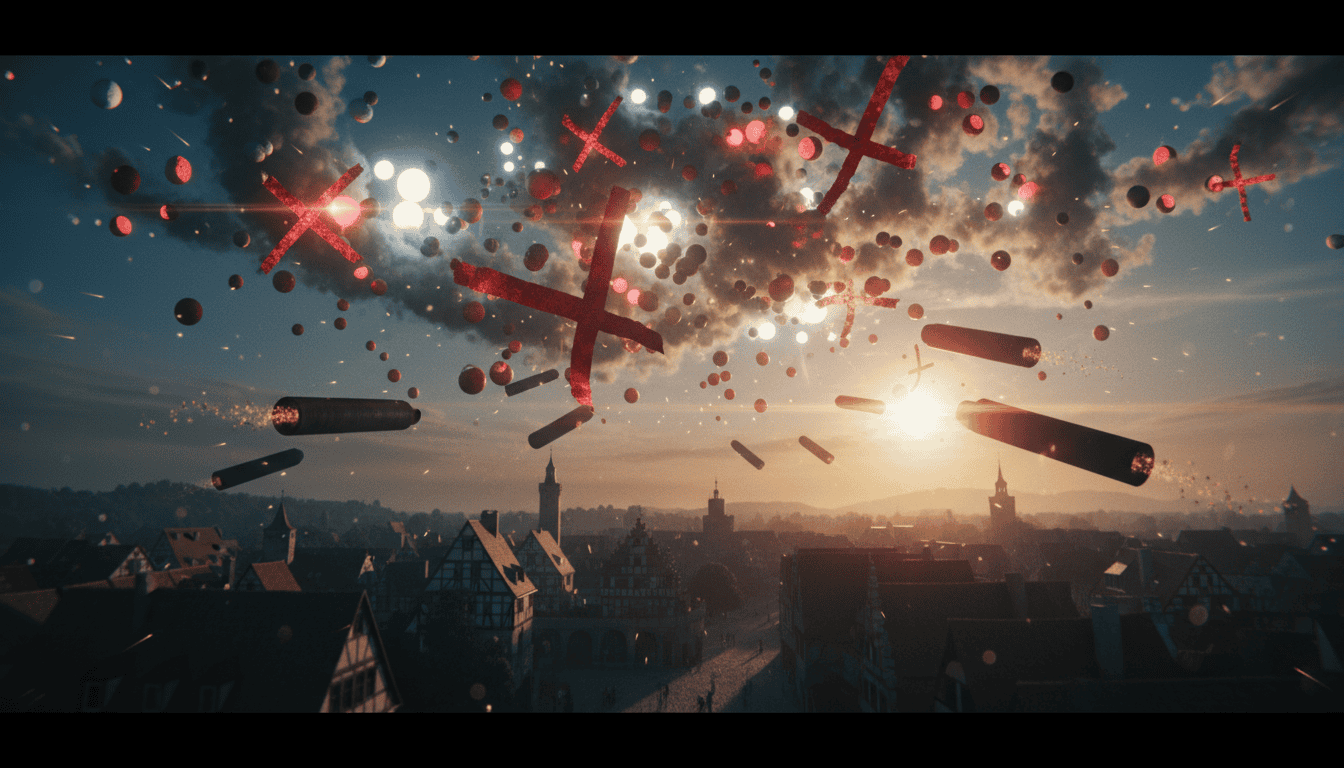
The spectacle began at sunrise on April 14, 1561. According to the account documented by artist Hans Glaser, the event started with the appearance of two blood-red, cylindrical objects from which numerous spheres emerged. These globes, colored red, blue, and black, appeared alongside crosses and other tubes near the rising sun. For over an hour, these objects darted erratically across the sky in what witnesses described as a terrifying aerial display.
Glaser’s broadsheet vividly portrays this “dreadful apparition” as a chaotic battle, with the various objects appearing to fight one another “vehemently.” The spheres and crosses were seen moving back and forth between the sun, seemingly colliding as they flew in disarray. This intense activity reportedly lasted for more than an hour, creating a scene of confusion and fear for those watching from below. The sheer number and frantic movement of the objects gave the impression of a large-scale conflict unfolding in the heavens.
The event climaxed as the celestial battle seemed to wind down, with the objects appearing to grow “fatigued to death.” Following this period of chaos, a massive, black, spear-like object was seen, pointing from east to west. Glaser’s text reports that the remaining globes and tubes then fell from the sun to the earth, landing in the fields outside the city. A “great smoke” was observed rising from the ground where they crashed, though no physical wreckage was ever officially recovered.
Theories Under the Microscope

One popular theory frames the event as an extraterrestrial conflict, a notion that gained traction in the 20th century. Modern ufologists point to Hans Glaser’s descriptions of “globes,” “crosses,” and “tubes” firing at each other as clear evidence of advanced, non-human craft. The large, black spear-shaped object is often interpreted as a mothership, and the entire spectacle is seen as an ancient precursor to modern mass UFO sightings. Under this hypothesis, the event was not a mere celestial anomaly but a historical record of an alien battle witnessed by an entire city.
Skeptics and scientists, however, offer explanations grounded in earthly phenomena, such as complex atmospheric optics. One leading scientific theory proposes the “battle” was an unusually vivid parhelion, or “sundog” event, where ice crystals in high-altitude clouds refract sunlight to create phantom suns, halos, and bright pillars of light. According to atmospheric scientists, these elements can appear to move and shift, which could be perceived as a conflict by observers unfamiliar with the phenomenon. While a unique meteor shower is also considered, the reported duration and erratic movements make a complex optical illusion a more fitting, though still debated, natural explanation.
A third perspective blends the natural with the psychological, suggesting the event was a case of mass interpretation fueled by cultural anxieties. In the 16th century, the sky was seen as a canvas for divine messages and omens, and Nuremberg was a city tense with religious and political conflict. This theory posits that a notable but natural event, perhaps a sundog or meteor procession, was collectively amplified through the lens of religious superstition and mass hysteria. What began as a strange light show in the sky may have been transformed into a symbolic celestial war by the fears and beliefs of the people on the ground.
Conclusion
The 1561 Nuremberg celestial phenomenon endures as one of history’s most compelling and debated aerial events. Hans Glaser’s broadsheet provides a singular, vivid testimony of a sky filled with warring globes, crosses, and tubes, culminating in the appearance of a large black spear and a reported crash outside the city. Explanations range from meteorological optics like sundogs to mass psychological events, yet no single theory fully satisfies all the details described in the historical account. The incident remains a fascinating intersection of documented observation and the powerful religious and cultural lens through which a 16th-century society would interpret such a spectacle.
The Nuremberg “battle” serves as a powerful reminder of humanity’s long-standing fascination with the unknown in the skies. The core questions it raises about perception versus reality are similar to those in modern UAP discussions. Without physical evidence, the event will likely remain a historical puzzle, preserved in Glaser’s iconic woodcut and open to endless interpretation. This case challenges readers to weigh historical testimony against scientific possibility and consider how our own beliefs shape our view of the extraordinary. After reviewing the evidence and theories, what do you believe is the most plausible explanation for what the citizens of Nuremberg witnessed?
Frequently Asked Questions
1. What exactly happened during the 1561 Nuremberg event?
On April 14, 1561, citizens of Nuremberg witnessed a chaotic, hour-long aerial display at dawn. Various objects, including spheres, crosses, and tubes, appeared to dart erratically and battle one another in the sky. The spectacle concluded when a large black spear appeared and some objects reportedly crashed outside the city.
2. How do we know this event actually occurred?
The event was documented in a popular news broadsheet by artist Hans Glaser, a common method of reporting news at the time. His detailed woodcut illustration and written account provide a direct, contemporary historical record of what witnesses reported seeing.
3. What did the objects in the sky look like?
The sky was reportedly filled with spheres of red, blue, and black, as well as blood-red crosses and two large, cylindrical tubes. After the objects battled, a large, black spear-like object was seen, marking the end of the main phenomenon.
4. Was this considered a ‘UFO battle’ at the time?
No, the term ‘UFO’ is a modern invention. The 16th-century account describes the event as a ‘dreadful apparition’ and was likely interpreted through a religious lens as a divine warning. The idea of it being an extraterrestrial battle is a much more recent interpretation.
5. What are the scientific explanations for the Nuremberg event?
Scientific explanations suggest the event could have been a complex atmospheric optical phenomenon, such as a ‘sundog’ or other light refractions from ice crystals. These can create vivid illusions of shapes and lights in the sky, though this theory may not account for all the specific details reported.
6. Did anything actually crash?
Hans Glaser’s broadsheet states that after the aerial battle, several objects fell to the earth outside the city and were consumed in a thick cloud of smoke. Despite this dramatic account, no physical evidence or wreckage from this reported crash has ever been recovered.