Decoding The Mystery Of The Copper Scroll Treasures
Deep within the dusty caves of the Judean wilderness, a discovery was made in 1952 that sounded like something straight out of an adventure novel. While other ancient texts from the era were written on fragile parchment, archaeologists unearthed a mysterious eight-foot plaque made of nearly pure metal. This fascinating artifact contained a detailed map leading to the legendary copper scroll treasures, a massive hoard of hidden gold, silver, and precious incense. It was a physical inventory of unimaginable wealth, sparking a historical mystery that continues to captivate the world today.
Because the ancient metal was too brittle to simply unroll, scientists had to carefully slice it into twenty-three strips using a high-speed saw just to read its secrets. What they translated was a tantalizing list of hidden fortunes scattered across the desert. While some skeptics view the text as a mere myth, the incredibly specific directions suggest these riches were very real and deliberately hidden from an approaching threat. The possibility remains that a staggering fortune still lies buried beneath the ancient sands, waiting for the right person to finally decode the clues.
Key Takeaways
- Discovered in 1952 at Qumran, the Copper Scroll is a unique ancient artifact crafted from nearly pure metal rather than traditional fragile parchment.
- Because the oxidized copper was too brittle to unroll, scientists had to painstakingly slice the cylinders into twenty-three strips using a circular saw to reveal the text.
- The translated text serves as a literal treasure map, detailing massive quantities of hidden gold, silver, and incense protected by cryptic Hebrew and Greek codes.
- Despite specific ancient directions and modern archaeological efforts, the legendary fortune remains undiscovered beneath the Judean desert due to drastically shifting geographical landmarks.
Discovery In Cave 3 At Qumran
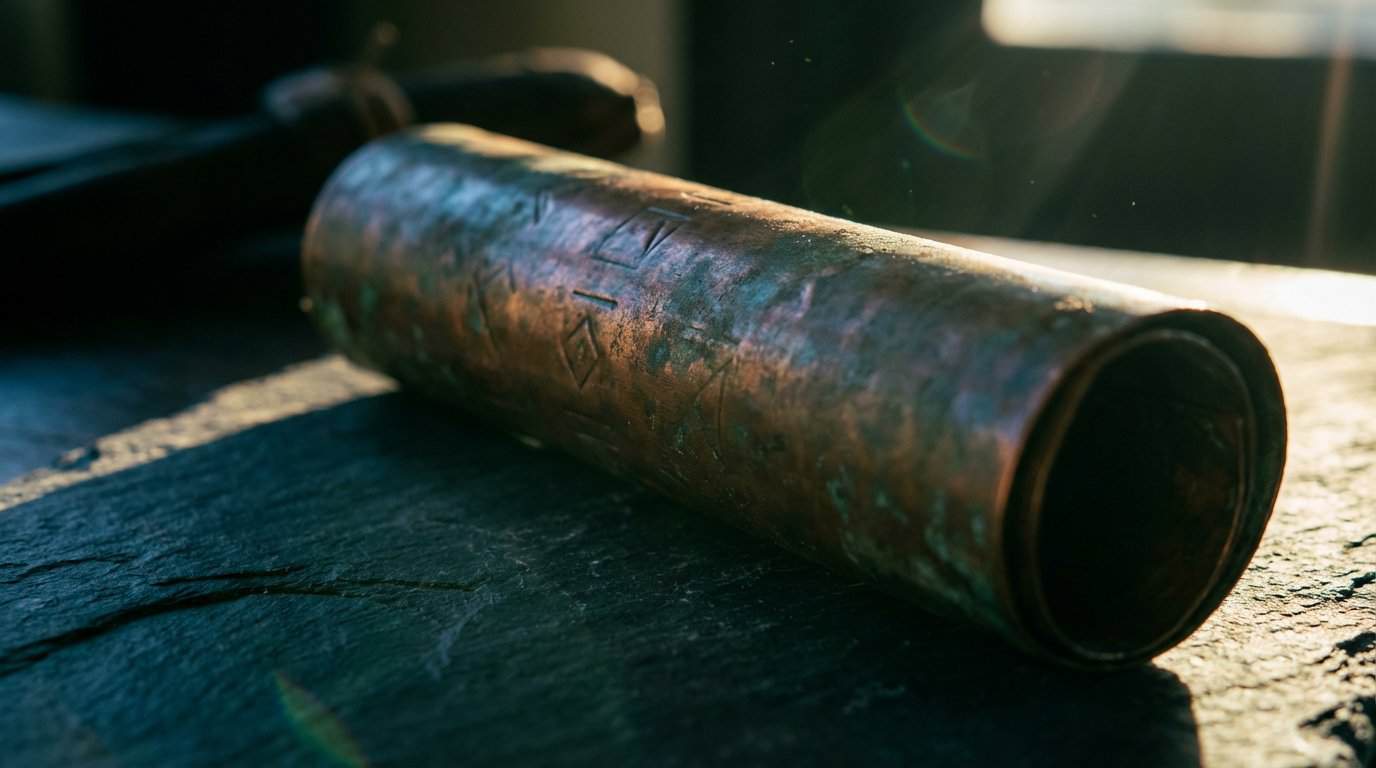
In March 1952, a team of international archaeologists made a startling find deep within the dusty shadows of Cave 3 at Qumran. While searching for more of the famous Dead Sea Scrolls, they uncovered two mysterious cylinders resting quietly in the ancient dirt. Unlike the fragile parchment and papyrus documents previously found in the region, these unique artifacts were crafted from nearly pure copper. The heavy metal rolls immediately sparked intense curiosity among the researchers. It quickly became clear that whoever created this document wanted it to survive through the centuries, hinting that the information hidden inside was of immense value.
Excitement over the discovery quickly turned into a frustrating waiting game because the ancient copper had completely oxidized over time. The metal was incredibly brittle, meaning any attempt to simply unroll the cylinders would shatter the precious artifact into countless pieces. To solve this delicate problem, the scrolls were sent to a specialized technology college in 1955 for careful treatment. Experts there devised a brilliant but stressful plan to mount the cylinders on a spindle and use a tiny circular saw to cut the metal. Over several months, they painstakingly sliced the cylinders into 23 curved strips to finally expose the hidden writing within.
What the researchers finally read on those sliced strips of copper completely changed the historical understanding of the Dead Sea Scrolls. Instead of recording religious rules or spiritual teachings, the ancient Hebrew text revealed an astonishing physical inventory of massive wealth. The copper scroll outlined specific locations across the Judean wilderness where incredible quantities of gold, silver, and precious incense were supposedly buried. This ancient document reads exactly like a real treasure map, complete with detailed instructions and cryptic landmarks that still baffle historians today. The lingering mystery leaves modern readers to wonder if these legendary riches are still waiting beneath the desert sands to be claimed by a lucky explorer.
An Ancient Map Of Hidden Wealth
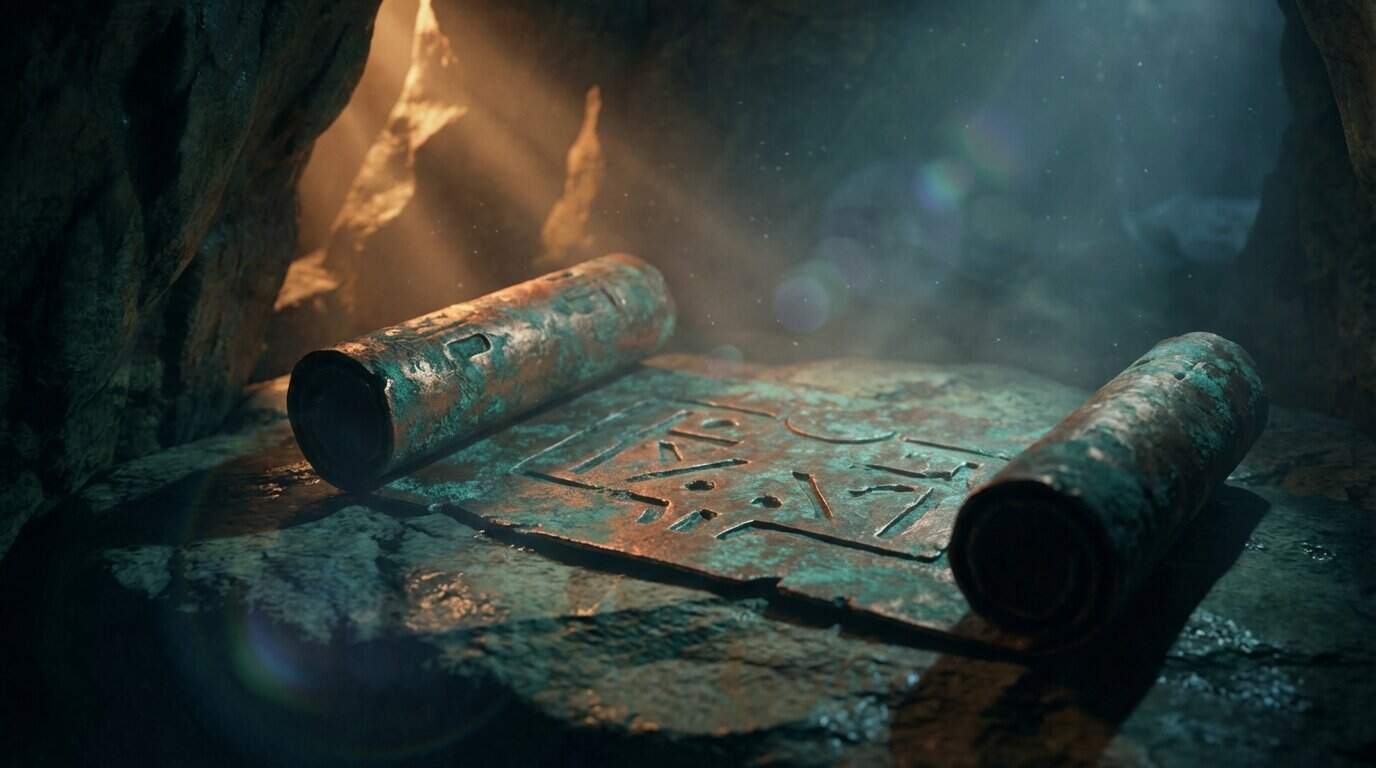
When archaeologists explored Cave 3 at Qumran in March 1952, they stumbled upon an artifact that completely defied their expectations. Instead of finding brittle parchment filled with religious teachings, the team unearthed two heavy cylinders made of nearly pure copper. This unique discovery, now known as the Copper Scroll, stood out dramatically from the thousands of spiritual manuscripts hidden in the surrounding Judean desert. Researchers quickly realized this heavy metal document was actually an ancient treasure map containing a massive inventory of hidden wealth. Rather than recording prayers or sectarian rules, the text detailed thousands of pounds of gold, silver, and precious incense carefully buried across the harsh wilderness.
Translating this mysterious map proved to be a delicate scientific challenge because the ancient metal was far too brittle to simply unroll. Technology experts had to carefully slice the cylinders into twenty-three separate strips using a high-speed circular saw between 1955 and 1956. Once translated, the newly exposed text revealed a staggering fortune that leaves modern historians and treasure hunters equally fascinated. The detailed locations mentioned in the script suggest this was a completely real effort to protect a vast fortune from invading forces. Even today, the sheer volume of precious metals listed on the metal sheets makes many experts believe these legendary riches are still waiting to be found beneath the desert sands.
The exact locations described in the ancient copper plates remain incredibly difficult to pinpoint because the geographic landmarks have changed drastically over two thousand years. Clues like a specific water cistern or a particular courtyard mean very little without the original context of the ancient terrain. Despite numerous modern expeditions equipped with advanced metal detectors and ground-penetrating radar, the incredible hoard remains completely undiscovered. This enduring mystery leaves researchers wondering if one of the greatest archaeological treasures of all time is still resting quietly just a few feet below the rocky earth. Do you believe the massive fortune detailed in the Copper Scroll was secretly recovered centuries ago, or is it still out there waiting for a lucky explorer to unearth it?
Cryptic Hebrew And Mysterious Greek Codes
The physical creation of the Copper Scroll is fascinating, but the language etched into its surface presents an entirely different kind of puzzle. Unlike the religious texts found in nearby caves, this ancient inventory is written in an early form of Mishnaic Hebrew that was not commonly used for writing at the time. Scholars who first examined the text noticed bizarre spelling variations and unusual grammatical choices that seemed almost deliberate. Instead of standard vocabulary, the author used peculiar words for architectural features and geographical landmarks that confuse modern translators. This odd phrasing suggests the document was never meant to be read by the general public, acting as a natural filter to protect the locations of the hidden loot.
The mystery deepens when looking at the random combinations of Greek letters scattered irregularly among the Hebrew words. Groups of two or three Greek letters appear at the end of several treasure listings without any obvious linguistic purpose. Museum researchers and historians have long suspected these letters form a complex secret code. Whoever buried this massive fortune likely created a cipher to ensure only the rightful owners could recover the gold, silver, and precious incense. Some historians theorize that the Greek letters might correspond to a secondary document or a specific set of physical markers hidden in the Judean desert.
Decades after its discovery, the true meaning behind these cryptic linguistic choices remains completely unsolved. While traditional archaeologists often view the text as a simple administrative list, the strange codes strongly suggest a genuine treasure map waiting to be cracked. The idea that an ancient society successfully hid a massive fortune using a bilingual puzzle continues to captivate treasure hunters and linguists alike. Perhaps the key to reading the Copper Scroll is still buried in another desert cave just waiting for the right person to unearth it. Do you think these Greek letters are a solvable map to ancient riches, or are they simply a lost filing system from a forgotten era?
The Unsolved Hunt For The Riches
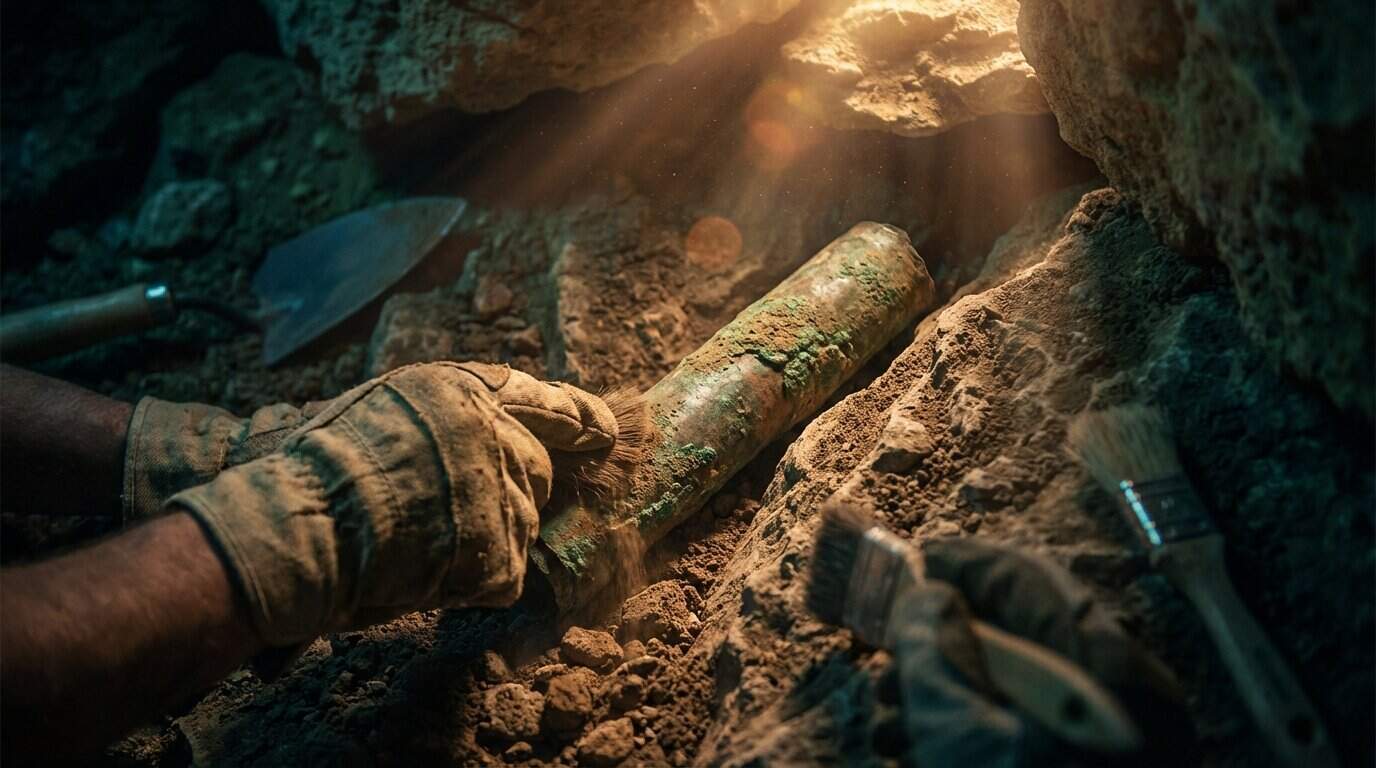
Since its discovery in March 1952 in Cave 3 at Qumran, the Copper Scroll has captivated treasure hunters and historians alike. A team of dedicated archaeologists unearthed this eight-foot plaque of nearly pure copper. Because the oxidized metal was far too brittle to unroll normally, technology experts had to carefully cut it into twenty-three strips several years later. What they found inside was not a collection of religious texts, but a detailed inventory of massive quantities of gold, silver, and precious incense hidden across the Judean wilderness. This ancient map sparked a modern frenzy to locate the buried fortunes, yet the exact locations remain stubbornly hidden in the desert sands.
For decades, dedicated archaeologists and adventurous explorers have scoured the rugged terrain around the Dead Sea, hoping to crack the cryptic clues left behind by the ancient authors. The text lists dozens of specific hiding spots, using geographical landmarks and measurements that would have been perfectly clear to someone living two thousand years ago. Today, those same directions are incredibly difficult to decipher, leading to endless debates among scholars about whether the treasure was already looted by the Romans or still rests quietly beneath the rocky soil. Despite countless expeditions utilizing advanced ground-penetrating radar and historical geographic mapping, no definitive piece of this legendary hoard has ever been recovered. The sheer volume of wealth described makes it hard to dismiss the document as a mere fairy tale, keeping the dream of a monumental discovery alive.
The enduring mystery of the Copper Scroll forces researchers to ask fascinating questions about the people who went to such incredible lengths to protect their wealth. If this massive fortune was simply a myth, it is difficult to imagine why someone would go through the immense trouble of engraving it onto expensive copper plates. Some experts believe the treasure belonged to the Second Temple in Jerusalem and was hidden just before its destruction, waiting for a righteous generation to reclaim it. As technology improves and new archaeological methods emerge, the possibility of finally unearthing these ancient riches feels closer than ever. What do you think happened to the immense wealth described in the Copper Scroll, and do you believe it is still out there waiting to be found?
Decoding the Ancient Metal Treasure Map
The Copper Scroll remains one of the most captivating puzzles of the ancient world. Discovered among the famous Dead Sea Scrolls, this unique metal document offers a very real inventory of unimaginable wealth. Historians and archaeologists have confirmed the age and authenticity of the copper plaque itself, proving it was carefully crafted by people who wanted their secrets to survive the test of time. While the religious texts found nearby tell stories of faith, this brittle metal map tells a story of survival, hidden gold, and buried silver. The sheer scale of the treasure listed on its ancient surface continues to challenge our understanding of history.
Researchers have spent decades trying to decode the cryptic landmarks and vague measurements etched into the copper strips. Many experts believe the hoard represents the actual hidden wealth of the Second Temple in Jerusalem, spirited away just before its destruction. Despite numerous official excavations across the Judean desert, the massive caches of precious metals and fragrant incense remain stubbornly hidden. However, the lack of physical gold today does not mean the map is a mere fairy tale or a symbolic myth. The specific nature of the locations suggests that someone, somewhere, left behind a genuine guide to a fortune that has simply evaded modern detection.
The mystery of the Copper Scroll perfectly captures the timeless human fascination with lost treasure. It stands as a tantalizing bridge between documented archaeological science and the thrilling unknown. Every new discovery in the Middle East brings a fresh wave of hope that the ancient inventory might finally be validated. As technology improves and desert sands shift, the ultimate puzzle remains entirely unsolved. Do you believe this legendary hoard of ancient riches is still out there waiting to be found, or has the desert claimed its golden secret forever?
Frequently Asked Questions
1. What exactly is the Copper Scroll?
Discovered in 1952 in the Judean wilderness, the Copper Scroll is an ancient, eight-foot plaque made of nearly pure metal. Unlike fragile parchment scrolls, this unique artifact contains a detailed physical inventory of a massive hidden treasure. It lists specific locations where vast amounts of gold, silver, and precious incense were buried.
2. Where was the Copper Scroll found?
A team of archaeologists unearthed this fascinating artifact deep within the dusty shadows of Cave 3 at Qumran. In March 1952, international researchers and museum archaeologists were searching for Dead Sea Scrolls when they spotted two metallic cylinders resting in the ancient dirt.
3. How did scientists read the brittle ancient metal?
Because the ancient copper was far too brittle to simply unroll, researchers had to get creative. Scientists carefully sliced the metallic cylinders into twenty-three delicate strips using a high-speed saw. This painstaking process finally allowed them to translate the tantalizing secrets hidden inside.
4. What kind of treasure does the scroll describe?
The text reveals a staggering fortune of hidden gold, silver, and precious incense scattered across the desert. It serves as a literal treasure map, providing incredibly specific directions to these buried riches. The sheer scale of the wealth suggests it was deliberately hidden from an approaching historical threat.
5. Are the copper scroll treasures real or just a myth?
While some skeptics dismiss the inventory as a mere myth, the incredibly detailed clues suggest these riches were very real. The creators used pure metal so the map would survive the harsh elements, hinting that the information was of immense value. A staggering fortune likely still lies buried beneath the ancient sands, waiting for the right person to decode the clues.
6. Why was the treasure map written on metal instead of parchment?
Whoever created this mysterious document wanted to ensure it would survive the centuries. While other ancient texts were written on fragile parchment or papyrus, this nearly pure copper plaque was designed for permanence. The heavy metal construction strongly indicates that the hidden fortune it protected was incredibly important and entirely real.
7. Has anyone found the buried gold and silver yet?
Despite decades of intense searching, the massive hoard of gold and silver remains undiscovered in the Judean wilderness. The ancient directions are highly specific but rely on local landmarks that have shifted or disappeared over thousands of years. This leaves the door wide open for future explorers to finally solve the mystery and unearth the legendary riches.