
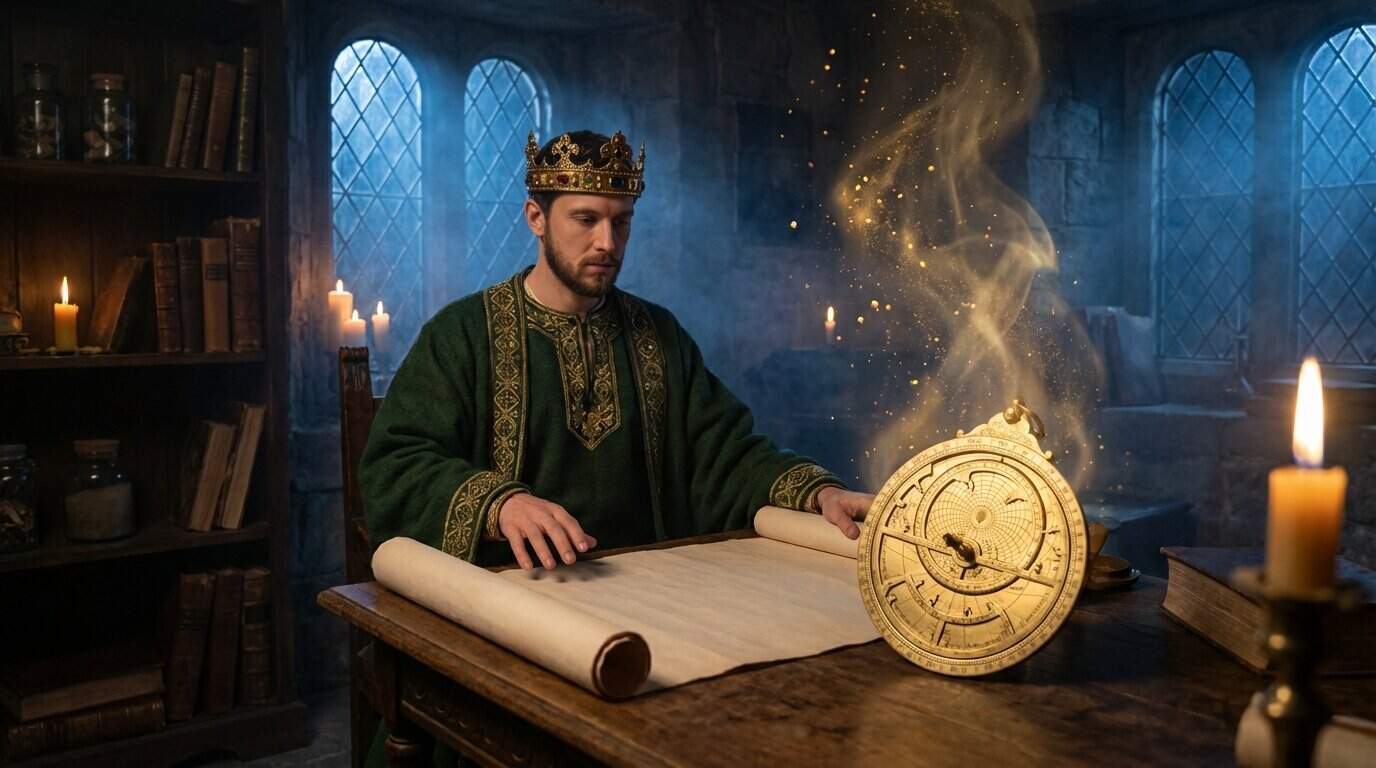
The Phantom Time Hypothesis: Are We Actually Living In The Year 1728?
Imagine glancing at a calendar and realizing the current year is not actually 2025, but rather 1728. This mind-bending scenario sits at the heart of the phantom time hypothesis, a fascinating historical puzzle that suggests nearly three centuries of human history were completely made up. According to this theory, the Early Middle Ages, specifically the years between AD 614 and 911, were simply invented by powerful leaders who wanted to manipulate the timeline for their own glory. It sounds like a wild fantasy, but a surprising number of historical oddities make this supposedly missing era worth a very serious look.
The story goes that Holy Roman Emperor Otto III and Pope Sylvester II orchestrated an elaborate deception to perfectly align Otto’s reign with the monumental year AD 1000. To pull off this massive illusion, they allegedly forged documents, invented historical figures, and added 297 fake years to the official Christian calendar. While mainstream experts often brush off the idea, looking closely at the strange lack of physical evidence from this dark era raises genuine questions about what really happened during those shadowy centuries.
Key Takeaways
- The phantom time hypothesis proposes that Emperor Otto III and Pope Sylvester II fabricated nearly 300 years of the Early Middle Ages to align their rule with the year AD 1000.
- This historical conspiracy theory relies on a perceived mathematical discrepancy in the Gregorian calendar correction and a notable lack of archaeological artifacts from the Dark Ages.
- Mainstream science thoroughly debunks the idea of missing centuries using unbroken astronomical records of celestial events and biological timelines established through tree-ring dating.
- While factually debunked, exploring this theory provides a valuable exercise in critical thinking and highlights how official historical narratives are often shaped by those in power.
Emperor Otto And The Fabricated Year 1000
According to a fascinating theory proposed by German historian Heribert Illig in 1991, the calendar used today might be built on a massive royal lie. Illig suggested that Holy Roman Emperor Otto III and Pope Sylvester II desperately wanted to rule during the symbolically powerful year of AD 1000. Since they were actually living in the seventh century, these ambitious leaders allegedly conspired to fast-forward time by simply adding 297 fake years to the historical record. By manipulating the calendar, Otto could cast himself as the divine ruler of a new millennium without having to wait for the actual date to arrive. This bold manipulation would mean that centuries of recorded history were nothing more than a carefully crafted illusion designed to boost royal egos.
The most shocking part of this historical conspiracy involves the legendary figure of Charlemagne. Instead of being a real conquering hero who united Western Europe, Charlemagne was supposedly invented completely out of thin air by Otto and his co-conspirators. This fictional king was created to serve as the ultimate role model and to provide a glorious, legitimate backstory for their own imperial power. Exploring this skeptical rabbit hole makes the majestic castles and epic battles of the Early Middle Ages look like a brilliant medieval fantasy novel. It forces historians and casual readers alike to question whether grand historical narratives are actual facts or just highly successful political propaganda.
While mainstream scholars quickly dismiss the idea of missing centuries, the phantom time hypothesis still offers a wonderful exercise in critical thinking. It is genuinely thrilling to entertain the possibility that the modern world is currently living in the early 1700s rather than the twenty-first century. Looking closely at the sparse archaeological evidence from the period between AD 614 and 911 makes it surprisingly easy to see why some researchers question the official timeline. Even if the theory is ultimately unproven, it serves as a powerful reminder that history is often written by those in power. Curious minds are left to wonder what other accepted historical truths might actually be brilliant fabrications waiting to be exposed.
Heribert Illig And The Gregorian Calendar Math

In 1991, German historian and publisher Heribert Illig introduced a mind-bending idea that challenged everything we know about the Early Middle Ages. He proposed in his publication “Leaps in Time” that nearly three hundred years of human history were entirely fabricated. The foundation of this fascinating theory begins with a simple mathematical puzzle involving the Gregorian calendar. When Pope Gregory XIII introduced his new timekeeping system in 1582, the goal was to fix the old Julian calendar, which had drifted out of sync with the solar year. The Julian system miscalculated the length of a year by roughly eleven minutes, causing the calendar to fall behind the actual seasons over the centuries.
This is where Illig noticed a glaring mathematical discrepancy that encourages some serious critical thought. Because the Julian calendar was established by Julius Caesar in 45 BC, a total of thirteen days should have drifted by the time the year 1582 rolled around. However, the Pope only ordered his new calendar to skip forward by ten days to realign with the spring equinox. Illig calculated that those three missing days of correction equal roughly 297 years of time that never actually passed. According to his findings, this means the historical period between AD 614 and 911 simply did not happen.
If this mathematical theory holds true, it suggests our current year is actually centuries behind what our modern clocks claim. Illig pointed his finger at powerful medieval figures like Holy Roman Emperor Otto III and Pope Sylvester II as the masterminds behind this massive illusion. He argued they retroactively added these phantom centuries to place Otto’s reign exactly at the monumental year AD 1000. While mainstream experts point to established records to dispute these claims, the calendar math still presents a highly intriguing puzzle. Could a handful of ambitious leaders truly have orchestrated the greatest historical deception of all time, or is there another explanation for those missing days?
Astronomical Records And Real Medieval History
While the idea of a fabricated medieval era is a fascinating puzzle, historians often point to the sky to anchor the traditional timeline. Ancient astronomers from different parts of the world kept surprisingly detailed records of celestial events. For example, historical records from Chinese and European stargazers document sightings of Halley’s Comet that perfectly align with the current calendar. When experts trace the path of solar eclipses mentioned in ancient texts, modern astronomers can calculate exactly when and where those shadows fell across the Earth. These mathematical certainties provide a massive hurdle for the idea of missing centuries, as the heavens operate on a strict schedule that humans cannot alter.
Down on the ground, nature offers its own living time capsule through the science of tree rings. Researchers studying ancient wood samples use a method called dendrochronology to count backward year by year. By examining overlapping patterns of thick and thin rings caused by weather changes, scientists have built an unbroken chain of wood dating back thousands of years. This biological record shows no sudden gaps or missing centuries during the Early Middle Ages. The physical evidence found in these ancient European timbers strongly supports the traditional timeline, making it very difficult to simply erase almost three hundred years of history.
Even with this solid scientific backing, the phantom time hypothesis remains a wonderful exercise in questioning accepted facts. The original theorist, Heribert Illig, tapped into very real gaps in the archaeological record and a strange lack of physical artifacts from this specific era. This puzzling lack of evidence makes people wonder how much of history relies on the word of powerful medieval leaders who had their own political agendas. When looking at the stalled architectural progress of the Dark Ages, it is easy to see why some might question the official story. Do you think the astronomical and biological evidence completely closes the case on this historical mystery, or could parts of the calendar still be a grand illusion?
Did We Really Skip Three Hundred Years?
The phantom time hypothesis stands as one of the most captivating puzzles in modern historical study. By suggesting that figures like Emperor Otto III completely fabricated nearly three hundred years of the Early Middle Ages, Heribert Illig created a perfect exercise in critical thinking. While mainstream scholars often dismiss these claims, exploring this skeptical rabbit hole forces anyone to look closer at the actual evidence holding the modern calendar together. It reminds curious minds that the official record is written by those in power, leaving plenty of room for grand deceptions to slip right under the radar.
Exploring this mind-bending theory transforms passive readers into active historical detectives who must weigh established facts against glaring inconsistencies. Ultimately, the idea that humanity might actually be living in the early eighteenth century is an entertaining thought experiment that challenges everything society takes for granted. Uncovering the truth behind these missing centuries is just the beginning for those who love to question the accepted narrative. If this journey through fabricated timelines sparked a sense of wonder, it might be time to investigate other unsolved historical mysteries that defy logical explanation.
History is rarely as solid as it appears on paper, and keeping an open mind allows for thrilling discoveries that rewrite the past. The possibility that powerful leaders simply invented a massive chunk of time completely shatters our basic understanding of human progress. Now, take a moment to imagine waking up tomorrow to discover that three entire centuries of recorded history were suddenly erased from existence. How would that massive revelation change the way you view the world around you?
Frequently Asked Questions
1. What exactly is the phantom time hypothesis?
The phantom time hypothesis is a fascinating historical puzzle suggesting that nearly three centuries of human history were completely made up. It proposes that the Early Middle Ages, specifically the years between AD 614 and 911, never actually happened. This means the timeline was artificially stretched to serve the ambitions of powerful leaders.
2. Who first proposed the idea of these missing centuries?
German historian Heribert Illig first proposed this captivating theory in 1991. He spent years examining the historical record and noticed strange inconsistencies during the Early Middle Ages. His research led him to the startling conclusion that the calendar we use today is built on a massive royal lie.
3. Why would anyone want to fake three hundred years of history?
Holy Roman Emperor Otto III and Pope Sylvester II allegedly wanted to rule during the symbolically powerful year of AD 1000. Since they were actually living in the seventh century, waiting for the true millennium was impossible. They conspired to fast-forward time so Otto could cast himself as the divine ruler of a new era.
4. How did these leaders manage to pull off such a massive illusion?
To manipulate the timeline, Otto and Sylvester allegedly forged countless historical documents and added 297 fake years to the official Christian calendar. They also had to invent entire historical figures and events to fill the empty space. Because communication and record-keeping were so limited back then, it was surprisingly easy for royalty to rewrite the truth.
5. Is there any real evidence to support the phantom time hypothesis?
Mainstream experts often dismiss the theory, but a strange lack of physical evidence from the dark era raises genuine questions. Archaeologists struggle to find authentic artifacts or building remains dating specifically to those shadowy centuries. This curious gap in the physical record makes the idea of a fabricated era worth a very serious look.
6. What does this mean for famous historical figures from that time period?
If the hypothesis is true, legendary figures like Charlemagne might never have existed at all. They would simply be fictional characters created to fill the fabricated centuries and boost royal lineage. It is a mind-bending thought that some of our most celebrated historical heroes could be nothing more than medieval propaganda.
7. If the theory is true, what year are we actually living in right now?
If 297 years were truly added to the calendar, the current year is not what it seems. We would actually be living nearly three centuries in the past, making a year like 2025 roughly 1728. Do you think the lack of archaeological evidence points to a massive historical coverup, or is there a simpler scientific explanation for these missing centuries?