The Mystery Of Joshua Tree Circles And Desert Enigmas
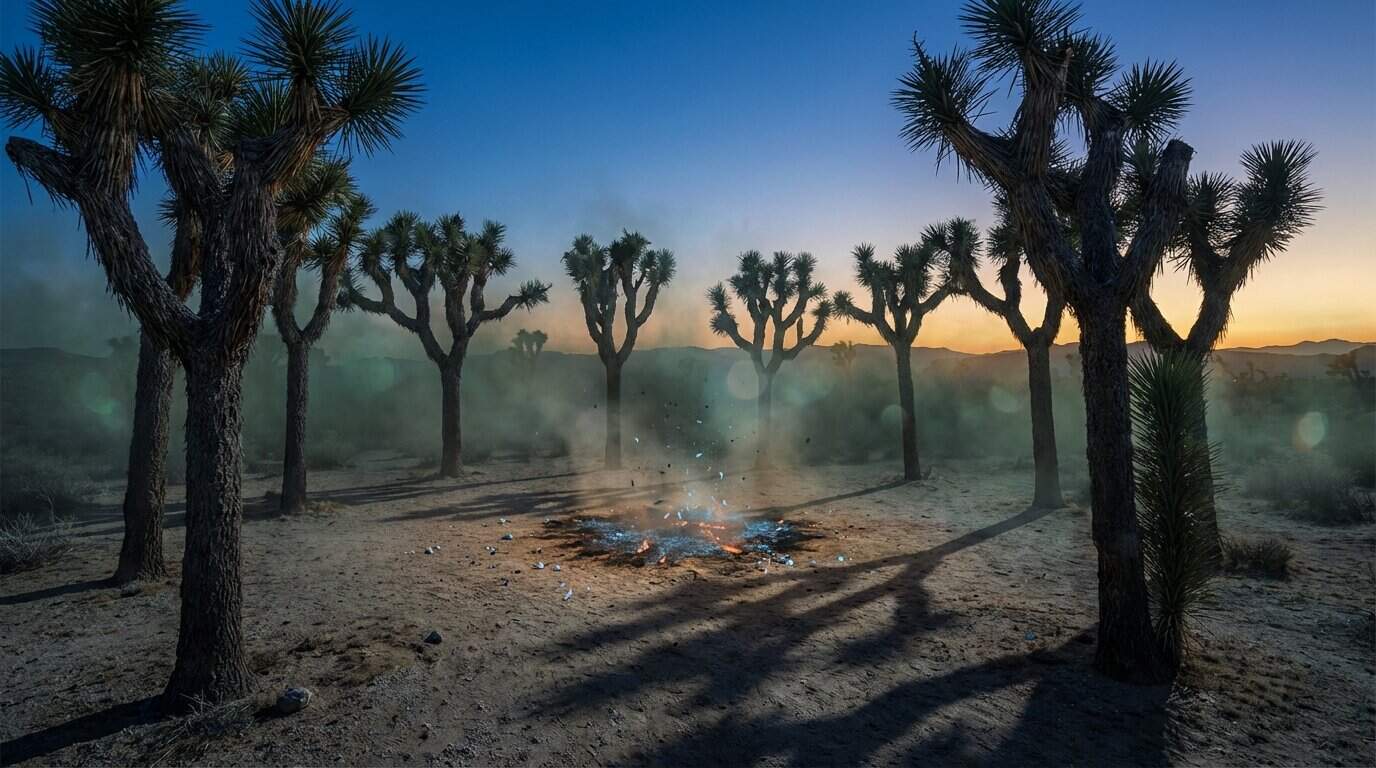
Deep in the heart of the Mojave Desert, a quiet mystery is etched into the sandy floor in the form of perfect rings. These joshua tree circles appear like ancient footprints, marking places where the iconic, twisted branches of the desert’s most famous resident seem to grow in deliberate, rhythmic patterns. While they might look like intentional monuments or strange relics of an unknown past, these formations are actually living echoes of a single ancestor.
These rings are born from a survival strategy that defies the typical lifespan of a desert plant. When a central tree finally succumbs to the harsh elements, it leaves behind a genetic legacy that rises from the earth in a wide, protective halo of new sprouts. Some of these hidden colonies have been quietly expanding for hundreds, or even thousands, of years. They represent a bridge between the botanical world and something much more ancient, turning the desert floor into a map of hidden history.
Key Takeaways
- Joshua tree circles are clonal colonies where genetically identical trees sprout from the underground rhizomes of a single ancestor, creating a living ring that can persist for thousands of years.
- The geometric precision of these rings serves as a vital survival strategy, allowing the colony to expand outward and create a persistent biological anchor against the Mojave Desert’s extreme heat and drought.
- The eerie symmetry and ancient age of these formations fuel theories that they act as organic markers for magnetic anomalies, energy vortexes, or extraterrestrial landing sites.
- Many observers view these botanical circles as a form of ancient technology or a hidden communication network that aligns with celestial events and geological energy grids.
Clonal Growth And Ancient Desert Rings
Out in the silent expanse of the high desert, the Joshua tree performs a slow motion dance that spans centuries. While a single tree might only stand for two hundred years, its genetic legacy continues through a process called clonal growth. When the central parent tree eventually withers and dies, it leaves behind underground rhizomes that sprout new life in a perfect perimeter. This natural cycle creates a living ring of genetically identical trees that expand outward from a vanished center. These botanical formations act as ancient anchors in the shifting sands, holding the secrets of the landscape within their circular boundaries.
Some researchers and desert explorers believe these geometric rings are far more than just a survival strategy for the Yucca brevifolia. The precision of these circles often draws comparisons to ancient megalithic sites or markers left by advanced visitors from beyond our world. Because these clonal colonies can survive for thousands of years, they function as biological time capsules that have witnessed millennia of unexplained desert phenomena. Professional conservationists note that these colonies are vital to the ecosystem, yet their eerie symmetry continues to fuel stories of high desert energy vortexes.
Standing in the center of an ancient ring feels like stepping into a natural cockpit designed by the earth itself. These living fossils create a geographic focal point that seems to attract strange lights and atmospheric anomalies often reported by campers in the Mojave. Scientists track these growth patterns to understand climate history, but the sheer age and shape of the rings keep the door open for more fringe theories. Whether they are simple products of biology or markers for something more mysterious, these desert circles remain one of the most intriguing features of the wilderness.
Extraterrestrial Theories And High Desert Anomalies
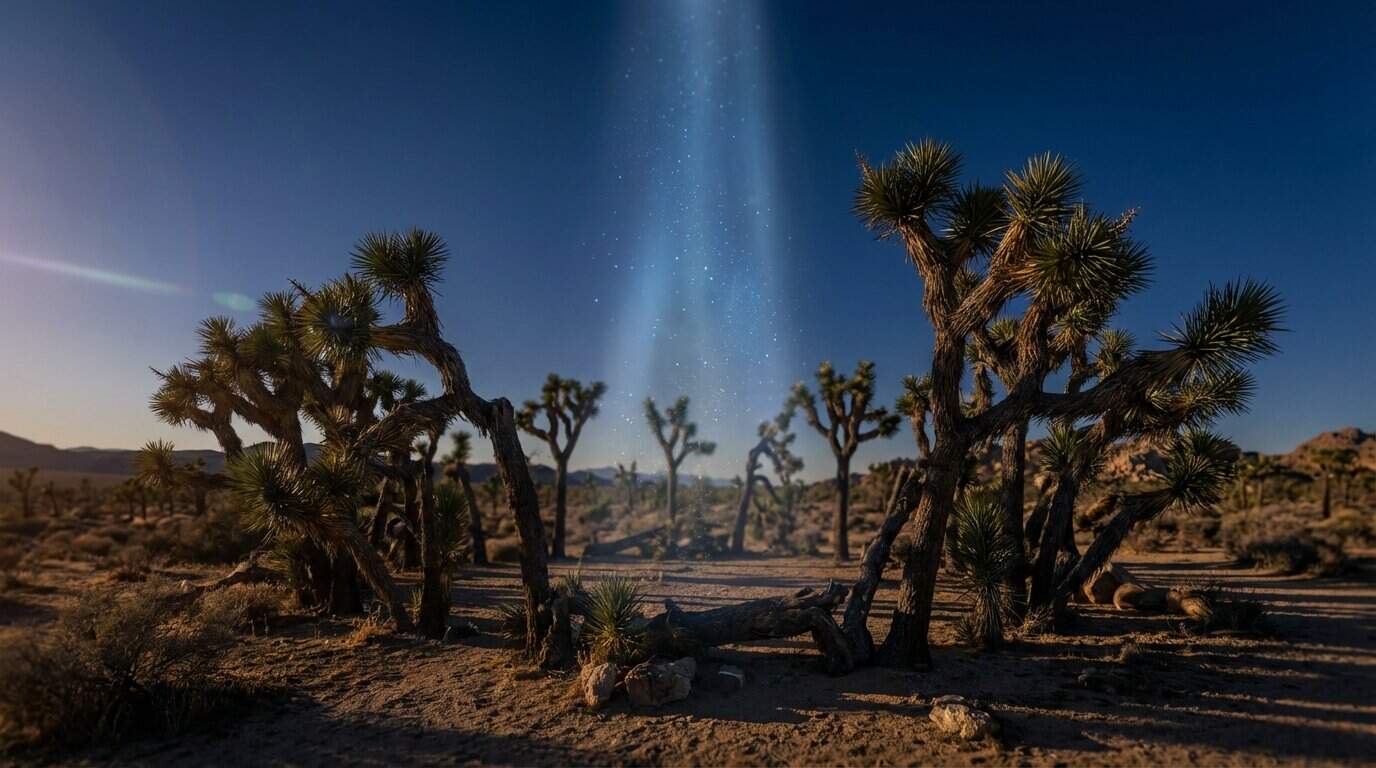
The High Desert has long been a magnet for those seeking answers beyond our atmosphere, and the geometric precision of Joshua tree circles only adds to the local lore. While biologists point to clonal growth, many residents and researchers look toward the stars for a different explanation. There is a deep-seated belief that the unique magnetic properties of the Mojave Desert act as a natural beacon for extraterrestrial visitors. These formations are often viewed as more than just plants, serving instead as organic markers for landing sites or energy vortexes. The sheer symmetry of these rings suggests a design that feels intentional to the curious observer.
George Van Tassel, the creator of the nearby Integratron, famously claimed that the area was a hub for celestial communication and advanced ancient technology. He believed the desert could facilitate rejuvenation and time travel through its specific geographic resonance. Followers of this culture often suggest that the Joshua tree circles align with known flight paths of unidentified aerial phenomena. This connection between the earth and the sky creates a cinematic atmosphere where science and mystery frequently collide. The desert is not just a collection of sand and stone, but a living map of unexplained history.
Local sightings of strange lights often concentrate around these specific botanical formations, fueling theories that the trees themselves might be sensitive to non-human frequencies. Much like the Marfa lights mystery of the Texas high desert, these glowing orbs and unexplained visual phenomena suggest that certain arid landscapes possess unique properties that attract or generate unusual energy. Some theorists argue that the ancient root systems are tapping into energy grids once used by prehistoric civilizations or visitors from other worlds. While environmental agencies focus on the vital conservation of these zones, the fringe community continues to document anomalies that defy standard logic. Each circle invites us to wonder if we are truly alone in the vast silence of the desert night. What do you think is responsible for these perfect geometric patterns in the sand?
Ancient Technology And Hidden Energy Grids
The high desert of Southern California holds secrets that seem to bridge the gap between biological growth and intentional design. While botanists explain these perfect rings as clonal colonies where new sprouts emerge from a dying parent tree, many observers notice a strange precision in their placement across the Mojave. These circles often appear to align with specific magnetic anomalies or underground mineral deposits, suggesting they might act as organic markers for a hidden energy grid. Local legends and independent researchers have long whispered that the Joshua trees were planted or encouraged to grow in these patterns to highlight significant geological nodes. This theory proposes that the rings are more than just plants, serving instead as a living map for those who understand how to read the Earth’s natural frequencies.
The sheer age of these clonal colonies, which can persist for thousands of years, hints at a timeline that overlaps with ancient civilizations and unexplained aerial phenomena. Much like those exploring the mysteries of the Mapimi Silent Zone, researchers find that certain desert locations seem to disrupt or enhance natural signals. Some theorists suggest that the rings function as a form of ancient technology, perhaps acting as natural resonators for low frequency energy that pulses through the desert floor. By mapping the coordinates of the largest circles, researchers have found curious alignments with celestial events and distant megalithic sites. This geographic precision challenges the idea of random seed dispersal or simple root expansion, pointing toward a purposeful arrangement that predates modern record keeping. Whether these sites were used for spiritual communication or as markers for travelers from above, the energy felt within a ring remains a powerful experience for those who visit.
What do you feel when standing in the center of an ancient Joshua tree circle, and could these living rings be part of a larger, forgotten communication network? Some people report a distinct humming sensation or a shift in the air pressure when they enter the perimeter of a well established grove. These experiences lend weight to the idea that the desert is a giant circuit board, with the Joshua trees acting as the organic components that keep the system active. While science provides a firm foundation for the biological life of the tree, it struggles to explain why these specific locations feel so charged with mystery. We invite you to share your theories on whether these formations are a product of nature alone or a lingering piece of a much older, sophisticated technology.
The Living Echoes of Ancient Clones
The high desert of the Mojave remains a place where the lines between botanical reality and ancient mystery often blur into the horizon. Science offers a grounded explanation for the Joshua tree circles, pointing toward a fascinating process of clonal growth where new life sprouts in a ring around a dying ancestor. These resilient colonies can survive for thousands of years, acting as living witnesses to the changing landscape and the passage of time. Yet, the precision of these formations continues to spark imagination among those who walk the silent trails. The desert has a long history of unexplained events and magnetic anomalies that keep the spirit of curiosity alive for every visitor.
Beyond the biological data, the Mojave serves as a geographic focal point for theories involving ancient technology and celestial visitors from beyond our world. Some observers find it difficult to ignore the cinematic beauty and strange energy that seems to radiate from these perfectly positioned rings of yucca. While researchers focus on management zones and ecological protection, others look at the stars and wonder if these patterns serve a purpose we have yet to fully decode. The landscape is filled with stories that science cannot always capture in a laboratory or a field report. The silence of the desert often feels like it is holding onto secrets that date back to the dawn of human history.
Do you believe these desert formations are simply a clever survival tactic of the natural world, or could they be markers left by something far more mysterious? The Mojave has always been a canvas for the strange and the unexplained, making it the perfect backdrop for such a compelling debate. Much like the mystery of the Devil’s Tramping Ground in North Carolina, where a barren circle defies natural growth, these Joshua tree rings challenge our understanding of the environment. Whether they are the result of underground rhizomes or a sign of extraterrestrial influence, the circles invite us to look closer at the world around us. We would love to hear your thoughts on whether these rings are a biological wonder or a link to a hidden history. Join the conversation and share your perspective on what truly lies at the heart of the Joshua tree circles.
Frequently Asked Questions
1. What exactly are Joshua tree circles?
These circles are natural rings of trees that grow from the underground roots of a single ancestor. When a central tree dies, its genetic legacy sprouts outward in a protective halo that can expand for thousands of years.
2. How do these rings form in such a perfect shape?
The formation begins when a parent tree leaves behind a network of rhizomes beneath the soil. New sprouts emerge at an equal distance from the original center, creating a rhythmic and deliberate perimeter that looks like a living monument.
3. Are all the trees in a circle related to each other?
Every tree within a specific ring is a genetic clone of the original plant that once stood in the middle. They share the exact same DNA, making the entire circle a single living organism that refuses to let its history fade away.
4. How old can these desert formations actually get?
While an individual trunk might only live for two centuries, the underground colony can persist for thousands of years. These hidden histories make the circles some of the oldest living residents of the Mojave Desert.
5. Why do some people think these circles are more than just plants?
The geometric precision of the rings often reminds observers of ancient megalithic sites or markers left by visitors from other worlds. This blend of botanical survival and mysterious symmetry invites many to wonder if there is a deeper purpose to their placement.
6. Can these circles survive the harsh desert environment?
This unique growth strategy is actually a clever survival mechanism that helps the species endure extreme heat and drought. By expanding outward, the colony creates a persistent anchor in the shifting sands that protects its genetic line for generations.