The Enigma Of Pampa De Las Llamas Moxeke
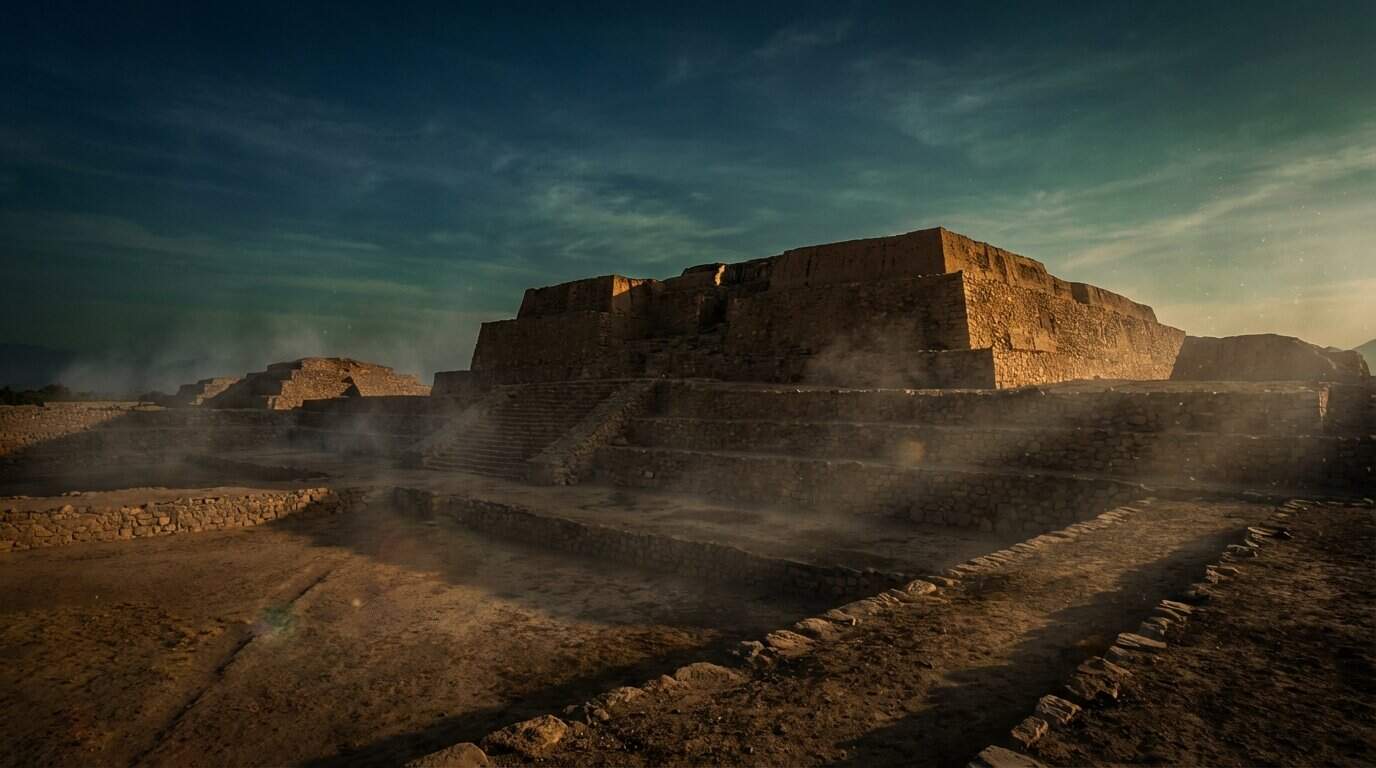
High in the desert valleys of north-central Peru, a massive architectural marvel known as Pampa de Lamas challenges traditional understanding regarding the dawn of civilization. Long before the rise of the famous Inca Empire, this sprawling urban center served as a bustling hub of religion and politics for the Casma people. Its towering mounds and organized plazas suggest a society far more advanced and structured than expected for such an ancient era.
Walking through the ruins today, it is natural to wonder how these early builders managed to construct such a sophisticated city nearly 4,000 years ago. The site sits as a silent witness to a lost world of ritual and power that predates even the legendary Chavín culture. While archaeologists have uncovered many secrets, a sense of mystery still hangs over the dust-swept plains of the Casma Valley.
Key Takeaways
- Pampa de las Llamas-Moxeke represents one of the oldest planned state capitals in the Americas, dating back to 1800 BC and predating the Inca and Chavín cultures by millennia.
- The site’s sophisticated urban layout, featuring the massive Huaca A and Moxeke mounds aligned to a precise northeast celestial axis, demonstrates advanced engineering and astronomical knowledge.
- A powerful central authority managed a highly organized social order, evidenced by Huaca A’s function as a massive controlled storage facility for the distribution of food and goods.
- The presence of colossal polychrome statues and intricate architectural symmetry indicates a complex spiritual world and a level of social hierarchy previously thought to have developed much later in history.
Ancient Engineering Of The Casma Valley
Long before the first stones of the Inca Empire were laid, the Casma Valley was home to a society that possessed a master level of urban planning. The Pampa de las Llamas-Moxeke complex stands as a testament to early human genius, featuring a layout that was meticulously designed rather than built at random. Two massive mounds, known as Huaca A and Moxeke, anchor the ends of a vast central plaza that stretches for nearly a mile. This organized arrangement suggests that a powerful central authority coordinated thousands of workers to create a city that could house a growing population. Archaeologists like Sheila and Thomas Pozorski have noted that this site represents one of the earliest examples of a planned state capital in the Americas.
The precision of the site’s alignment offers a fascinating glimpse into the astronomical knowledge of these ancient builders. Every major structure at Pampa de las Llamas is oriented to the northeast, following a specific axis that ignores the natural flow of the nearby river. This deliberate choice suggests that the people of the Casma Valley were looking to the stars or following a sacred geometry that researchers are only beginning to understand. Such exactness in a site dating back to 1800 BC challenges the idea that early societies were primitive. The sheer scale of the mounds and the symmetry of the plazas indicate a deep understanding of engineering and mathematics that predates modern tools.
Walking through the ruins today, one wonders how these ancient engineers achieved such monumental feats without the help of wheels or iron. The site functioned as a bustling urban center where religious ceremonies and daily commerce happened in the shadow of these towering structures. While researchers have uncovered many details about the construction methods used, the true origin of their sophisticated architectural blueprints remains a mystery. Did this knowledge develop slowly over centuries, or was it a sudden leap in human capability? We invite you to share your thoughts on whether this site represents a forgotten peak in human history or a stepping stone for the civilizations that followed.
The city’s plan also raises questions about how people moved through the settlement. Large open plazas could gather crowds for ceremonies, while smaller rooms and enclosed areas offered spaces for storage, administration, or restricted activities. The contrast between public spaces and controlled interior rooms suggests that architecture helped organize social life, not simply provide shelter. In a dry valley where water and harvests mattered greatly, the ability to bring people together and manage supplies may have been as important as the monumental buildings themselves.
Secrets Of The Moxeke Pyramid Mound
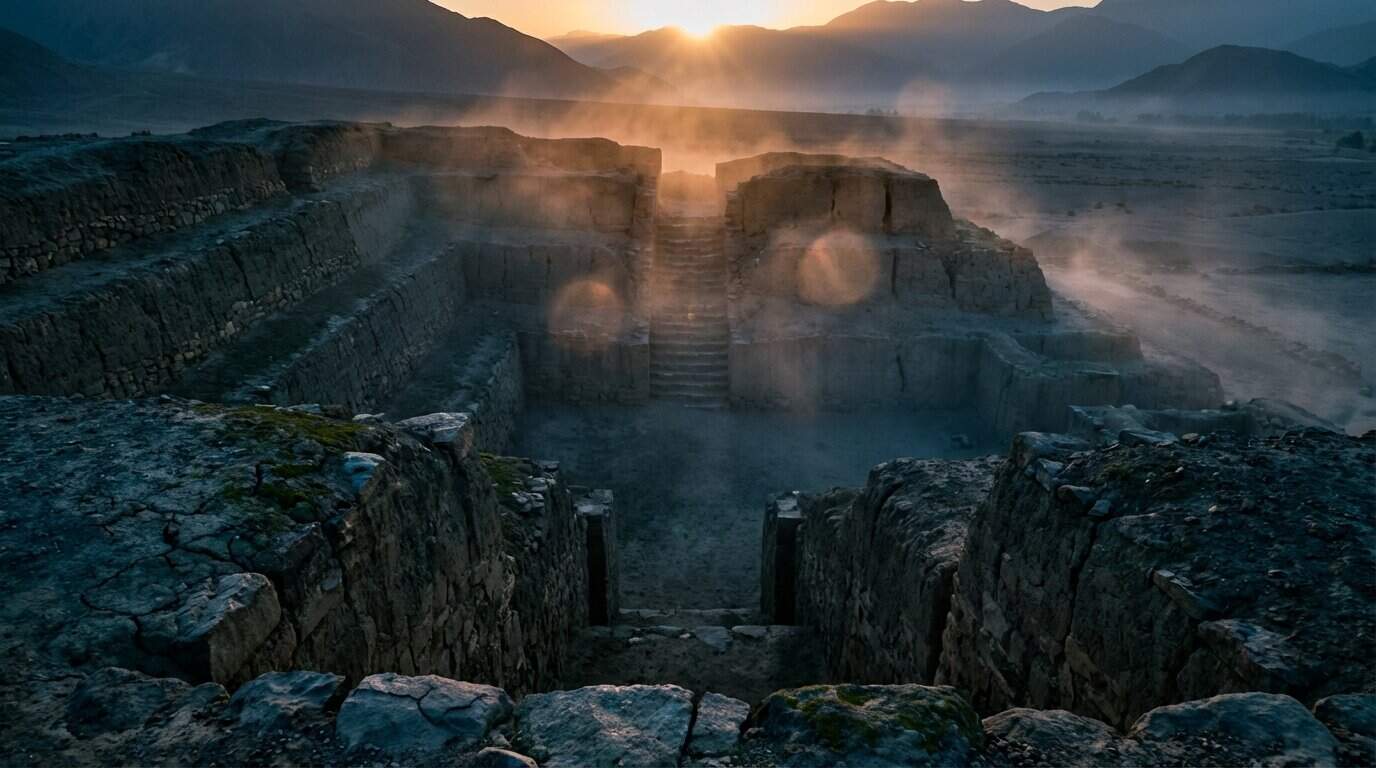
The Moxeke pyramid stands as a monumental testament to the engineering prowess of a society that thrived long before the rise of the Inca Empire. Rising thirty meters into the Peruvian sky, this massive stepped structure served as the heart of one of the oldest planned urban centers in the Americas. Archaeologists like Thomas and Shelia Pozorski have spent decades uncovering the secrets of this site, which dates back nearly four thousand years. The sheer scale of the mound suggests a highly organized workforce capable of moving millions of tons of stone and clay. It represents a level of social sophistication that challenges modern understanding of early human development.
Guarding the sacred chambers of this ancient monument were colossal polychrome statues that depicted mysterious, god-like figures. These sculptures were originally painted in vibrant shades of red, blue, and yellow, creating a striking visual experience for those approaching the pyramid. Many of these figures appear to be wearing elaborate tunics and headpieces, suggesting they represented powerful deities or high-ranking religious leaders. While time has weathered their features, the remaining fragments offer a glimpse into a complex spiritual world. The presence of such intricate art indicates that the people of Pampa de las Llamas valued aesthetic beauty as much as structural durability.
Beyond its physical grandeur, the Moxeke pyramid hints at a deep understanding of celestial alignments and ritual significance. The entire complex is laid out along a precise axis, suggesting that the builders were keen observers of the natural world and the stars above. Within the higher levels of the mound, hidden niches and rooms likely hosted private ceremonies far removed from the public eye. Scholars continue to debate whether these spaces were used for astronomical observations or secret offerings to the gods. What do you think the purpose of these giant, colorful guardians was, and does their presence suggest a lost connection to a much older global tradition?
Color and placement would have shaped the experience of approaching the mound. A figure painted in bright pigments could stand out against the pale desert ground, turning a building into a powerful public image. Even when the original colors faded, the surviving sculpture fragments document the care given to the site’s visual design. The arrangement of rooms and decorated surfaces also suggests that some rituals were meant for a select group, while the plaza allowed a wider community to witness gatherings from below.
Early Statehood And Megalithic Social Order
Long before the famous Chavín culture emerged in the Andes, the Pampa de las Llamas-Moxeke complex stood as a testament to an advanced and organized society. Located in the Casma Valley, this massive urban center dates back as far as 1800 BC, challenging traditional understanding of how early civilizations developed. The site features two enormous stone mounds, Huaca A and Moxeke, which anchor a strictly planned city layout that stretches across the desert floor. Archaeologists like Thomas Pozorski and Shelia Pozorski have documented how these structures were part of a unified architectural vision rather than a random collection of buildings. This level of precision suggests that a powerful central authority was already managing labor and resources on a scale that was practically unheard of for its time.
The engineering prowess displayed at Pampa de las Llamas points to a sophisticated social order that prioritized long-term stability and community planning. Huaca A, in particular, appears to have functioned as a massive controlled storage facility, featuring a specialized grid of rooms designed to hold vast quantities of food and goods. By managing the distribution of these resources, the ruling class could maintain a stable population and fund the construction of their megalithic monuments. The presence of high walls and restricted access points suggests that this was a carefully guarded system, reflecting a society with clear social hierarchy and professional roles. It is fascinating to consider how these early engineers moved such immense amounts of stone and earth without the use of modern tools or draft animals.
This ancient city represents a forgotten chapter of human history where engineering and social control worked hand in hand to conquer a harsh environment. The sheer size of the mounds and the complexity of the storage systems imply a level of statehood that predates many other known civilizations in the Americas. While much of their culture remains a mystery, the physical evidence left behind in the Casma Valley speaks of a people who were far from primitive. They managed to build a thriving, organized metropolis in the middle of a coastal desert, leaving us to wonder what other secrets are still buried beneath the sands. Does the existence of such a massive, planned city change how you think about the timeline of human progress in South America?
Storage rooms alone cannot reveal exactly how goods were gathered or shared, but their design gives archaeologists a way to examine these practices. The site contains spaces that appear to have served different functions, and that division points to careful planning rather than improvised use. Comparing room layouts, building materials, and traces of daily activity helps researchers document how authority may have operated. It also leaves an important question: did central control protect the community during difficult seasons, or mainly reinforce the power of those who managed the stores?
Uncovering The Legacy Of Early Peru
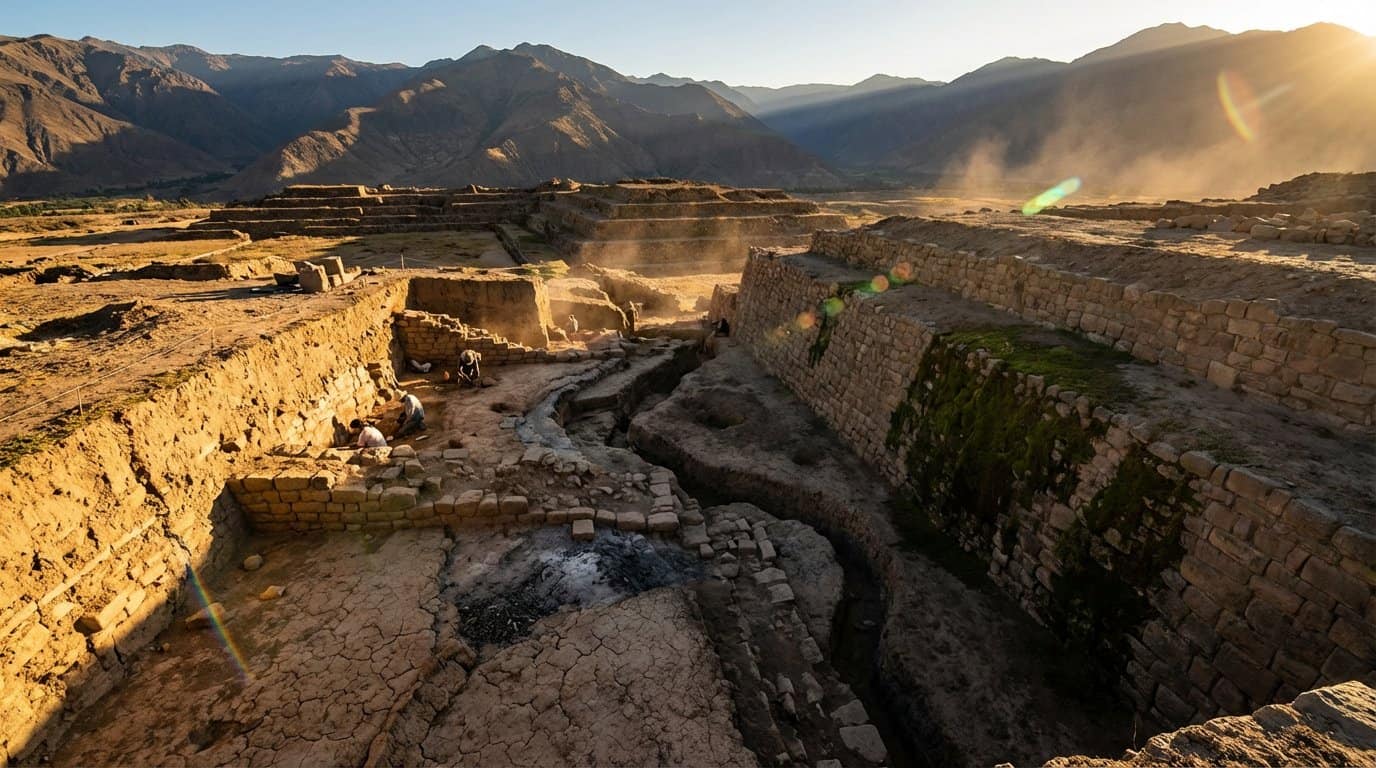
Deep within the Casma Valley of Peru, the massive ruins of Pampa de las Llamas-Moxeke challenge everything previously assumed about the timeline of ancient civilization. Long before the rise of the famous Inca Empire, this sophisticated urban center flourished between 1800 BC and 900 BC, making it one of the oldest planned cities in the Western Hemisphere. The site is dominated by two colossal mounds, Huaca A and Moxeke, which stand as silent witnesses to an era of incredible architectural ambition. Researchers like Thomas and Shelia Pozorski have documented how these structures were aligned with precision, suggesting that these early builders possessed an advanced understanding of geometry and celestial movements. This level of organization indicates a powerful central government that could mobilize thousands of workers to move tons of earth and stone.
The engineering feats found at Pampa de las Llamas are truly remarkable because they appeared so early in human history without any known local predecessors. Visitors and archaeologists alike are often struck by the height of the plazas and the intricate clay sculptures that once decorated the temple walls. These early Peruvians designed a complex city layout that included residential zones and administrative hubs, showing a level of social hierarchy that was previously thought to have developed much later. Despite their clear success and technical mastery, the society seems to have vanished or transformed quite suddenly, leaving behind empty plazas and weathered monuments. This abrupt ending creates a lingering mystery about what internal or environmental pressures could have led such a sophisticated culture to abandon their monumental home.
What makes this site so captivating is the persistent question of how such a lost society achieved state-level organization while most of the world was still in its infancy. While scientific analysis provides dates and measurements, it struggles to explain the sudden leap in human capability that allowed for such massive construction projects. Some theorists wonder if there are missing chapters in history books that would explain where this knowledge originated. We are left to piece together the clues from the dust of the Casma Valley, balancing what we can prove with the haunting possibility that ancient engineering was far more capable than often credited. Does the existence of such a massive, early city change how you view the capabilities of our ancestors, or do you think environmental changes are the simple answer to their disappearance?
Neighbors In A Wider Casma Story
Pampa de las Llamas-Moxeke did not stand in an empty landscape. The Casma region holds other important early sites, including Sechin, whose monuments and carved stone imagery offer a separate window into the area’s ancient communities. Sechin and Pampa de las Llamas-Moxeke should not be treated as the same city or as proof of one continuous political center. Their proximity instead invites comparison: archaeologists can ask how building traditions, public art, and community organization changed across the valley and over time.
That regional view matters because a single monumental complex cannot tell the whole story of early Peru. Researchers compare settlements, artifacts, and construction phases to understand whether ideas spread between communities or developed independently. The dramatic carvings associated with Sechin contrast with the planned plaza and mound arrangement at Moxeke, showing that ancient societies could express authority in different ways. Such comparisons help place this architecture in context without turning every resemblance into evidence of a lost global connection.
The Lasting Legacy of the Casma Valley Architects
Pampa de las Llamas stands as a monumental testament to the ingenuity of a forgotten era, proving that the roots of Andean civilization run much deeper than many once believed. Long before the rise of the Inca, the people of the Casma Valley were already mastering the art of urban planning and massive stone construction. The sheer scale of the mounds and the precision of the layout suggest a society with a highly sophisticated understanding of engineering and social organization. By exploring these ancient ruins, we gain a rare glimpse into a time when humanity first began to reshape the world into a reflection of their spiritual and political beliefs.
The mystery of how these early builders achieved such architectural feats without modern tools continues to captivate researchers and history enthusiasts alike. While traditional science points to a gradual evolution of local techniques, the complexity of the site leaves plenty of room for wonder and curiosity. It challenges assumptions about the timeline of human progress and the true origins of megalithic mastery in the Americas. Every stone and plaza at the site tells a story of a culture that thrived through cooperation and a deep connection to their environment. Similar questions arise when studying the lost giants of other regions who constructed massive monuments across the globe.
What do you think was the driving force behind such an ambitious engineering project nearly four thousand years ago? Does the existence of Pampa de las Llamas change your perspective on the capabilities of ancient societies, or do you believe there are still missing pieces to this archaeological puzzle? We invite you to share your theories and join the conversation about these incredible early builders. Your thoughts help keep the spirit of discovery alive as we continue to peel back the layers of our collective past.
Frequently Asked Questions
1. What exactly is Pampa de Lamas?
Pampa de Lamas is an ancient urban center located in the Casma Valley of Peru that served as a major political and religious hub nearly 4,000 years ago. It is part of the Moxeke complex, featuring massive mounds and organized plazas that represent some of the earliest examples of a planned state capital in the Americas.
2. Who were the people that built this ancient city?
The city was constructed by the Casma people, a sophisticated society that thrived long before the Inca Empire or the Chavín culture. Archaeological research by Sheila and Thomas Pozorski suggests these early builders were part of a highly structured state with a powerful central authority capable of managing large-scale construction.
3. How old is the Pampa de Lamas site?
This architectural marvel dates back approximately 4,000 years, placing its peak of activity around 1800 to 1500 BCE. Its extreme age challenges traditional timelines of civilization, proving that complex urban planning existed in South America much earlier than previously believed.
4. What are the most impressive structures at the site?
The most significant features are the two towering mounds known as Huaca A and Moxeke, which anchor a central plaza stretching for nearly a mile. These structures were meticulously aligned to the northeast, demonstrating a deep understanding of astronomy and engineering that ignored the natural landscape.
5. Does the site have any connection to the Inca Empire?
While it is located in the same geographic region, Pampa de Lamas predates the Inca by thousands of years. It represents a much earlier dawn of civilization, showing that the foundations of Peruvian culture and engineering were laid by the Casma people long before the rise of the famous mountain empires.
6. Why is the alignment of the buildings so important?
The specific northeast orientation of the buildings suggests that the city was designed with celestial movements in mind rather than just practical geography. This level of intentional planning hints at a society that valued ritual and cosmic order, using their architectural genius to connect their city with the stars above.