The Secrets Of The Lady Of Dai
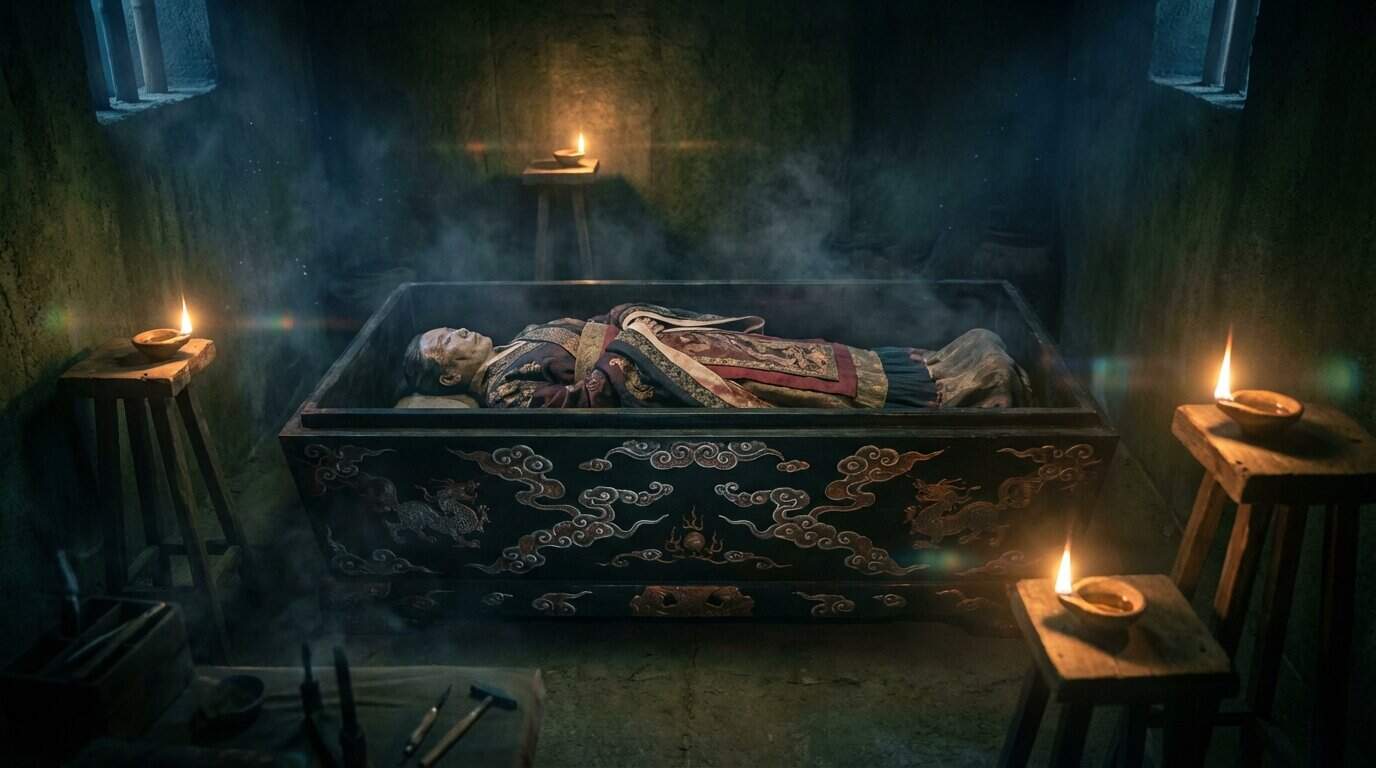
When workers digging an air-raid shelter in 1971 stumbled upon a massive underground tomb, they had no idea they were about to rewrite the rules of biology. Inside, they found the Lady of Dai, a noblewoman from the Han Dynasty who had been buried for over 2,100 years. While most ancient remains are reduced to bone and dust, her body was found in a state that seemed to freeze time itself.
Her skin remained soft and elastic to the touch, and her joints could still bend as if she were merely sleeping. Scientists were stunned to find type-A blood still in her veins and her internal organs perfectly intact, making her the best-preserved human ever discovered. This incredible find challenges everything known about life, death, and the mysterious burial techniques of ancient China.
Key Takeaways
- The discovery of Xin Zhui, the Lady of Dai, represents the best-preserved human remains in history, featuring soft skin, flexible joints, and intact Type A blood after 2,100 years.
- Her extraordinary preservation resulted from a sophisticated multi-layered burial system using twenty silk wraps, four nested coffins, charcoal packing, and white clay to create a perfectly airtight, sterile environment.
- A modern autopsy revealed that her high-status lifestyle led to chronic health issues, including heart disease and gallstones, with her final meal of musk melon seeds likely triggering a fatal gallbladder attack.
- The presence of a mysterious, slightly acidic liquid in her coffin suggests that ancient Chinese chemistry may have utilized advanced preservation techniques that remain not fully understood by modern science.
The Miraculous Preservation Of Xin Zhui
When archaeologists uncovered the tomb of Xin Zhui in 1971, they expected to find the skeletal remains typical of a 2,100 year old burial. Instead, they were met with a sight that challenged everything science understood about the decomposition of the human body. The Lady of Dai appeared as if she had only recently passed away, with skin that was still soft and elastic to the touch. Her joints remained flexible enough to be moved by the researchers, and her veins still contained Type A blood. This level of physical integrity is almost unheard of in ancient mummies, making her a singular marvel of archaeological history.
The secret to her timelessness seems to lie in the complex and mysterious burial methods used by the Western Han Dynasty. Xin Zhui was wrapped in twenty layers of fine silk and placed inside a series of four nested coffins, which were then packed with charcoal and sealed with white clay. This created a multi-layered burial system that blocked out oxygen and bacteria. When the innermost coffin was opened, researchers discovered the body was submerged in eighty liters of a strange, slightly acidic liquid. While some experts believe this fluid was a preservative herbal broth, others suggest it may have been an intentional chemical concoction designed to halt the march of time.
This incredible discovery, documented by historians and professional museum researchers, continues to spark debate among scientists and history buffs alike. While the airtight seals explain some of the preservation, the fact that her brain and internal organs remained intact is truly baffling. Some researchers point to the high concentration of mercury and lead found in the burial chamber as a possible key to her condition. Whether it was a stroke of luck or a lost secret of ancient Chinese chemistry, the Lady of Dai remains a haunting reminder of how much there is still to learn about the past. Do you think the ancient Chinese possessed a secret preservation technique that has since been forgotten by history?
Life And Luxury In The Han Dynasty
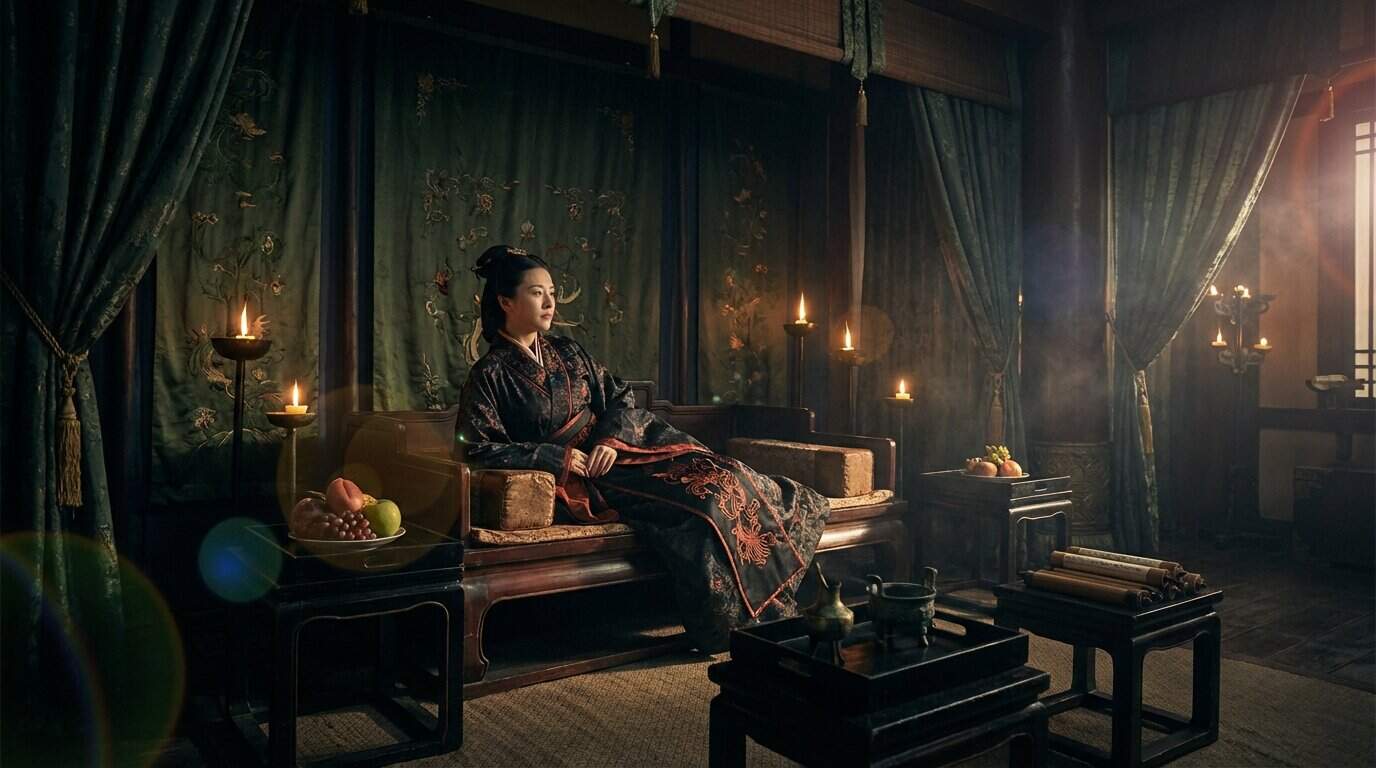
Life for Xin Zhui, the Lady of Dai, was a masterclass in Han Dynasty opulence that followed her even into the afterlife. As the wife of a powerful Marquis, she lived surrounded by the finest comforts ancient China could offer. Her tomb at Mawangdui revealed a staggering collection of over 100 silk garments, ranging from delicate gossamer robes to intricately embroidered gowns that displayed her immense wealth. These textiles were so well preserved that they still shimmered with the vibrant dyes of red, gold, and black used over two millennia ago. Such luxury was not just for show, as it reflected a culture that believed one could carry their earthly status into the next world.
Beyond her wardrobe, the Lady of Dai maintained a rigorous beauty routine that would rival modern standards. Archaeologists discovered elaborate lacquerware cosmetic sets containing fine powders, combs, and lipsticks designed to keep her appearance flawless. Her vanity was supported by a massive staff of servants, represented by wooden figurines placed within the burial chambers to serve her every whim. This attention to detail suggests a life of leisure where personal presentation and social standing were of the utmost importance. It is fascinating to realize that her vanity sets remained intact long after the empire she lived in had crumbled into history.
The sheer scale of her final feast offers a macabre look at the dietary habits that likely contributed to her death. Researchers found dozens of bamboo baskets filled with luxury foods like lotus roots, swan, and spiced meats, along with detailed recipes for her favorite stews. This excessive lifestyle was further evidenced by the discovery of melon seeds in her stomach, indicating she had enjoyed a final, sweet meal just before she passed away. While her wealth provided a life of unrivaled comfort, it also led to health issues like heart disease and gallstones. Does the preservation of such luxury make her story more tragic, or is it the ultimate success of an ancient noblewoman seeking immortality?
Medical Secrets Of The Diva Mummy
When scientists performed a modern autopsy on Xin Zhui, they were stunned to find her internal organs as intact as if she had passed away only days prior. This medical examination revealed that the Lady of Dai had type-A blood still sitting in her veins, a discovery that remains a scientific marvel for a body over two millennia old. Researchers found that her lifestyle as a wealthy noblewoman had led to several chronic health issues, including fused spinal discs and a severely clogged heart. Her gallbladder was also packed with stones, suggesting a diet rich in fats and oils that eventually took a toll on her physical well-being.
The investigation into her final moments turned into a fascinating piece of forensic detective work thanks to the contents of her stomach. Pathologists discovered 138 musk melon seeds, indicating that her very last meal was a refreshing fruit snack enjoyed shortly before her death. Experts believe that the effort of eating this meal likely triggered a massive gallbladder attack, which in turn placed too much stress on her weakened heart. At approximately fifty years old, the Diva Mummy succumbed to a sudden heart attack, leaving behind a biological time capsule for future generations to study.
By piecing together these medical clues, historians can visualize the daily life and final hour of one of history’s most pampered figures. It is incredible to think that a few melon seeds could provide such a clear window into a life lived two thousand years ago. Her preservation defies the natural laws of decay, leaving us to wonder if her embalmers used secret techniques that modern science has yet to fully grasp. Much like the debate surrounding ancient technology found in other parts of China, her condition forces us to reconsider the capabilities of our ancestors. What do you think was the most important factor in keeping her body so perfectly preserved for all these centuries?
The Timeless Legacy of Xin Zhui
The Lady of Dai remains a towering figure in the world of archaeology because she challenges everything previously thought about the limits of human decay. For over two millennia, Xin Zhui rested in a silent, airtight chamber that somehow paused the natural clock of biology. When she was finally brought back into the light of the modern world, her soft skin and movable joints offered a startling, almost haunting bridge to the Han Dynasty. This discovery is more than just a burial site; it is a masterclass in ancient chemistry and environmental engineering that has yet to be fully decoded. Her presence reminds us that the ancient world possessed secrets of preservation that continue to baffle advanced laboratories today.
The mystery of her survival rests in a delicate balance of charcoal, white clay, and a mysterious reddish liquid that may have acted as a preservative. While researchers have studied every inch of her remains, from her last meal to the genetic markers in her blood, the exact recipe for her immortality remains elusive. Scientists continue to debate whether her condition was a stroke of environmental luck or a deliberate, sophisticated chemical treatment designed to last forever. The fact that her body did not succumb to the typical march of time suggests that the people of her era understood the physical world in ways we are only beginning to appreciate. It is a rare instance where the fringe possibilities of Tutankhamun’s Tomb seem to align with the facts of the autopsy table.
As we look toward the future of medical science and preservation, the Lady of Dai stands as a silent challenge to current capabilities. Even with modern technology and a deep understanding of cellular biology, it is difficult to recreate the perfect conditions that kept her body so remarkably lifelike for twenty-one centuries. It raises the fascinating question of whether we have lost some fundamental knowledge that the architects of her tomb took for granted. Do you think modern science will ever truly be able to replicate the incredible preservation techniques used on Xin Zhui, or was her condition a one-time miracle of history? We invite you to share your thoughts on whether this ancient mystery will ever be fully solved or if some secrets are meant to stay buried in the past.
Frequently Asked Questions
1. Who was the Lady of Dai during her lifetime?
The Lady of Dai, also known as Xin Zhui, was a high-ranking noblewoman and the wife of Li Cang, the Chancellor of the Marquis of Dai. She lived a life of extreme luxury during the Western Han Dynasty over 2,100 years ago. Her status allowed her access to the finest silks and various delicacies that were ultimately documented by researchers during her autopsy.
2. How did her body stay so well preserved for thousands of years?
Her preservation was achieved through an airtight burial system involving twenty layers of silk and four nested coffins. The tomb was packed with charcoal and sealed with white clay to block out all oxygen and moisture. This created a sterile environment that prevented bacteria from breaking down her tissues.
3. What did scientists find inside her veins?
In a discovery that shocked the medical community, researchers found that the Lady of Dai still had Type A blood in her veins. Her internal organs were also found completely intact, appearing as if she had only recently passed away. This level of biological preservation is considered the best ever recorded in human history.
4. Was there a mysterious liquid found in her coffin?
When the innermost coffin was opened, archaeologists found her body submerged in eighty liters of a mysterious, slightly acidic yellowish liquid. While some believe this was a sophisticated preservation fluid, others suggest it may have been natural body fluids that collected over the centuries. Scientists still debate the exact chemical makeup of this strange substance.
5. Can her joints still move today?
One of the most incredible aspects of her discovery was that her skin remained soft and her joints stayed flexible. Unlike typical mummies that are stiff and brittle, the Lady of Dai could have her limbs bent by researchers without any damage. This elasticity is a testament to the advanced, and somewhat forgotten, burial techniques of ancient China.
6. What does her discovery tell us about ancient Chinese medicine?
The autopsy of Xin Zhui revealed she suffered from various ailments like heart disease and gallstones, providing a rare look at ancient health. The presence of herbal medicines in her system suggests the Han Dynasty had a complex understanding of pharmacology. Her state of preservation hints at a lost scientific knowledge that kept her body from decaying for two millennia, much like the questions raised by the Dropa stones discovery regarding the technological capabilities of ancient civilizations.