Walking With Giants The Ancient Mystery Of The Beringia Ghost Tracks
Thousands of years ago, a group of teenagers and children walked across the muddy shores of a prehistoric lake in what is now New Mexico. These footprints eventually vanished under layers of earth, only to reappear today as ghost tracks that are visible only when the moisture in the soil is just right. This discovery has sent shockwaves through the scientific world, as these ancient steps suggest that humans were thriving in North America much earlier than anyone ever imagined.
Recent dating of the sediment reveals that these travelers moved through the area between 21,000 and 23,000 years ago. This timeline challenges the long-held belief that the first Americans arrived much later, after the ice sheets began to melt. By examining over 60 individual prints, researchers are now piecing together a forgotten chapter of human history that was hidden in plain sight for millennia.
Key Takeaways
- The discovery of fossilized human footprints in New Mexico dates human presence in North America to between 21,000 and 23,000 years ago, thousands of years earlier than previously believed.
- These ‘ghost tracks’ at White Sands National Park reveal that ancient families, primarily teenagers and children, lived and played alongside Ice Age megafauna like mammoths and giant ground sloths.
- Evidence from these tracks fundamentally upends the ‘Clovis-first’ theory and the Beringia Standstill timeline, proving humans thrived in the heart of the continent during the height of the last Ice Age.
- The footprints provide a rare, cinematic glimpse into prehistoric daily life, appearing and disappearing based on soil moisture levels to act as a bridge between modern science and a lost world.
The Magic Of The White Sands Ghost Tracks
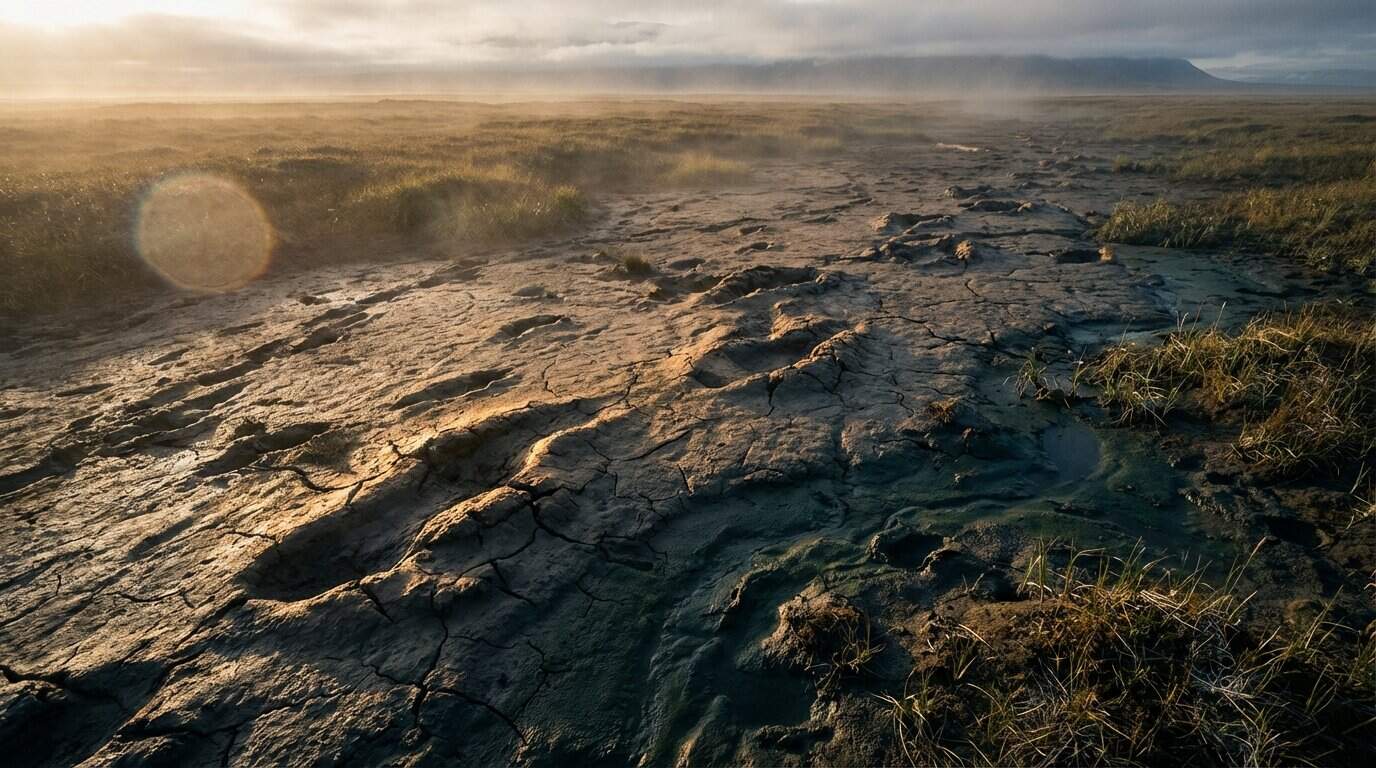
The ghost tracks of White Sands earn their name from a haunting, natural phenomenon that makes them appear and disappear. These 23,000-year-old prints are usually invisible to the naked eye, remaining hidden beneath the surface of the alkali flat. When the moisture levels in the soil are just right, the tracks soak up water and darken, revealing the distinct shapes of human toes and heels against the pale sand. As the sun rises and the ground dries out, the footprints slowly vanish back into the earth like spirits returning to the past. This fleeting visibility creates a cinematic experience, offering a brief window into a world that existed during the height of the last Ice Age.
Scientists have used these ephemeral marks to rewrite the history of how people first arrived in the Americas. By dating the seeds of ancient ditch grass found embedded within the footprints, researchers confirmed that humans were walking alongside giant ground sloths and mammoths much earlier than previously thought. This discovery challenges the old idea that the first Americans arrived only after the ice sheets melted. Instead, these tracks suggest that families were thriving in New Mexico while the Beringia land bridge was still a frozen gateway. The presence of children’s footprints among the tracks adds a touching, human element to this ancient mystery, showing us that these were not just explorers, but families making a home.
These shifting sands serve as a bridge between hard archaeology and the unexplained wonders of our planet. While the science provides a clear timeline, the experience of watching a footprint materialize from thin air feels like a brush with the supernatural. It forces us to wonder what other secrets remain buried beneath the desert floor, waiting for the right moment to reveal themselves. If humans were already this far south during the peak of the glaciers, our understanding of the first migrations must be completely reimagined. What do you think these ancient travelers were searching for as they followed the shores of the now-lost Lake Otero?
Teenage Travelers And Ice Age Megafauna
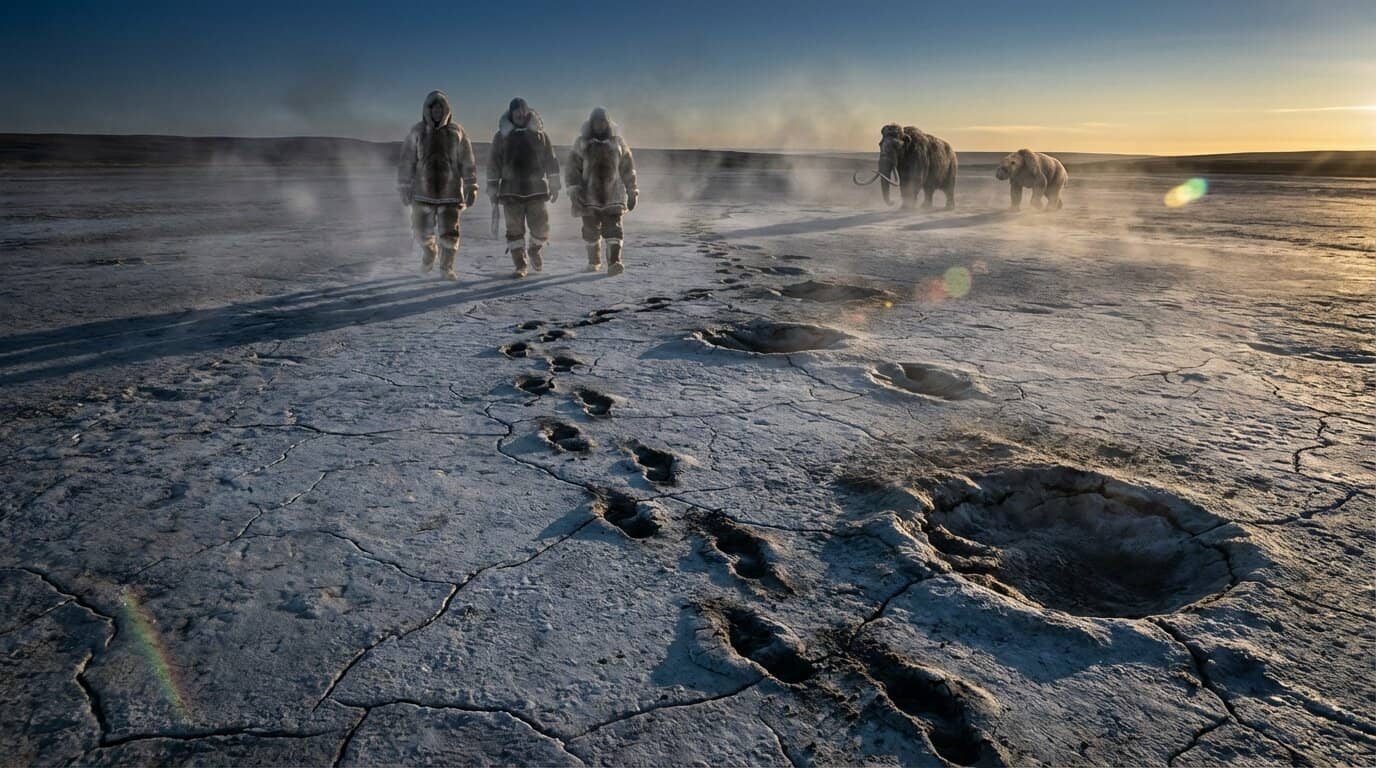
The discovery of these fossilized prints at White Sands National Park reveals a cinematic scene frozen in time from over 21,000 years ago. Most of the tracks belong to teenagers and younger children who were walking across the muddy shores of what was once Lake Otero. They were not alone in this lush environment, as their small footprints frequently cross paths with the massive, circular indentations of giant ground sloths and the heavy ruts left by Columbian mammoths. It is a striking image that suggests these ancient youths lived in a world where encountering multi-ton megafauna was a routine part of their daily lives.
Archaeologists and various research institutions have noted that the tracks often show a sense of playfulness and purpose. In one area, the footprints of a small child follow the path of a giant sloth, almost as if the youngster were intentionally stepping into the animal’s massive tracks for fun. These ghost tracks only become visible under specific moisture conditions, appearing and disappearing like spirits from the past. This fleeting glimpse into the Ice Age suggests that humans were established in North America much earlier than the traditional land bridge theories originally proposed.
Imagine the courage and curiosity of these young travelers as they moved through a continent filled with predators like dire wolves and saber-toothed cats. The presence of so many children suggests a settled community rather than a small group of lone hunters passing through the area. These prints challenge our understanding of history and force us to reconsider how long humans have truly called the Americas home. If these teenagers were exploring New Mexico during the height of the last Ice Age, what other secrets remain hidden beneath the sands of time?
Challenging The Beringia Standstill Timeline
The discovery of fossilized human footprints in White Sands National Park has completely upended the traditional timeline of human history in North America. These remarkable impressions, often called ghost tracks because they only appear under specific moisture conditions, date back between 21,000 and 23,000 years. This timeline directly challenges the long held Clovis-first theory, which suggested that humans did not arrive on the continent until much later. By finding these tracks in New Mexico, scientists have found evidence that proves people were thriving in the heart of the continent during the height of the last Ice Age. This suggests that the initial migration across the land bridge must have happened thousands of years earlier than previously imagined.
Walking alongside the tracks of giant ground sloths and mammoths, these ancient people left behind a cinematic record of a lost world. Researchers used radiocarbon dating on ancient grass seeds found within the footprint layers to confirm this staggering age. The sheer quantity of prints, with over 60 individual tracks identified, shows that this was not a fluke or a single traveler, but a settled community. Most of the tracks belong to teenagers and children, painting a vivid picture of families playing or working near the shores of the ancient Lake Otero. This evidence forces a major rethink of the Beringia Standstill hypothesis, suggesting that humans did not just wait in the north but moved deep into the Americas while massive glaciers still covered much of the land.
The presence of these ghost tracks creates a bridge between hard archaeology and the sense of a hidden history waiting to be uncovered. If humans were already as far south as New Mexico 23,000 years ago, it opens up the possibility that many other sites remain hidden beneath the earth or sea. This discovery encourages us to look at the environment with fresh eyes and consider what other mystery of America’s Vikings or other early explorers might still be waiting to be found. It invites a fascinating discussion about how these early pioneers lived in an icy, formidable world filled with megafauna. Do you think there are even older sites waiting to be discovered, or does this finally mark the true beginning of the American story?
A Glimpse Into the Past
The ghost tracks serve as a powerful bridge to a lost world, offering a rare glimpse into the lives of the first Americans. These fossilized footprints, frozen in time alongside the massive tracks of mammoths and giant ground sloths, tell a cinematic story of survival during the height of the Ice Age. By pushing the timeline of human arrival back to over 21,000 years ago, they challenge everything we thought we knew about the original pioneers of the continent. This discovery transforms a vast landscape into a bustling scene of ancient family life and prehistoric wonder.
These ancient steps do more than just rewrite history books; they invite us to imagine a world that was once thought impossible. The presence of children playing near the shores of Lake Otero suggests that these early people were not just passing through, but were well-established in their environment. As the evidence for an earlier migration grows, the mystery of how these travelers moved south becomes even more intriguing. Each track is a silent witness to a journey that changed the course of human history forever.
How does the idea of humans living alongside megafauna thousands of years earlier than expected change your perspective on our ancestors? It is fascinating to consider what other anachronistic artifact secrets might still be hidden beneath the sands, waiting for the right conditions to reappear. We invite you to share your thoughts on whether these findings make you rethink the traditional story of the Americas. Do you believe there are even older sites yet to be discovered, or does this find complete the puzzle of our past?
Rewriting Human History Through Ancient Footprints
The discovery of these ancient ghost tracks has fundamentally shifted our understanding of human history in the Americas. By dating these footprints to over 21,000 years ago, researchers have provided a tangible link to a world that existed long before the ice sheets melted. These impressions tell a story of a courageous people who thrived alongside giant sloths and mammoths during the peak of the last Ice Age. This evidence suggests that the journey across the land bridge happened much earlier than the traditional history books once claimed.
While science continues to analyze the sediment and seeds found within these tracks, the sense of wonder they inspire remains undeniable. These fossilized moments capture the everyday lives of families walking along an ancient lakeshore, bridging the gap between archaeology and a lost cinematic reality. Much like the discovery of Göbekli Tepe, these footprints serve as a silent witness to a sophisticated culture that lived in a harsh and beautiful environment. As we uncover more of these hidden paths, we are forced to rethink everything we thought we knew about the first people to call this continent home.
What do you think these ancient travelers were searching for as they moved through the vast wilderness of the prehistoric Southwest? Does the idea of humans living alongside extinct megafauna change how you view the early history of our world? The ghost tracks remind us that there are still many secrets buried beneath the earth waiting to be discovered. We invite you to share your thoughts and join the conversation about this Bigfoot evidence debate and how it relates to our shared human journey.
Frequently Asked Questions
1. What exactly are the ghost tracks?
These are ancient human footprints found in the White Sands area of New Mexico that appear and disappear based on the moisture in the ground. They were left by children and teenagers walking through muddy shores during the last Ice Age, thousands of years before previously recorded history.
2. How do these footprints appear and disappear?
The tracks earn their ghostly name because they are usually invisible to the naked eye under the alkali flats. When the soil moisture levels are perfect, the prints soak up water and darken against the pale sand, only to vanish again as the sun dries the ground.
3. How old are these mysterious prints?
Recent scientific dating of seeds found within the sediment reveals these tracks were made between 21,000 and 23,000 years ago. This discovery is groundbreaking because it suggests humans were thriving in North America much earlier than the traditional timeline of the melting ice sheets.
4. How did researchers determine the age of the tracks?
Experts analyzed the seeds of ancient ditch grass that were embedded directly within the footprints. By dating these organic materials, they were able to confirm that people were walking this area alongside extinct creatures like giant ground sloths.
5. Why is this discovery considered so controversial?
For decades, the standard belief was that the first Americans arrived much later after a specific window in the Ice Age. These tracks challenge that entire narrative, suggesting a forgotten chapter of human history where people lived in the Americas during the height of the glacial period.
6. Who made these ancient footprints?
By examining over 60 individual prints, researchers determined that a group primarily made up of teenagers and children left these marks. Their small steps provide a rare and personal glimpse into the daily lives of prehistoric families moving through a world that looked very different than it does today.