The Lost Giants Of Pohnpei And The Secrets Of The Coral Reefs
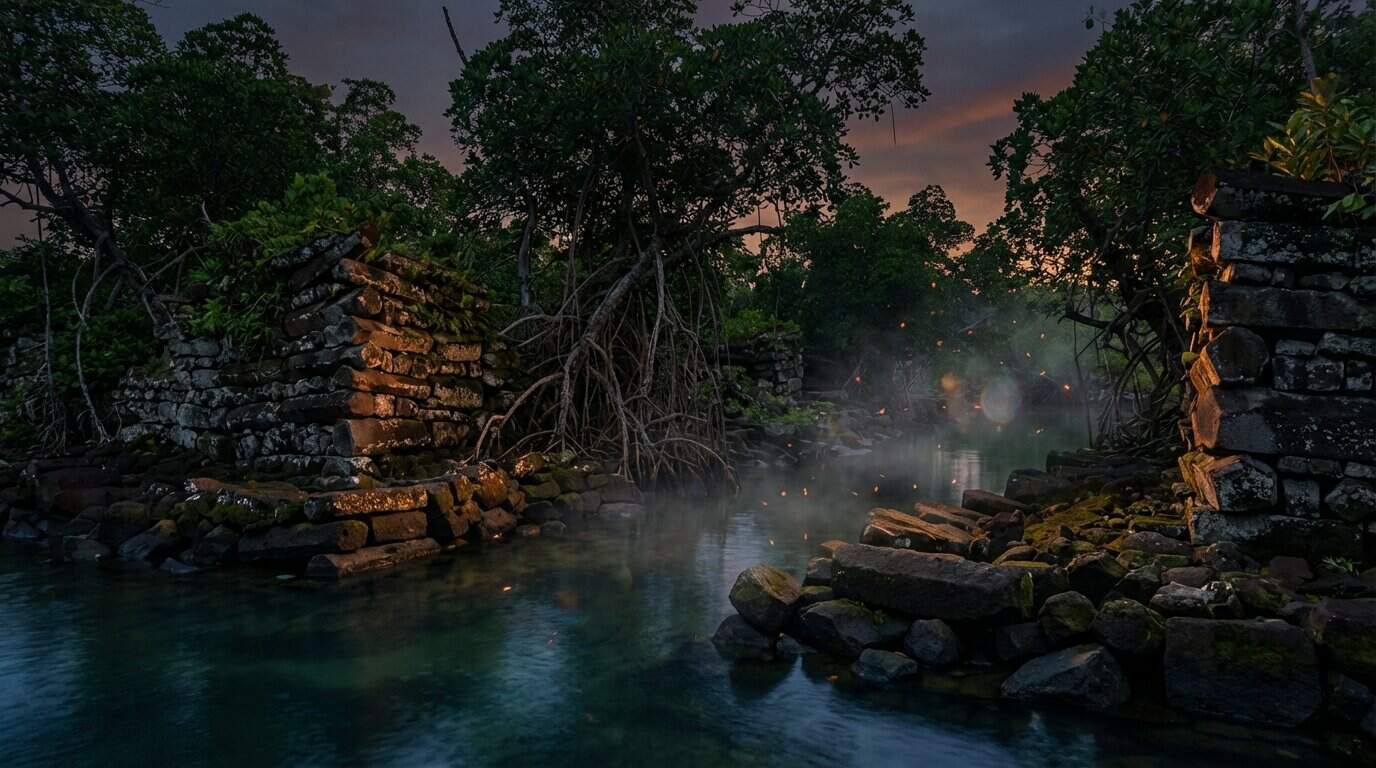
Rising from the turquoise waters of the Pacific, the pohnpei megalithic ruins of Nan Madol challenge traditional understanding of ancient engineering. This massive city, built entirely on a coral reef, consists of nearly 100 artificial islands crafted from giant stone logs. Some of these basalt columns weigh as much as 50 tons, leaving modern visitors to wonder how a civilization without metal tools or pulleys moved such immense weight across the ocean.
Often called the Venice of the Pacific, this stone labyrinth served as the seat of the Saudeleur Dynasty for centuries. While archaeologists have traced the construction back to the 13th century, local legends whisper of twin sorcerers who used supernatural powers to fly the stones into place. Whether built by sheer human will or something more mysterious, the ruins stand as a silent witness to a sophisticated society that mastered the sea and stone in ways that remain difficult to explain.
Key Takeaways
- Nan Madol represents a monumental engineering feat involving the transport and placement of 750,000 tons of basalt columns onto a coral reef without the use of metal tools or pulleys.
- The sophisticated design of nearly 100 artificial islets and submerged foundations suggests the existence of a highly advanced maritime empire with logistical capabilities that challenge traditional historical timelines.
- The scale and precision of the construction, featuring 50-ton stones and 25-foot walls, indicate a mastery of seafaring and architectural technology that remains unexplained by modern archaeological theories.
- Local oral traditions of supernatural stone-moving and the presence of underwater ruins hint at a much older, potentially lost civilization that operated long before recorded history began.
The Impossible Engineering Of The Artificial Islets
The scale of the construction off Pohnpei defies logic when considering the tools available to ancient Pacific islanders. Builders moved an estimated 750,000 tons of columnar basalt across the ocean to create a network of nearly 100 artificial islets directly on top of a jagged coral reef. Some of these volcanic stones, naturally shaped like hexagonal logs, weigh as much as 50 tons each. Local legends often speak of powerful magic or flying stones to explain the feat, as there are no nearby quarries on the coastline. This massive undertaking required a level of logistical planning and seafaring skill that suggests a highly advanced civilization operated in the region long before modern records began.
Moving such immense weight across the water remains the central mystery of these megalithic ruins. While some researchers suggest that workers used large rafts or even underwater paths during low tide, the volume of material makes these theories difficult to prove. UNESCO documentation confirms that the city was built using these heavy basalt pillars and coral boulders, creating a complex that covers roughly 18 square kilometers. The precision required to stack these stones into walls that reach 25 feet high is staggering, especially considering they were built to withstand the constant pressure of the tides. This architectural marvel demonstrates a sophisticated understanding of engineering that allowed a city to exist where nature never intended.
The existence of these ruins suggests that a forgotten maritime empire once dominated this corner of the Pacific. Unlike other ancient cities built on solid ground, this site was intentionally placed in the water, perhaps for spiritual reasons or to demonstrate total control over the ocean. Many observers point to the site as a potential Out-of-Place Artifact because the technology used to transport and place the stones seems to exceed the known capabilities of the era. Scholars continue to debate how a society could coordinate such a massive labor force over several centuries to complete the project. Do you think these ancient builders used hidden technology that has since been lost to time, or is there a simpler explanation for how they moved 750,000 tons of rock?
Out Of Place Artifacts And The Saudeleur Legacy
The Saudeleur Dynasty left behind a legacy that challenges our understanding of ancient engineering and maritime capability. Local oral traditions, passed down through generations of Pohnpeians, speak of twin sorcerers who used supernatural powers to fly the massive basalt columns into place. While modern researchers look for logical transport methods, the scale of the construction suggests a level of organization and technical skill that seems out of place for the era. These legends may be a poetic way of describing a highly advanced seafaring civilization that possessed knowledge now lost to time.
Beyond the famous stone city, the surrounding islands hold secrets that hint at a broader network of sophisticated outposts. Archaeological surveys have uncovered strange artifacts and stone foundations that do not fit the typical patterns of early Pacific islander life. Some researchers suggest these ruins are part of a much larger, sunken complex that once served as a central hub for trade and ritual across the ocean. These finds point toward a vanished culture that mastered the sea long before recorded history began.
The mystery of how a small island population managed to move hundreds of thousands of tons of stone remains a topic of intense debate. Scientists have proposed theories involving rafts and lever systems, yet no physical evidence of these tools has ever been discovered in the silty depths. This gap between physical reality and historical theory leaves the door open for more daring possibilities about the true origin of the Saudeleur legacy. What do you think was the unsolved secrets behind this massive construction project, and could there be more ruins waiting to be found beneath the waves?
Unsolved Mysteries Of Pohnpei Submerged Foundations
Beyond the visible stone walls of the eastern shore lies a silent world of submerged foundations that suggest a much larger story than history books usually tell. Local legends speak of a vast city that existed before the rising tides, with massive stone pillars and paved roads now resting deep beneath the Pacific waters. Divers and researchers have reported seeing strange, columnar basalt structures sitting on the seabed far outside the known reef boundaries. These underwater ruins seem to extend deep into the ocean, hinting that the ancient builders were working with a landscape that looked very different from the one we see today.
The scale of these drowned structures raises fascinating questions about the true age of the civilization that once thrived on Pohnpei. Some researchers, including those featured in studies by the University of Oregon, have noted that the sea levels in this region have fluctuated significantly over the last several thousand years. If these submerged canals and foundations were once dry land, it could mean the megalithic construction started much earlier than the commonly accepted medieval dates. This suggests a sophisticated seafaring culture capable of moving stones weighing several tons across both land and sea with precision that defies simple explanation.
Exploring these hidden depths reveals a complex network of tunnels and platforms that some believe served as an advanced maritime hub. These out of place artifacts and structures point toward a mastery of engineering that allowed an ancient people to build directly onto living coral and volcanic rock. While mainstream science often focuses on the surface ruins, the shadows beneath the waves offer a more mysterious perspective on how these people interacted with their environment, much like the sunken city discoveries found in other parts of the world. What do you think lies further out in the deep blue, and could there be an even larger city waiting to be discovered by future explorers?
The Engineering Enigma of Pohnpei’s Basalt Giants
The enduring mystery of Pohnpei lies in how an ancient society managed to transport and stack millions of pounds of hexagonal basalt with such precision. These ruins challenge the traditional understanding of early Pacific history by presenting a scale of construction that seems to exceed the capabilities of a simple agrarian culture. Much like the discovery of Göbekli Tepe, these sites prove that complex social structures and engineering feats were achieved long before the rise of settled civilizations. When observing the mass of the stones, it is difficult not to wonder if these builders possessed advanced knowledge of seafaring and engineering that has since been lost to time. The existence of these artificial islets suggests a highly organized civilization with a sophisticated grasp of logistics and maritime navigation. Whether through sheer human labor or forgotten technology, the site remains a silent witness to a golden age of oceanic exploration.
Exploring the possibility of a high-tech ancient seafaring culture provides a fascinating lens through which to view these megalithic structures. Some researchers suggest that the placement of these stones across a coral reef points toward an Out of Place Artifact, or OOPArt, on a massive scale. If these builders were part of a larger network of advanced navigators, it would explain how such massive megaliths and complex architectural styles appear in isolated parts of the Pacific. While mainstream science focuses on the social hierarchy of the islands, the physical evidence leaves the door open for more extraordinary theories regarding prehistoric global travel. These ruins serve as a bridge between what we know for certain and the vast, watery secrets of the ancient past.
What do you think was the true purpose behind the construction of these massive artificial islands? Does the evidence suggest a lost maritime empire with advanced tools, or is it a testament to the incredible ingenuity of local ancestors using traditional methods? The debate between archaeological records and the unexplained features of the site continues to spark curiosity among explorers and historians alike. We invite you to share your thoughts on whether these ruins represent a missing chapter in the story of human civilization. Your perspective helps keep the spirit of discovery alive as we piece together the puzzle of Pohnpei.
Frequently Asked Questions
1. What exactly are the Pohnpei megalithic ruins?
The ruins, known as Nan Madol, are a massive stone city built directly on a coral reef off the island of Pohnpei. This prehistoric marvel consists of nearly 100 artificial islands connected by a network of canals, earning it the nickname Venice of the Pacific.
2. Who built this mysterious stone city?
The Saudeleur Dynasty ruled over Pohnpei for centuries and oversaw the construction of this monumental site starting around the 13th century. They established Nan Madol as a central seat of power for their religious and political leadership.
3. How did ancient builders move stones weighing 50 tons?
The exact method remains a mystery because the builders lacked metal tools or complex pulleys to move 750,000 tons of basalt. While some researchers suggest the use of large rafts or submerged paths, local legends maintain that the stones were moved through the air using supernatural powers.
4. Where did the giant stone logs come from?
The basalt columns used for the walls were naturally formed by volcanic activity into hexagonal shapes. Because there are no quarries in the immediate vicinity of the reef, these heavy stones had to be transported across the island or over the open ocean to reach the construction site.
5. Why was the city built on top of a coral reef?
Building on the reef allowed the Saudeleur rulers to create a highly defensible and secluded environment separate from the main island. This unique location emphasized their elite status and allowed them to control the surrounding waters and social hierarchy.
6. Are the Pohnpei ruins still accessible to visitors today?
Modern explorers can still visit the site to witness the towering stone walls and intricate canal systems firsthand. Navigating the ruins often requires a boat at high tide, providing a glimpse into the sophisticated maritime lifestyle of the ancient Pohnpeian people.