The Ancient Mystery Of The Dogon Tribe And The Sirius Star
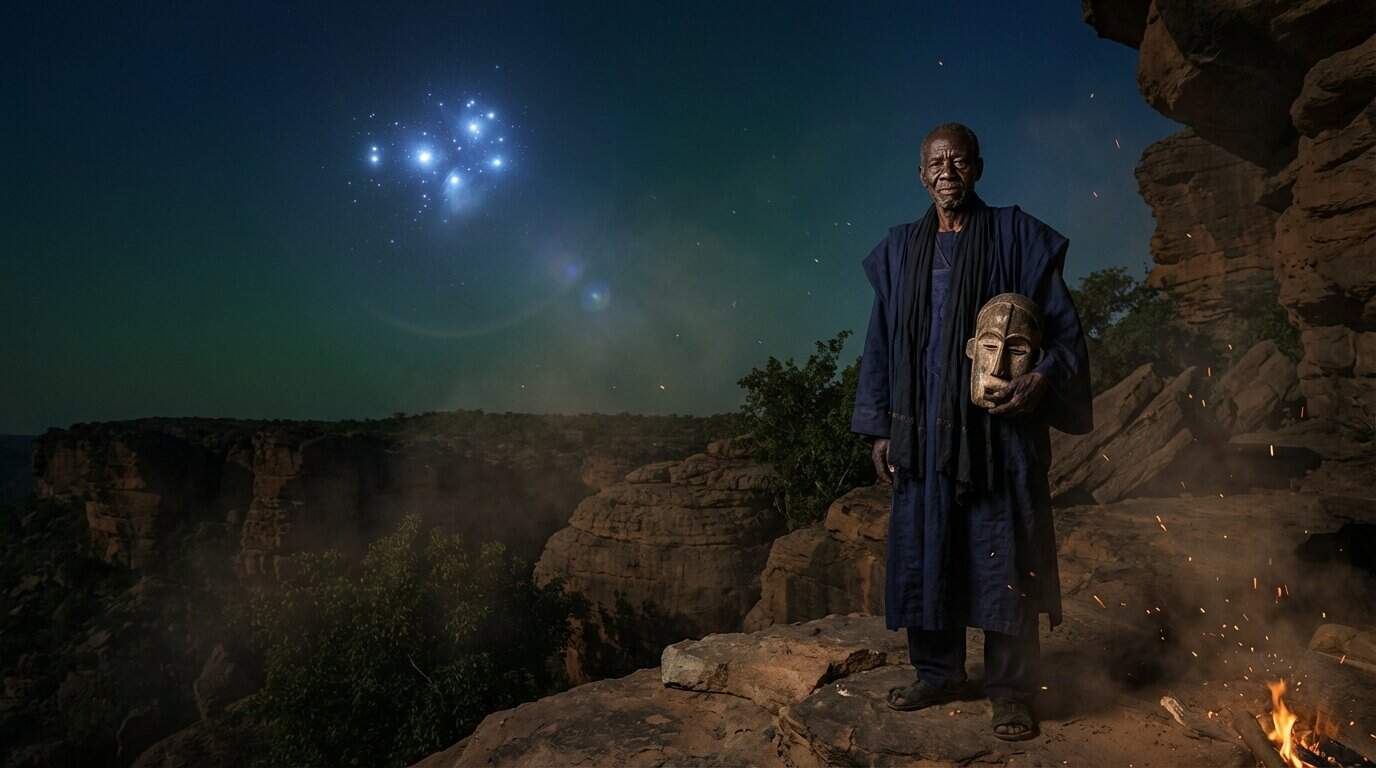
High atop the jagged cliffs of the Bandiagara Escarpment in Mali, a mysterious connection to the cosmos has baffled researchers for decades. The dogon tribe sirius lore suggests that this West African community possessed precise knowledge of a tiny, invisible star long before modern telescopes could even see it. Their ancient traditions describe a dense companion star with a fifty year orbit, a fact that mirrors contemporary astronomical discoveries with startling accuracy.
According to local legends, this advanced information did not come from tools, but from otherworldly visitors known as the Nommos. These amphibious beings allegedly descended from the heavens centuries ago to share the secrets of the universe during sacred festivals. While skeptics search for earthly explanations, the sheer detail of the Dogon cosmology leaves many wondering if a bridge between Earth and the stars truly exists.
Key Takeaways
- The Dogon tribe of Mali possessed precise astronomical knowledge of the white dwarf star Sirius B, including its fifty-year elliptical orbit and extreme density, centuries before modern telescopes confirmed its existence.
- Tribal oral traditions attribute this advanced scientific data to the Nommos, amphibious extraterrestrial beings from the Sirius system who allegedly visited Earth to share secrets of the universe.
- Beyond the Sirius system, Dogon lore accurately describes complex celestial features like the rings of Saturn and the four moons of Jupiter, integrating these facts into ancient rituals that predate modern contact.
- While skeptics suggest the information may have come from 20th-century travelers, the deep-rooted nature of the Sigui ceremony and other long-standing traditions points toward an ancient, unexplained source of cosmic understanding.
The Invisible Companion Of Sirius A
The Dogon people of Mali have long spoken of a tiny, invisible star they call Po Tolo. According to their ancient oral traditions, this celestial body is incredibly heavy and orbits the bright star Sirius A every fifty years. While Sirius A is the most luminous star in our night sky, Po Tolo is completely hidden from the naked human eye. It was not until the nineteenth century that Western astronomers used powerful telescopes to confirm the existence of Sirius B, a dense companion star that matches the Dogon descriptions perfectly. This discovery left researchers wondering how an isolated tribe could possess such specific data centuries before modern technology existed.
The mystery deepens when exploring the origin of this advanced astronomical data. Anthropologists Marcel Griaule and Germaine Dieterlen documented that the Dogon claim their knowledge came from the Nommos. These were described as amphibious beings who arrived from the Sirius system long ago to share secrets about the cosmos. The Dogon lore even describes the elliptical shape of the orbit and the extreme density of the smaller star, comparing its weight to a specific type of heavy grain. Such precise details suggest a source of information that transcends simple observation or lucky guessing.
Skeptics often argue that the tribe might have learned these facts from visiting travelers, yet the Dogon culture is deeply rooted in rituals that predate modern contact. Their Sigui ceremony, performed every sixty years, is directly tied to the movements of these stars and has been practiced for generations. This consistency points toward a long standing heritage of cosmic understanding that challenges the standard timeline of scientific progress. If these stories are true, they provide a fascinating link between humanity and potential visitors from beyond our solar system. The presence of Sirius B serves as a silent, heavy witness to a history that science is only beginning to uncover.
Celestial Visitors Known As The Nommos

The Dogon people tell a fascinating story of the Nommos, who were mysterious amphibious beings that descended from the sky in a great vessel. According to tribal legends documented by anthropologists Marcel Griaule and Germaine Dieterlen, these visitors possessed fish like features and required a watery environment to survive. They are described as spiritual masters and teachers who arrived to share profound wisdom about the structure of the universe. This interaction allegedly took place hundreds of years ago during a sacred period known as the Sigui festival. The Dogon claim these celestial guests did not just bring culture, but also provided specific scientific data that would be impossible to see with the naked eye.
These visitors supposedly originated from the Sirius star system, specifically focusing on a tiny star they called Po Tolo. Modern science now recognizes this star as Sirius B, a dense white dwarf that is completely invisible without the aid of powerful telescopes. The Dogon traditions accurately described its fifty year elliptical orbit and its incredible weight long before Western astronomers confirmed these facts in the nineteenth and twentieth centuries. Robert Temple popularized this mystery by suggesting that the Nommos were actual ancient astronauts who gifted this advanced map of the stars to the tribe. It raises a compelling question about how an isolated culture in Mali could possess such precise astronomical details.
The legacy of the Nommos continues to challenge our understanding of ancient history and the potential for early contact with other worlds. While some skeptics search for conventional explanations, the deep integration of Sirius B into their centuries old ceremonies suggests a much older source. The Dogon maintain that their knowledge is a direct inheritance from these celestial teachers who promised to return one day. This narrative sits at the intersection of cultural mythology and unexplained scientific accuracy. Do you believe these legends are evidence of ancient astronauts, or is there a terrestrial explanation we have yet to discover?
Marcel Griaule And The Sirius Mystery
In the 1930s, French anthropologists Marcel Griaule and Germaine Dieterlen lived among the Dogon people to document their complex spiritual beliefs. They were stunned to discover that this isolated tribe possessed specific knowledge about the star Sirius that seemed impossible to obtain without modern technology. According to Griaule, the Dogon described a tiny, heavy companion star called Po Tolo, which we now know as the white dwarf Sirius B. This invisible star follows a fifty year orbit, a fact the Dogon had integrated into their ceremonies for centuries. Their oral traditions even detailed the density and orbital path of this celestial body long before Western telescopes could confirm its existence.
The mystery deepened in 1976 when author Robert Temple published his book, The Sirius Mystery, which proposed a radical origin for this knowledge. Temple suggested that the Dogon did not discover these facts on their own but were instead taught by extraterrestrial visitors. He pointed to the Nommos, described in Dogon lore as amphibious beings who arrived from the Sirius system in a great vessel. These entities supposedly shared advanced astronomical data with the tribe ancestors to help them understand the mechanics of the universe. While many scientists remain skeptical of these bureaucratic claims, the precision of the Dogon cosmic calendar continues to challenge our understanding of ancient history.
This intersection of tribal mythology and modern astrophysics invites us to reconsider what we know about the ancient world. If an isolated group in Mali knew about a hidden star system hundreds of years ago, it raises fascinating questions about the true source of their information. Whether this was the result of incredible observational skills or a direct encounter with beings from beyond our world, the legend of the Nommos remains a compelling puzzle. We are left to wonder if other ancient cultures might also hold keys to understanding our place in the galaxy. What do you think is the most likely explanation for the Dogon incredible astronomical accuracy?
Modern Science Versus Ancient Dogon Lore
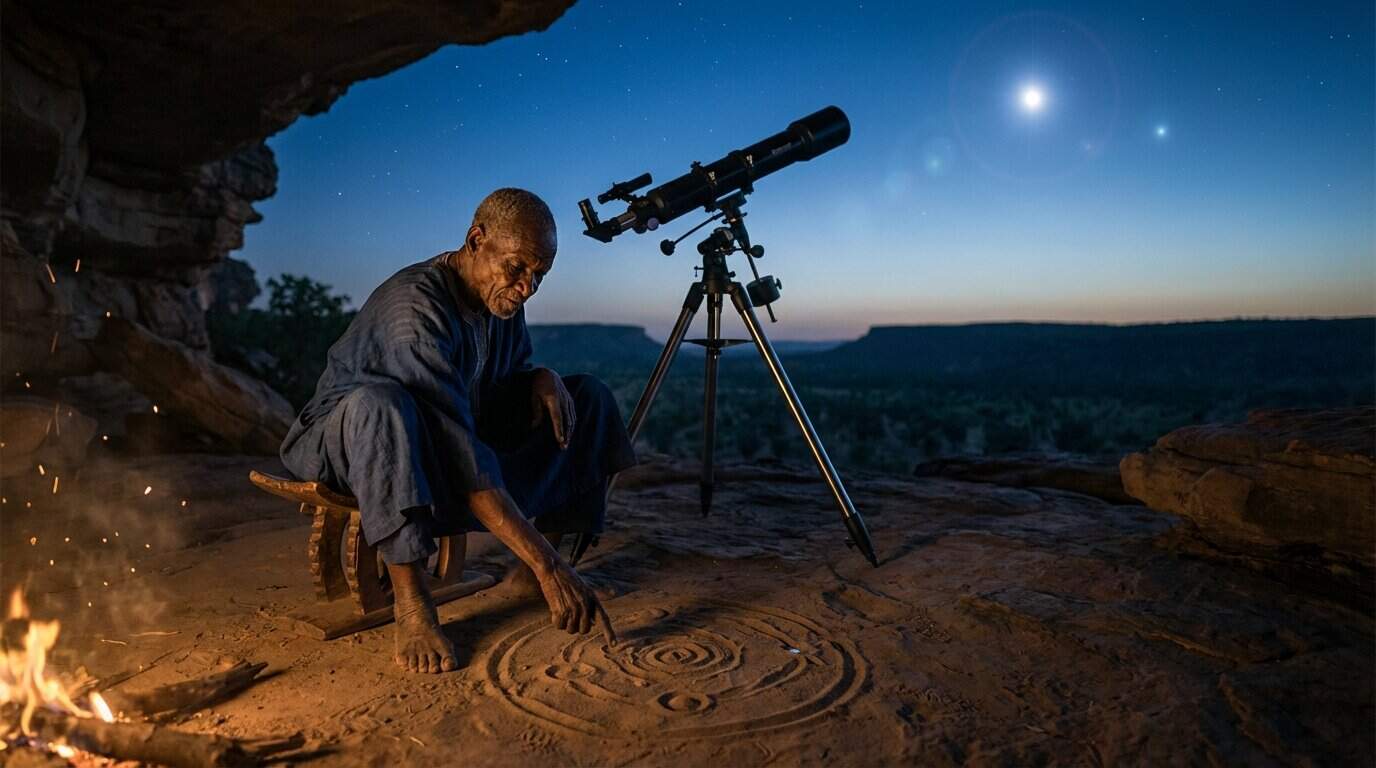
The Dogon people of Mali have long shared stories that seem to mirror the discoveries of modern telescopes. Long before astronomers confirmed the details, this tribe described the four moons of Jupiter and the distinct rings surrounding Saturn. According to the research of anthropologists Marcel Griaule and Germaine Dieterlen, these celestial facts were woven into the very fabric of Dogon spiritual life. While Western science required advanced technology to see these distant worlds, the Dogon spoke of them as common knowledge passed down through generations. This creates a fascinating puzzle for anyone interested in how an isolated culture could map the solar system so accurately.
These specific descriptions of the planets lend a sense of weight to the more mysterious claims regarding the Sirius star system. The tribe identifies a tiny, heavy star orbiting Sirius that is invisible to the naked eye, which modern science now calls Sirius B. Robert Temple, author of The Sirius Mystery, suggests that this information was not a lucky guess but a gift from extraterrestrial visitors known as the Nommos. These amphibious beings reportedly arrived from the stars centuries ago to share their wisdom with the Dogon ancestors. If their descriptions of Saturn and Jupiter are correct, it makes the stories of these ancient astronauts feel much more plausible.
The overlap between Dogon lore and contemporary astronomy invites us to rethink our understanding of human history. Critics often argue that the tribe may have learned these facts from traveling Europeans, yet the deep integration of these stars into their oldest rituals suggests a much older origin. By weighing the physical evidence of their astronomical maps against the lack of modern tools, the possibility of outside contact becomes a compelling theory. Much like ancient technology found in other parts of the world, this leaves us wondering if we are truly the first generation to understand the cosmos or if we are simply rediscovering what the Nommos taught long ago. What do you think is the most likely explanation for this advanced ancient knowledge?
The Celestial Secrets of the Dogon
The story of the Dogon tribe serves as a powerful reminder that our ancestors may have possessed a much deeper understanding of the universe than we often credit them for. By describing the invisible white dwarf star Sirius B long before modern telescopes were even invented, this West African community challenged the boundaries of known history. Whether this knowledge was passed down through generations of careful observation or gifted by visitors from the stars, the mystery remains a captivating puzzle. It forces us to reconsider the origins of human wisdom and the possibility that we have never been truly alone.
The legend of the Nommos suggests a bridge between Earth and the cosmos that feels both ancient and futuristic. These amphibious beings, described as masters of the water and teachers from the Sirius system, represent a narrative thread found in many cultures around the globe. While skeptics search for conventional explanations, the precision of the Dogon astronomical cycles continues to spark curiosity and wonder. This enduring mystery invites everyone to look up at the night sky and imagine a history where humanity is part of a much larger, galactic family.
As we weigh the scientific evidence against the rich oral traditions of Mali, the truth likely sits somewhere in the fascinating space between the two. Exploring these connections allows us to embrace a sense of awe about our place in the vastness of space. Much like the astronomy, rituals, and ancient unity found at other megalithic sites, the Dogon lore suggests a profound link between early civilizations and the stars. Was it a coincidence, or did an advanced civilization truly make contact with our world centuries ago? We would love to hear your thoughts on this cosmic connection, so please share your theories in the comments below and keep the conversation going.
Frequently Asked Questions
1. Who are the Nommos in Dogon mythology?
The Nommos are described as advanced, amphibious beings who traveled from the Sirius star system to Earth long ago. According to Dogon tradition, these celestial visitors shared profound secrets about the universe and the nature of the stars during sacred festivals.
2. What is Po Tolo and why is it significant?
Po Tolo is the Dogon name for a tiny, heavy star that orbits Sirius A every fifty years. This star is invisible to the human eye, yet its description perfectly matches the white dwarf known as Sirius B, which Western scientists only discovered in the nineteenth century.
3. How did the Dogon tribe learn about Sirius B without telescopes?
This remains the greatest mystery of the Bandiagara Escarpment. While the Dogon credit their knowledge to the Nommos, some researchers suggest they may have gained this information through early cultural exchanges, though the specific details they possess are remarkably precise.
4. Is there scientific evidence for the Dogon astronomical claims?
Modern astronomy confirms that Sirius B exists and has an orbital period of approximately fifty years, just as the Dogon oral traditions describe. Anthropologists Marcel Griaule and Germaine Dieterlen were among the first to document these startling correlations during their decades of study in Mali.
5. Where is the Dogon tribe located?
The Dogon people live in the central plateau region of Mali, specifically along the jagged cliffs of the Bandiagara Escarpment. This isolated and rugged setting has helped them preserve their unique cultural identity and ancient cosmic traditions for centuries.
6. Why do skeptics question the Dogon Sirius mystery?
Skeptics often look for earthly explanations, such as the possibility that the tribe learned about Sirius B from European travelers before the anthropologists arrived. However, the deep integration of these star patterns into ancient Dogon rituals suggests the knowledge may be much older than modern contact.