The Devil’s Footprints: Unraveling Devon’s Coldest Mystery
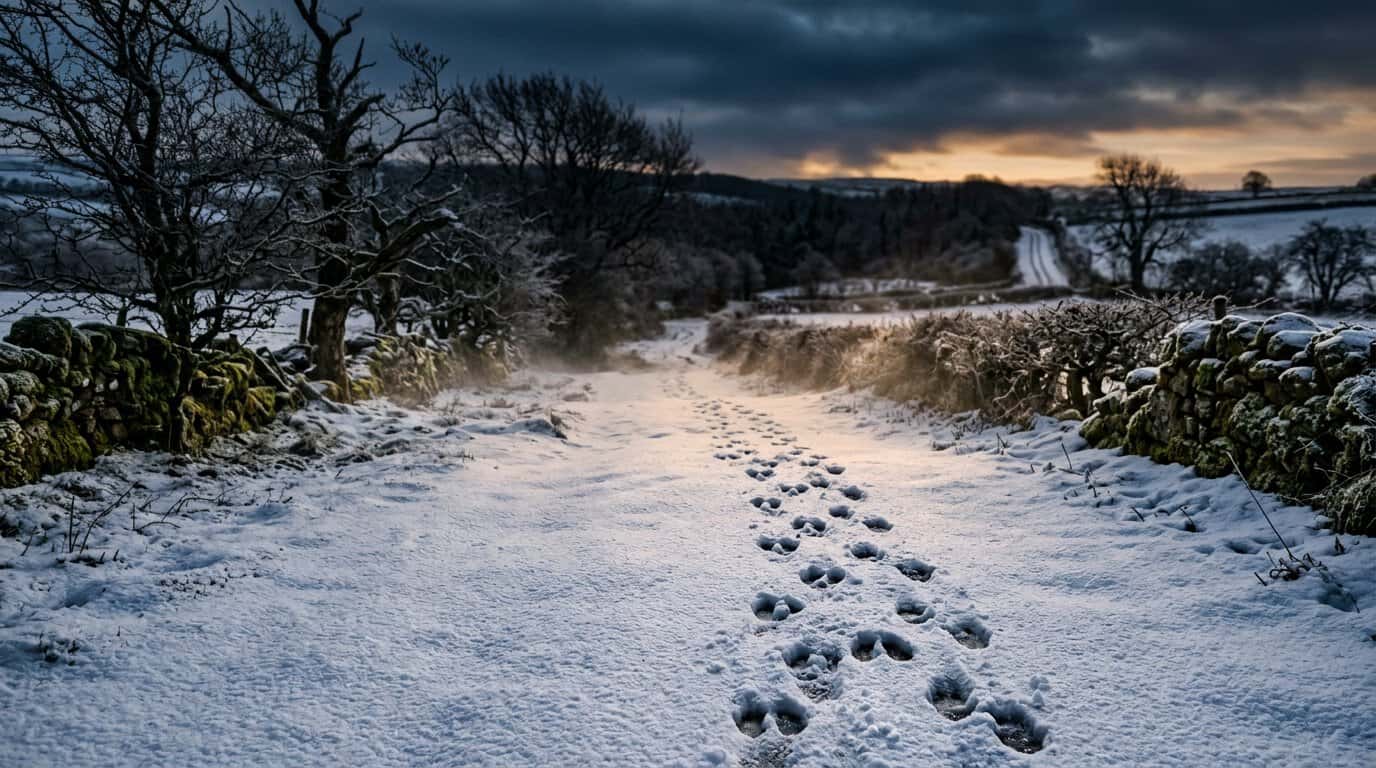
On a freezing February morning in 1855, the residents of Devon, England, awoke to a chilling sight that would spark the famous Devil’s footprints mystery. Overnight, a fresh snowfall had been marked by thousands of small, cloven-hoof prints stretching across more than thirty different towns. What made these tracks truly unsettling was their uncanny, relentless path. The mysterious walker did not stop for obstacles, leaving a single, continuous line of prints that seemed to defy the laws of nature.
These strange marks traversed high stone walls, crossed icy rivers, and even marched straight over snowy rooftops without disturbing the surrounding drifts. Covering an estimated distance of up to one hundred miles in just a few hours, the unyielding stride left locals terrified that something otherworldly had visited their countryside. To this day, historians and curious minds still struggle to explain how a single night created one of history’s most baffling unsolved riddles.
Key Takeaways
- On February 9, 1855, an unbroken line of four-inch, cloven-hoof impressions appeared overnight across more than thirty towns in Devon, England, spanning up to 100 miles.
- The baffling trail defied physical logic by scaling 16-foot walls, traversing snowy rooftops, crossing icy rivers, and passing through narrow drainpipes without breaking stride.
- Terrified Victorian residents overwhelmingly attributed the impossible phenomenon to Satan, triggering widespread panic, national media fascination, and armed search parties.
- Scientific theories—including hopping rodents, trailing balloon cables, and atmospheric snow distortion—fail to explain the full scale and nature of the tracks, leaving the mystery unresolved.
Snow Covered Tracks Across Devon Roofs
On the freezing morning of February 9, 1855, residents across East and South Devon awoke to a blanket of fresh snow and an unsettling puzzle. Stretched across more than thirty towns near the Exe Estuary, endless lines of strange, hoof-like impressions marked the snowy ground. Early accounts gathered by local researchers and later recounted in publications like The Illustrated London News described small, cloven prints measuring roughly four inches long. What startled the villagers most was the unnerving perfection of the trail, which advanced in an unbroken single file rather than a natural four-legged stride. Thousands of citizens stepped outside that morning to find that whatever made the tracks had covered an astounding distance of up to one hundred miles in a single night.
The physical impossibility of the route quickly elevated a local curiosity into a legendary mystery. Rather than swerving around obstacles, the mysterious prints marched straight over fourteen-foot brick walls, scaled snow-covered rooftops, and crossed wide stretches of the frozen River Exe. Witnesses in towns such as Topsham, Dawlish, and Lympstone reported finding the marks leading directly up to locked doors, squeezing through narrow drainpipes, and resuming on the other side without breaking stride. The baffling trail seemed to suggest that the creator of the marks had walked effortlessly through solid barriers or floated through the winter air with eerie precision. Even heavy snowfalls later that week could not erase the sense of wonder and dread that gripped the winter countryside.
- Single-file impressions that maintained an exact eight-inch distance between every step
- Footprints found atop high roof gables and inside fully enclosed, locked courtyards
- Continuous trails that appeared on opposite banks of wide rivers as if the water was no barrier
Local naturalists and worried clergymen scrambled to offer logical explanations, yet the sheer scope of the event defied easy answers. While some scientists blamed roaming badgers, escaped kangaroos, or trailing ropes from weather balloons, no single animal could have visited so many distant locations simultaneously. The superstitious naturally pointed to a more sinister origin, claiming the Devil himself had walked across Devon to mark his domain. Regardless of whether the cause was a rare atmospheric phenomenon or something far stranger, the bizarre night left behind documented proof of an anomaly that defied basic logic.
How Victorian England Blamed the Devil
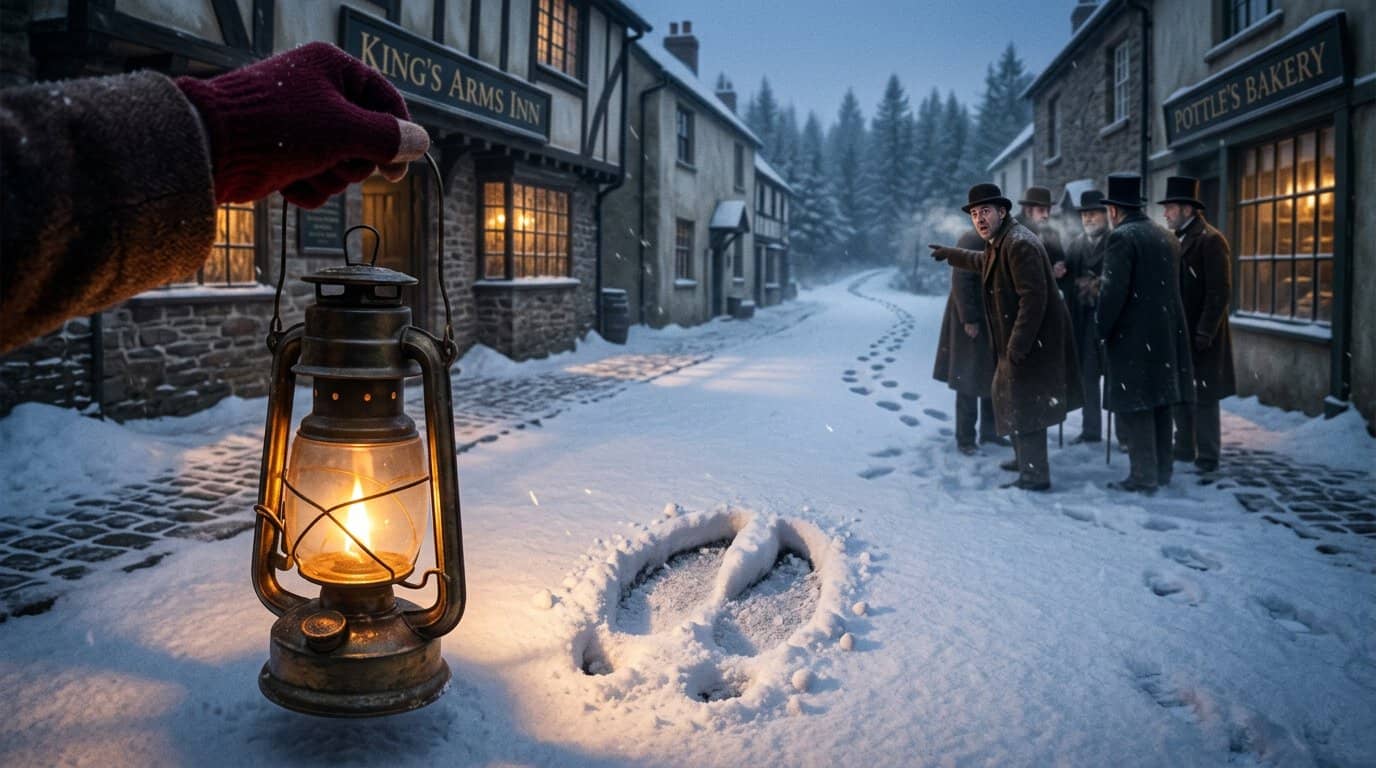
On the freezing morning of February 9, 1855, residents across the quiet Devon countryside woke up to an eerie scene that chilled them to the bone. Fresh snow blanketed towns like Topsham, Dawlish, and Exmouth, but it was marred by thousands of identical, cloven-hoof impressions. What truly terrified the locals was not just the strange shape of the prints, but where they went. The relentless tracks marched in a single line over sixteen-foot walls, across snow-covered rooftops, and even through narrow drainpipes without breaking stride. In a deeply pious Victorian society, many frightened citizens quickly came to a terrifying conclusion that Satan himself had walked through their villages overnight.
Local ministers and religious leaders did little to calm the rising panic, with some suggesting the prints were a divine warning or the literal work of the Devil inspecting his domain. News of the mysterious trails spread rapidly through the region, leading to widespread anxiety as families locked their doors and stayed indoors after dark. According to accounts published in The Illustrated London News at the time, armed search parties even roamed the countryside hoping to catch whatever created the bizarre trail. The sheer scale and unsettling uniformity of the phenomenon made it impossible for local authorities to offer a quick, comforting answer.
- Tracks covered an estimated 40 to 100 miles across more than 30 separate towns and villages.
- Impressions measured roughly four inches long and were spaced eight inches apart in an unbroken line.
- Prints scaled sheer obstacles and crossed the wide Exe Estuary as if the icy water were solid ground.
As national newspapers like The Times picked up the story, the event transformed from a regional mystery into a national obsession. Sensational articles fueled intense debate across Victorian England, blending genuine fear with gothic fascination. While skeptical researchers offered mundane explanations ranging from stray badgers to experimental weather balloons, none of these theories could fully account for tracks traveling nearly one hundred miles in a single night. The unsolved event allowed localized folklore to flourish, leaving behind an enduring legend that still challenges our understanding of that cold winter night.
Scientific Theories Behind the Cloven Prints
As news of the strange markings spread across Devon, local naturalists and researchers quickly searched for logical explanations to calm the anxious public. Prominent biologist Sir Richard Owen proposed that a leap of hungry wood mice had created the mysterious trail overnight. He reasoned that these tiny rodents hop in a specific rhythm that leaves pairs of prints, which might blend into a single hoofmark in soft snow. Other naturalists suggested that a combination of stray badgers, otters, or even escaped donkeys could have made the journey through the countryside. Yet, local historians noted that no known creature could cover nearly a hundred miles in a few hours while maintaining a perfectly straight line over obstacles.
- Hopping wood mice or badgers traveling through deep snow
- Atmospheric melting patterns expanding smaller animal tracks
- A trailing cable from a runaway weather balloon or test airship
- Mass hysteria connecting unrelated animal prints across neighboring towns
Meteorological theories offered another fascinating perspective by examining the peculiar weather conditions on that winter evening. A light dusting of fresh snow had fallen over frozen ground, followed by a brief warm breeze and an immediate hard frost. Atmospheric scientists suggest that this rapid temperature shift caused normal prints to melt outward, artificially enlarging small animal marks into identical hoof shapes. The unique snow conditions might also have blurred distinct toe prints into smooth, rounded shapes resembling horseshoe impressions. Even so, this weather effect would require identical snow conditions across more than thirty different localities, which remains statistically unlikely.
Another intriguing hypothesis pointed toward an escaped scientific instrument, such as a weather balloon trailing a heavy iron shackling chain. Historians noted that a loose cable dragging across roofs and fields could leave a continuous, evenly spaced mark over walls and rivers. However, researchers quickly realized that a drifting balloon could not navigate sharp turns or step neatly through tiny drainage pipes as witnesses reported. This leaves a captivating gap between known science and local folklore, suggesting that perhaps a combination of rare events took place at once. The inability of any single rational theory to satisfy every detail keeps this Victorian mystery open to debate.
Why Devon’s Cloven Footprints Defy Explanation
The strange case of the Devil’s Footprints remains one of the nineteenth century’s most tantalizing unsolved mysteries. On that frigid February morning in 1855, residents across Devon awoke to find thousands of cloven-hoof marks stretching across tens of miles in a single night. Scientists and skeptics over the years have offered several practical explanations, ranging from hopping wood mice and roaming badgers to loose weather balloons trailing heavy ropes. Yet, none of these mundane theories fully account for how a single, continuous trail could scale sheer stone walls, cross icy rivers, and stride across snow-covered rooftops without breaking pace.
While local folklore quickly blamed a sinister otherworldly visitor, the truth likely sits in the delicate space between natural phenomenon and human imagination. It is entirely possible that a rare atmospheric event transformed ordinary tracks into eerie prints, or that mass hysteria linked several unrelated animal sightings together. Still, the precise measurements documented by local witnesses leave open the possibility that something far stranger took place beneath the winter sky. This captivating blend of documented history and lingering uncertainty ensures the story remains as fresh today as it was over a century ago.
Unexplained historical cases like this remind us that the natural world still holds secrets that modern science struggles to clarify. Whether the marks were forged by an elusive creature, an extraordinary weather event, or something beyond our current understanding, the mystery continues to spark curiosity. Every new perspective brings fresh insights to a cold case that has baffled researchers for generations. Readers are encouraged to share their own theories and join the debate in the comments below. Did science miss a key piece of evidence, or was Devon truly visited by something extraordinary?
Frequently Asked Questions
1. What exactly were the Devil’s Footprints?
On February 9, 1855, thousands of strange, cloven-hoof prints appeared across a 100-mile stretch of Devon, England. The single-file tracks measured about four inches long and seemed to be made by a mysterious walker. They moved continuously over roofs, high walls, and frozen rivers without stopping.
2. When and where did the Devil’s Footprints mystery occur?
The phenomenon unfolded overnight on February 8, 1855, in East and South Devon, England. Villagers across more than thirty towns near the Exe Estuary woke up on a freezing morning to discover the strange marks in the fresh snow. The trail stretched across roughly one hundred miles of countryside in just a few hours.
3. Why were the prints believed to be caused by the Devil?
The unusual shape of the prints resembled cloven hooves, which had long been associated with traditional depictions of Satan. Terrified villagers were further spooked by the impossible path of the trail, which went straight over high stone walls and snowy rooftops. With no clear scientific explanation at the time, many frightened locals believed something sinister had visited them.
4. How could the tracks appear on rooftops and high walls?
The mysterious path defied natural explanation by continuing in a relentless line straight over obstacles. Tracks appeared on snowy roofs, high walls, and closed courtyards without disturbing the snow around them. This bizarre detail led many to believe that whatever made them could either jump vast distances or travel above the ground.
5. What are some scientific explanations for the footprints?
Some researchers suggest that escaping animals like badgers, rodents, or a stray donkey might have made the marks. Others point to meteorological oddities, such as strange snow melting patterns created by sudden temperature changes. However, none of these theories fully explain how a single animal or weather event could cover one hundred miles in a single night.
6. Did anyone witness who or what made the tracks?
No one was ever reported to have actually seen the maker of the tracks while they were being created overnight. The mystery was only discovered the following morning when locals stepped outside to inspect the fresh snowfall. Early reports gathered by local researchers and published in newspapers like The Illustrated London News documented only the unsettling evidence left behind.
7. Has the Devil’s Footprints mystery ever been solved?
To this day, the strange event remains one of history’s most baffling unsolved mysteries. While modern investigators continue to weigh animal theories against natural phenomena, no single explanation accounts for the massive distance and impossible obstacles. The legend continues to intrigue historians, scientists, and folklore enthusiasts around the world.