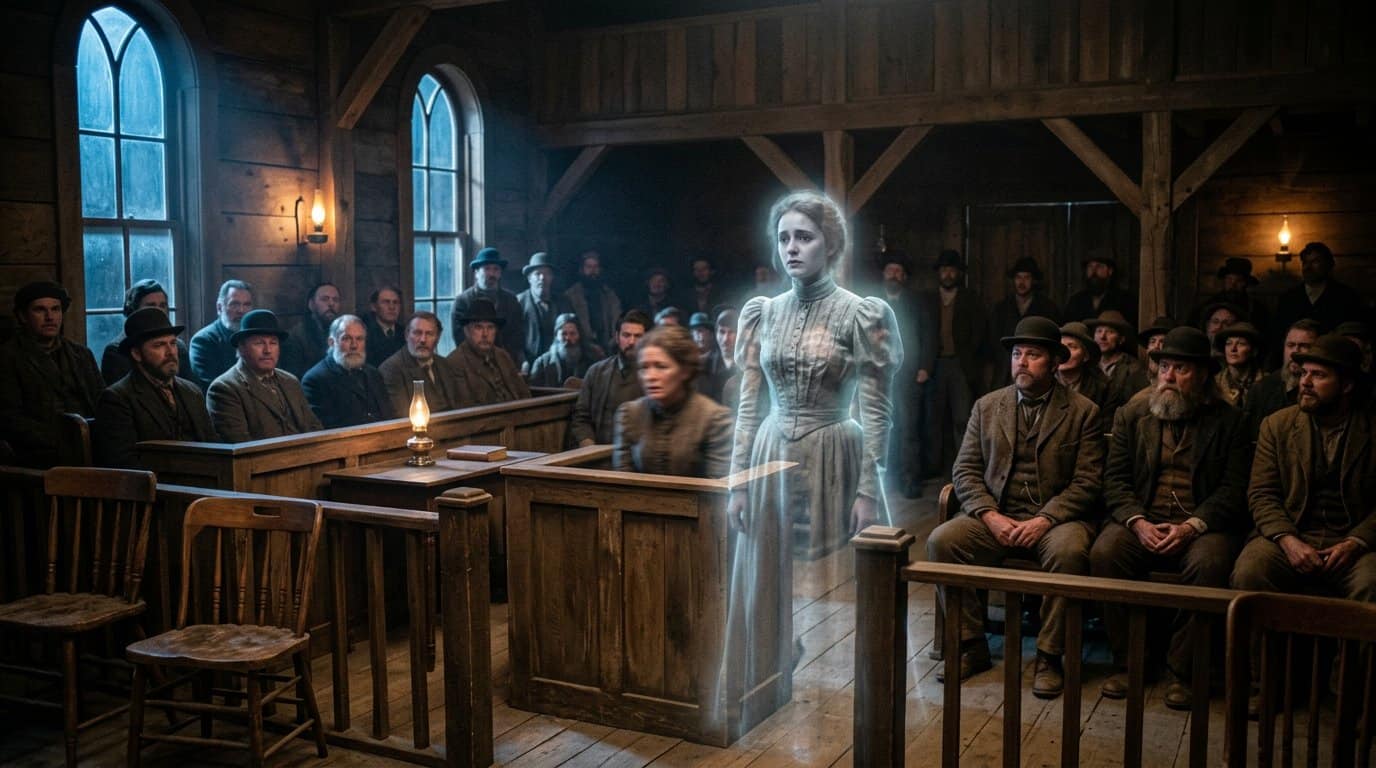
The Ghost Who Testified For Justice
In the quiet hills of 1897 West Virginia, a young bride named Zona Heaster Shue was found dead at the bottom of her stairs, seemingly a victim of natural causes. While the local doctor initially blamed a weak heart, a chilling series of events soon transformed this tragic accident into the legend of the Greenbrier Ghost. For four consecutive nights, Zona’s mother claimed her daughter’s spirit appeared at her bedside, whispering a terrifying secret about what really happened in that house.
This haunting visitation did more than provide comfort; it offered specific details about a crime that had been hidden from the public eye. In a turn of events that remains unique in American legal history, these ghostly revelations led to a body being exhumed and a murderer being brought to justice. It is a story where the boundary between the living and the dead blurred to ensure that the truth could finally be told.
Key Takeaways
- The 1897 murder of Zona Heaster Shue remains the only known instance in American legal history where a victim’s alleged supernatural testimony led to a killer’s conviction.
- Initial medical examinations can be fatally flawed by social pressure and perpetrator manipulation, as seen when the local doctor overlooked a broken neck and crushed windpipe due to the husband’s interference.
- Physical forensic evidence, uncovered through the exhumation of Zona’s body, provided the scientific validation necessary to turn a mother’s spiritual claims into a successful criminal prosecution.
- The defense’s strategic failure to discredit Mary Jane Heaster’s ghostly accounts ultimately backfired, allowing her consistent and compelling testimony to solidify the jury’s decision for a life sentence.
The Suspicious Death Of Zona Heaster Shue
In January 1897, the quiet life of Greenbrier County was shattered when a young errand boy discovered the lifeless body of Zona Heaster Shue at the foot of her stairs. Her husband, Edward Trout Shue, arrived home shortly after and immediately took control of the scene in a way that many neighbors found unsettling. Before the local physician, Dr. George W. Knapp, could arrive, Edward had already moved Zona’s body to the upstairs bedroom and dressed her in a high necked gown with a stiff collar. This unusual behavior continued throughout the medical examination, as Edward cradled his wife’s head and sobbed uncontrollably, making it difficult for the doctor to perform a thorough check.
The initial investigation into Zona’s passing was surprisingly brief and lacked the rigor one would expect for such a sudden tragedy. Dr. Knapp, perhaps feeling pressured by Edward’s intense emotional outbursts, only conducted a superficial exam that failed to look beneath the heavy clothing Edward had placed on the body. Consequently, the doctor officially listed the cause of death as heart disease, though he later changed it to childbirth or an everlasting faint. Because the community generally trusted the doctor’s word, Zona was buried just days later in the local cemetery without any further questions being asked about the physical marks or injuries she might have suffered.
Despite the official ruling, something about the situation felt deeply wrong to those who knew Zona best, especially her mother, Mary Jane Heaster. Mary Jane was suspicious of Edward from the beginning, noting how he seemed more interested in concealing Zona’s neck with scarves and veils during the wake than in mourning her loss. While the law appeared ready to close the book on this case, a series of strange events was about to unfold that would challenge everything the town believed about the living and the dead. This rushed medical conclusion was not the end of Zona’s story, but rather the beginning of one of the most famous legal mysteries in American legal history.
Four Nights Of Ghostly Visitations
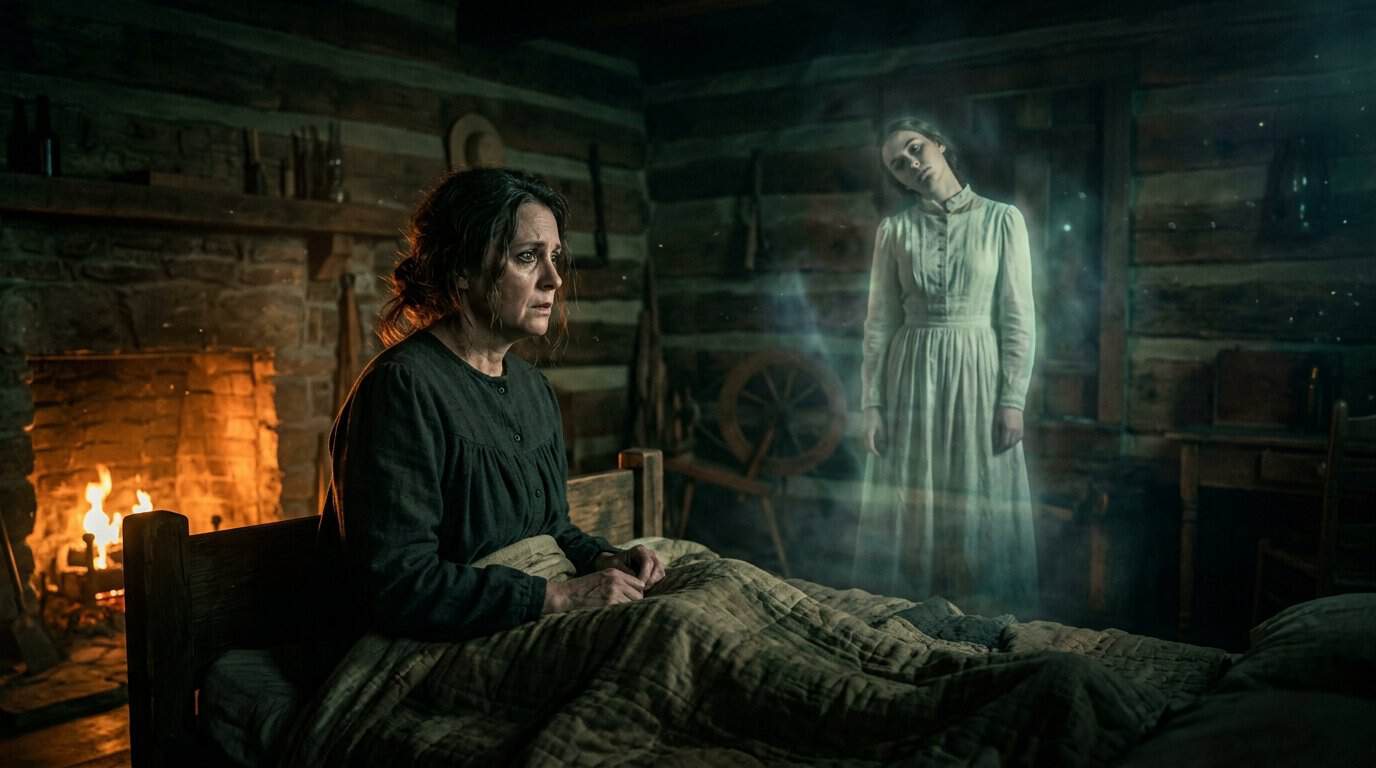
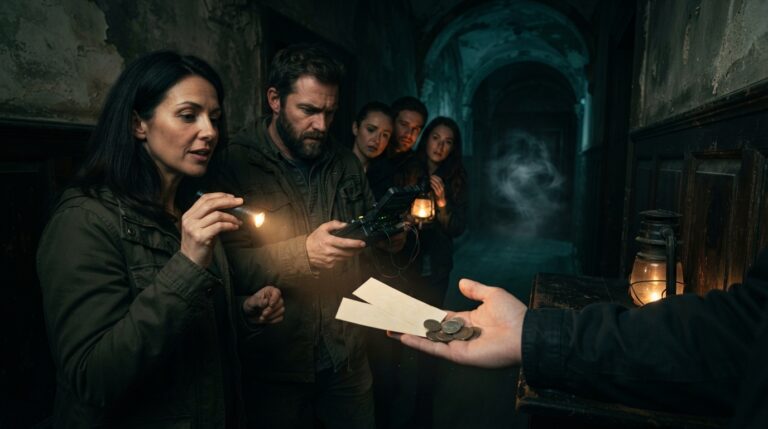
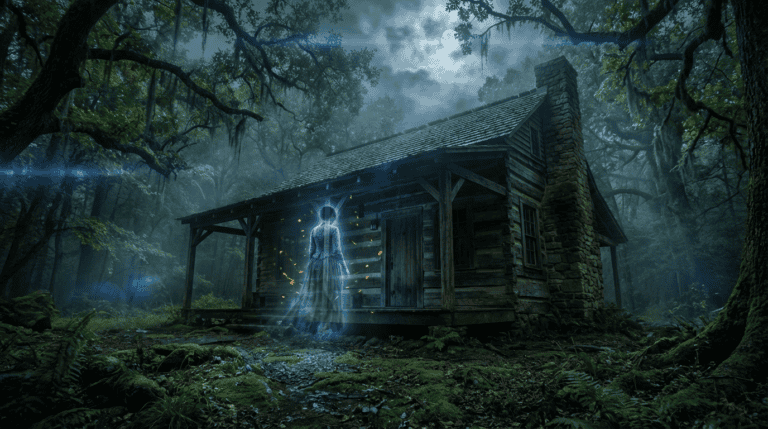
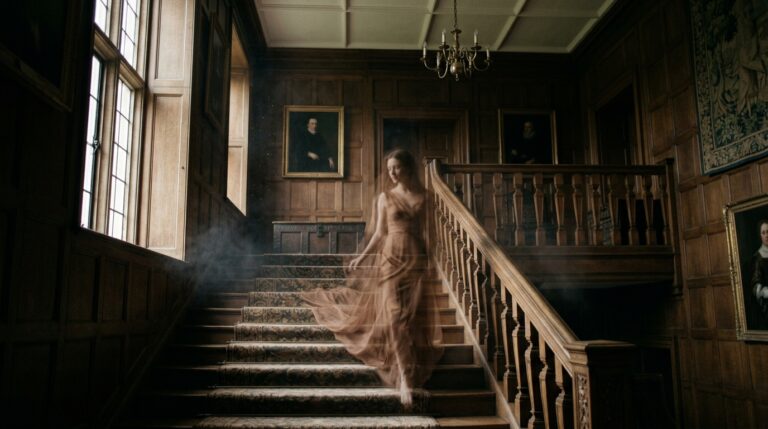
Mary Jane Heaster was a woman consumed by grief, but she refused to believe her daughter’s death was a simple accident. For four consecutive nights, Mary Jane claimed that the spirit of Zona appeared by her bedside in the dark of night to tell a terrifying story. These visitations were not fleeting shadows, as the ghost allegedly described in detail how her husband, Edward Trout Shue, had become violent and snapped her neck. According to Mary Jane’s accounts, the spirit even turned its head completely around to demonstrate the physical injury that the local coroner had overlooked.
The persistence of these ghostly visits drove Mary Jane to approach the local prosecutor, John Alfred Preston, with her extraordinary claims. While a mother’s dream might usually be dismissed as a product of sorrow, Mary Jane’s unwavering conviction and the specific details she provided were enough to spark a formal investigation. Her testimony eventually led to the exhumation of Zona’s body, where a second autopsy confirmed the exact injuries the ghost had described. This turning point in the case bridged the gap between a mother’s intuition and cold, hard forensic evidence.
This remarkable sequence of events remains a cornerstone of West Virginia folklore because it suggests a rare moment where the veil between worlds thinned to provide justice. Despite the skepticism of the defense, the jury found Mary Jane’s story and the physical evidence it uncovered to be undeniably compelling. Edward Trout Shue was ultimately convicted of murder, marking a historic instance where a victim seemingly spoke from beyond the grave to identify her killer. Do you believe Mary Jane truly saw a ghost, or did her subconscious mind simply piece together the clues that everyone else missed?
Scientific Evidence From The Grave
The pursuit of justice took a physical turn when Mary Jane Heaster’s persistent claims of ghostly visitations finally convinced Prosecutor John Alfred Preston to reopen the case. Despite the initial ruling of natural causes, authorities decided to exhume Zona’s body from her resting place in the mountains of West Virginia. A team of doctors, including the original coroner Dr. Knapp, conducted a thorough three day autopsy that many locals watched with bated breath. This procedure was highly unusual for the time, especially since it was prompted by the alleged testimony of a spirit. The investigators were looking for any sign of foul play that might support the mother’s haunting story.
The medical examination soon provided the chilling physical evidence needed to turn a ghost story into a legal reality. Doctors discovered that Zona’s neck had been broken between the first and second vertebrae, a fatal injury that the initial exam had completely missed. Her windpipe had been crushed and there were distinct finger marks on her throat, indicating she had been strangled with immense force. These specific physical findings matched the ghost’s description of her husband’s violent outburst almost perfectly. The scientific evidence from the grave was so undeniable that it immediately shifted the focus of the investigation toward a criminal trial.
Edward Trout Shue was arrested shortly after these gruesome details came to light, as his behavior during the initial wake had already raised local suspicions. He had famously insisted on dressing his wife himself, covering her neck with a high collar and a veil while refusing to let anyone get close to the body. The autopsy proved that his efforts to hide the physical trauma were intentional and calculated. This case remains a landmark because the physical facts discovered during the exhumation gave legal weight to a supernatural claim. Do you believe the ghost actually appeared to point out these injuries, or was Mary Jane Heaster just incredibly observant of her son in law’s behavior?
A Conviction Based On Supernatural Testimony
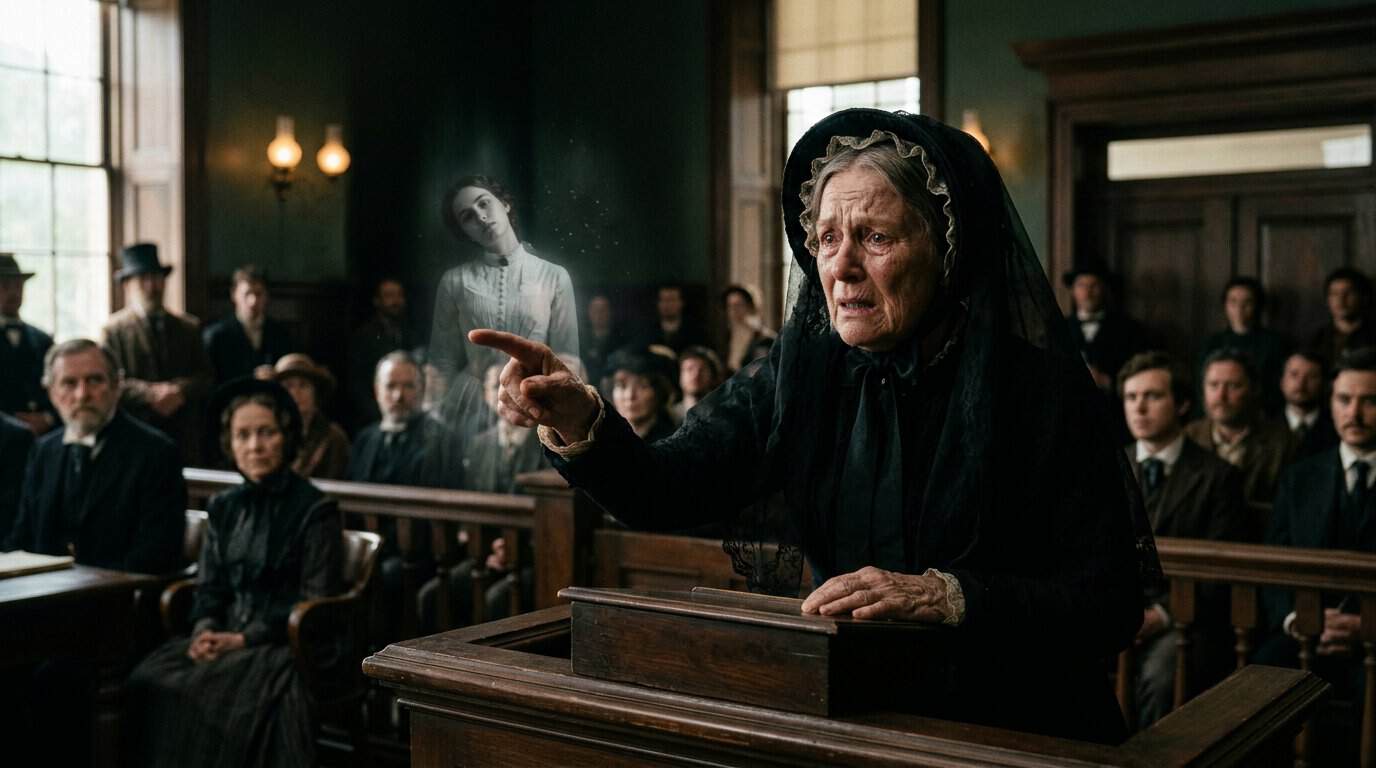
The trial of Edward Trout Shue began in a packed Greenbrier County Courthouse, where the atmosphere was thick with tension and skepticism. Prosecutor John Alfred Preston initially hesitated to bring up the ghostly visitations, fearing it would undermine the legal integrity of the case. However, the defense made a strategic failure by questioning Mary Jane Heaster about her visions in an attempt to make her look unreliable. Mary Jane remained unshakable on the witness stand, describing with chilling detail how her daughter’s spirit returned to reveal the truth about her broken neck. Her conviction was so powerful that it captivated the jury and shifted the entire energy of the room toward the possibility of a supernatural justice.
The defense attorney’s plan to mock the witness completely backfired as Mary Jane survived hours of intense cross examination without changing a single detail of her story. Jurors were faced with a woman who seemed entirely sane and deeply driven by a mother’s love rather than a desire for fame. While the physical evidence from the exhumation confirmed that Zona’s neck had indeed been broken, it was the haunting testimony that provided the narrative the jury needed to connect the dots. The judge allowed the testimony to stand, and after only a short deliberation, the jury returned a guilty verdict that resulted in a life sentence for Shue. This landmark decision remains the only instance in United States history where the word of a ghost effectively helped send a killer to prison.
Do you believe that Mary Jane truly saw a spirit, or was her subconscious mind simply helping her process the clues she had seen at the funeral? The Greenbrier Ghost reminds us that sometimes the line between the living and the dead becomes thin when the truth needs to be told. Many locals still wonder if the spirit of Zona Shue finally found the peace she was looking for after the trial concluded. Regardless of where you stand on the paranormal, the historical documentation of this trial proves that some mysteries are too powerful for a courtroom to ignore. Share your thoughts on whether supernatural evidence should ever have a place in modern legal proceedings.
The Ghost That Demanded Justice
The legacy of the Greenbrier Ghost remains a landmark moment in American legal history because it represents the rare intersection of a courtroom and the supernatural. While the defense tried to mock Mary Jane Heaster for her ghostly visions, her unwavering testimony led to a physical examination that proved her daughter had suffered a broken neck. This case suggests that the truth has a way of surfacing, even if it requires a voice from beyond the grave to set the investigation in motion. It reminds us that justice is not always found through traditional evidence alone, but sometimes through the sheer persistence of those who refuse to let a secret stay buried.
Whether one views this story as a genuine haunting or the clever strategy of a grieving mother, the impact on West Virginia folklore is undeniable. Edward Trout Shue was ultimately held accountable for his actions, marking a rare instance where a spirit’s alleged words were used to secure a murder conviction. The case challenges our modern understanding of logic and leaves us wondering if the veil between worlds is thinner than we think. It invites a deeper look at how we define evidence and whether some mysteries are meant to be solved by forces we cannot see.
What do you think really happened in that small West Virginia town back in 1897? Do you believe Zona truly returned to deliver justice for her own murder, or was Mary Jane simply using a supernatural story to make the authorities listen? This case leaves us with a fascinating question about whether the living or the dead truly secured the final verdict. Much like the vanishing Sodder children, we would love to hear your thoughts on this blend of true crime and the paranormal in the comments below.
Frequently Asked Questions
1. Who was the Greenbrier Ghost?
The Greenbrier Ghost was a young woman named Zona Heaster Shue who died under mysterious circumstances in West Virginia in 1897. Her spirit supposedly returned from the grave to tell her mother the truth about her untimely death.
2. How did Zona Heaster Shue actually die?
While the local doctor originally blamed a weak heart, a second examination revealed that Zona’s neck had been broken and her windpipe crushed. These findings proved that she had been murdered rather than dying of natural causes.
3. What did the ghost tell her mother during the visitations?
Zona’s spirit appeared over four nights to describe how her husband, Edward, had attacked her in a fit of rage. The ghost even physically turned her head around to show her mother exactly where the fatal injury had occurred.
4. Was the ghost’s testimony actually used in a court of law?
The ghost’s story was not used as direct evidence, but it was the reason the prosecutor agreed to exhume the body. During the trial, the defense accidentally let the jury hear the full ghostly tale while trying to make Zona’s mother look unreliable.
5. What happened to Edward Trout Shue after the trial?
Edward was found guilty of murder and sentenced to life in prison at the West Virginia Penitentiary. He died there just three years later during an epidemic, bringing a final close to the tragic saga.
6. Why is this case so famous in American history?
This case remains the only known instance in United States history where a ghost who gave legal testimony helped lead to a murder conviction. It stands as a fascinating bridge between the legal system and the unexplained world of the supernatural, much like the 1950s encounter or the Bell Witch haunting that continues to intrigue researchers today.